
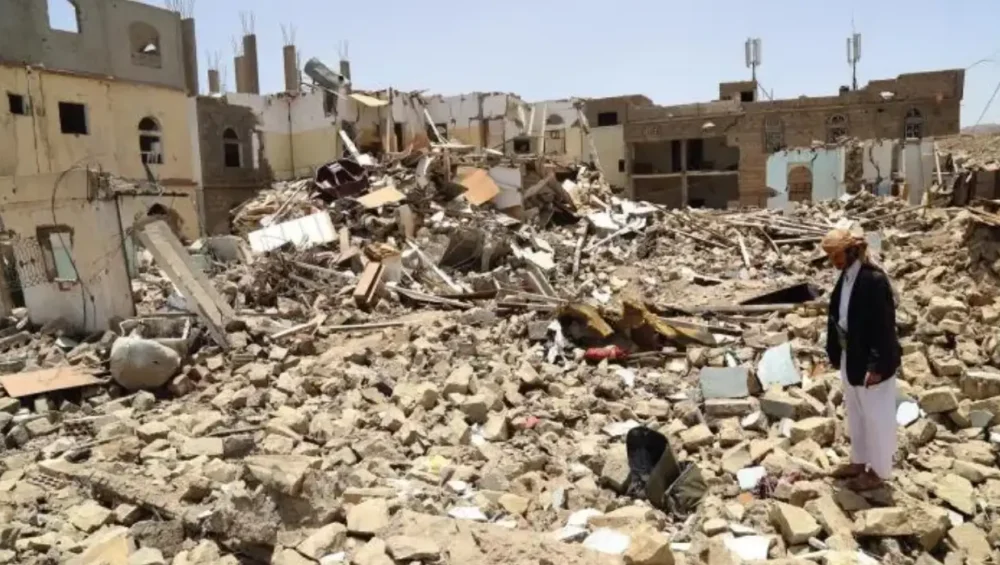
The Saada airstrike of April 28, 2025, has become a point of contention on the issue of civilian protection and military responsibility. Reports of dozens of deaths and injuries in a migrant detention center have only added to questioning targeting choices made in the current operations related to the larger Yemen conflict. The human rights groups such as Amnesty International claimed that the site was known to be civilian in nature previously and this posed legal issues at the very moment.
It is not limited to one incident. The fact that a facility that is regarded to be related to humanitarian monitoring was reported to have been hit by actors who are believed to have been aware, like the International Committee of the Red Cross, would question the effectiveness of adherence to international humanitarian law. Lack of clear statement in the eyes of the public by the military authorities has only raised more concerns whether the current accountability structures can withstand high intensity operating environments.
Operational failures and targeting complexities
The Saada incident has created a fresh insight into the shortcomings of the contemporary targeting systems, especially in cases when the information feeds are insufficient or out-of-date.
Precision technology and intelligence gaps
Most military planners tend to point to the importance of precision-guided munitions in reducing civilian casualties. Such systems can however only be effective when the intelligence, surveillance and reconnaissance processes are accurate. The Saada case indicates that the verification chain is broken, and the available information might not have been properly cross-referenced with humanitarian sites registries.
It is this disconnection that points to a structural problem. High-quality targeting platforms are capable of providing point-of-impact precision, but cannot counter inaccurate or inadequate intelligence. In a dynamic environment such as Yemen where facilities can be used in various ways or change functions with time, the use of static intelligence models can be misclassified especially when the tempo of an operation is high.
Civilian presence and misidentification risks
The alleged presence of African migrants in the detention center makes it difficult to assess the collateral damages in a traditional manner. These people did not fight, they were not involved in any hostilities but they fell victims of the system that did not differentiate properly between the military and the civilian space.
Human rights activists have termed the incident as part of a larger trend whereby the vulnerability of civilians is not adequately established within the calculus of targeting. The statement of Amnesty representatives that the strike was the consequence of the disturbing indifference indicates the increasing worry that practical considerations are taking precedence over humanitarian protection.
Accountability vacuum and institutional response
Limited official disclosure of the aftermath of the Saada airstrike has resulted in what analysts refer to as an accountability vacuum.
Institutional opacity and public trust
Lack of an explanation by the military authorities in a clear and timely manner has also been a factor that has made the decision making processes questionable. Although secrecy of operations is justified by the need to protect national security in most cases, secrecy may be detrimental to the confidence and international legitimacy of the people.
In 2025, the discussions about military responsibility were more concerned with the issue of the sufficiency of internal review mechanisms. In the absence of an independent oversight, the assessments will tend to be seen as self-validating instead of objective. This view can not only weaken the credibility of particular operations but also the overall endeavors to uphold compliance to international norms.
Limits of internal investigations
When internal investigation is done in the absence of external scrutiny, it is intrinsically limited. They might not have a sense of being neutral enough to deal with accusations of civilian casualties especially in politically charged wars. The lack of a publicly confirmed investigation in the Saada case has bolstered calls of an independent process that is capable of investigating evidence without institutional bias.
This incident is not the only one that has such limitations. In various conflict zones, analysts in 2025 noted a trend where accountability systems are underdeveloped in relation to operational capabilities, and there are holes between the legal standards and enforcement.
International inquiry and legal implications
The demand to have an international probe into the Saada airstrike is an indication of the wider issues concerning the application of humanitarian law in contemporary warfare.
Role of international humanitarian law
The international humanitarian law lays down some clear principles of conduct of hostilities, such as distinction, proportionality and precaution. The Saada episode is an issue on whether these principles were properly implemented or not. In the event that a location that is known to harbor civilians was targeted, it would be a possible breach that needs to be examined in detail.
A global investigation may offer a systematic guide to examining such problems. Such a process would seek to bring factual clarity, responsibility and prescribe actions that would ensure such events do not occur again. Not only would accountability be targeted but the strengthening of the norms of law would be reinforced.
Implications for future military conduct
The results of any investigation on the Saada airstrike may have wider implications on the military operations around the world. The more complicated and technologically-driven are the conflicts, the less easy is to consider humanitarian considerations in the operational planning.
The necessity to establish more powerful mechanisms that would guarantee that real-time humanitarian data is included in intelligence verification processes was discussed in the policy in 2025. The Saada case highlights what can go wrong in cases where there is lack of adaptation of these systems especially where there is a mix of civilian and military infrastructures.
Broader geopolitical and humanitarian context
The Saada airstrike also needs to be interpreted in the broader context of geopolitics of the Yemen war and its humanitarian implications.
Strategic priorities and civilian protection
The military action in Yemen is usually associated with the strategic goals, such as safeguarding maritime routes and regional security interests. Such priorities may cause a conflict with humanitarian considerations, especially when it is necessary to make a fast decision.
In 2025, analysts observed that the escalation of activities in some areas was accompanied by the reports of civilian casualties. This association has raised concerns on whether the available protection measures are adequate to strike a balance between strategic needs and the security of non-combatants.
Erosion of humanitarian norms
The failure to hold anyone accountable in cases such as Saada helps to erode humanitarian norms over time. Cases which are not openly examined act as precedents which can undermine efforts to comply elsewhere in other conflict zones.
This is a cumulative erosion and not instantaneous. The international law of enforcement is undermined by each unsolved case because it creates an illusion that the system is uneven. To humanitarian organizations, this tendency can be a huge challenge in terms of advocacy of civilian protection.
Toward a framework for accountability and reform
The Saada airstrike highlights the need for a more robust approach to accountability in modern conflict environments. Strengthening verification processes, enhancing transparency, and integrating humanitarian data into operational systems are critical steps.
Equally important is the role of international institutions in ensuring that investigations are conducted impartially and comprehensively. Without such mechanisms, the gap between legal standards and operational practice is likely to persist.
As global conflicts continue to evolve, the question raised by Saada is not limited to one incident or one region. It points to a broader challenge of aligning military capability with ethical responsibility, and whether existing systems are equipped to handle that balance. The answer will shape not only future operations but also the credibility of the international order that seeks to regulate them.