
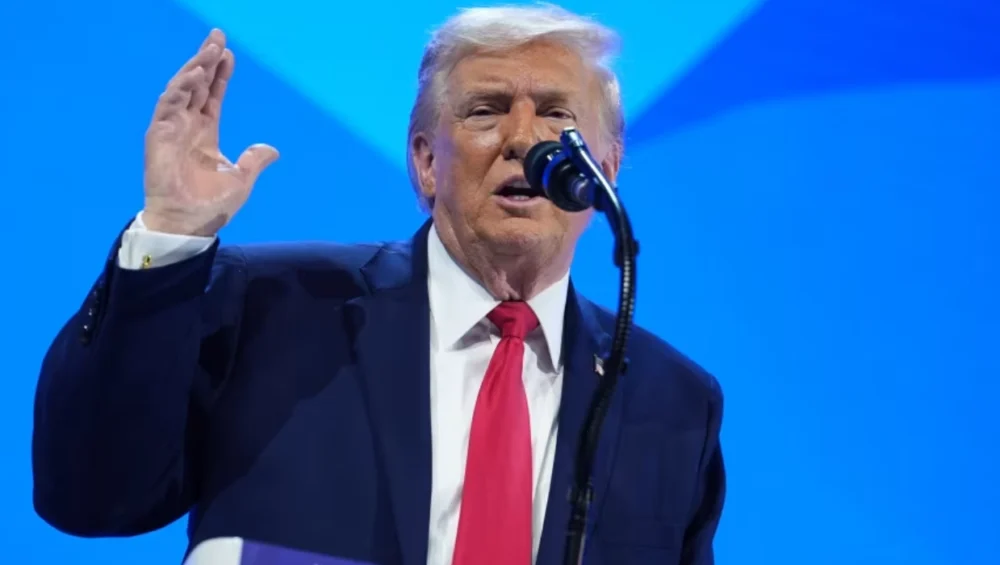
President Donald Trump celebrated the 160th anniversary of the ratification of the 13th Amendment on Dec. 6, 2025, positioning the milestone as a renewal of original promises to equality and justice. In his message, released as part of the America 250 project, he recited the text of the amendment, and said its ratification marked a morally defining point in the nation’s quest to achieve freedom. Georgia was the 27th state to ratify the amendment in 1865 and this national change made slavery formally, with the exception of criminal punishment, making it a principle that transformed the constitutional order.
The 2025 statement repeated words Trump had written in previous commemorations, such as the 155th anniversary message in 2020 and his 2019 message on the abolition of slavery. Both focused on the victory of freedom over oppression and responsibility to enforce the promise of the amendment. The administration was connecting historic emancipation with the approaching 250 th year of independence by placing the anniversary in the context of the larger America 250 preparations, implying continuity between the promises of the past and the future in regard to human dignity.
Interpreting Trump’s 2025 Freedom Pledge
Trump characterizing the amendment as the triumph of freedom, equal justice, and human dignity is in line with the longstanding traditional views of the presidency. His message stated that 160 years on the freedom promise given by Trump will still be pegged on the standard of a free society made by Lincoln where the abolitionists who helped get the amendment through the passage were celebrated. The declaration associated abolition with future victories of the nation such as the overthrowing of fascism and communism thus suggesting that emancipation marked the pathway of future leadership of America against oppression in the world.
Although the pledge focused on the recommitment, it did not provide many details about how these principles can be applied to concrete governance. Instead, the framing was symbolic with the anniversary being included within a general moral tradition as opposed to a detailed policy framework. This is a reflection of earlier Trump-based celebrations, which put a heavier emphasis on aspiration and heritage than political avenues.
Continuity With Previous Presidential Statements
The language used by Trump in 2025 was similar to that used by him in 2019 and 2020 when he promised to remove the shackles of slavery and keep in mind the sacrifices that had been made to promote equality. Those messages also emphasized togetherness and strength and were employing commemoration to enforce more general themes of national regeneration. The 2025 one was heavily dependent on this rhetorical succession, which provided the administration with the story of historical care without changing the message.
The continuity of these themes supports the focus of the administration on being symbolically attached to Lincoln. However, according to historians, the messaging of anniversaries has usually been reflective of current policy politics, and the 2025 statement was not an exception as it consistently overlapped with argumentative topics of rights, citizenship, and federal power.
Lincoln’s Vision Within Its Historical Setting
The endorsement of the 13th Amendment by Lincoln came in the last year of the Civil War based on the notion that the nation could not continue to exist with slavery. Though initially the institution was acceptable in the Constitution, Lincoln regarded abolition as pivotal to the application of the equality principles in the Declaration of Independence. The fact that the amendment was passed soon after the assassination of Lincoln was symbolic of the first move towards restoration of a society that had crumbled under rebellion and racial segregation.
Reconstruction on the other hand showed the constraints of constitutional text but not enforcement. Black Codes were used by the southern states by taking advantage of the amendment punishment clause, which led to federal interventions to save the newly freed citizens. This occupation stage, military occupation, civil rights laws and the establishment of the Freedmen Bureau, constituted the practical implementation of the vision of Lincoln. This 2025 message by Trump appealed to this moral ideal without focusing on this enforcement legacy, and this indicates a selective emphasis on constitutional aspiration as opposed to the intricate political actions that turned emancipation into a meaningful focus.
Human Dignity And Citizenship Expansion
The focus on equality by Lincoln contributed to the introduction of the 14th and the 15th Amendments which extended citizenship, due process, and right to vote. These actions were aimed at ensuring durable security of former slaves and ensuring that states undermined emancipation. The mention of dignity made by Trump has a symbolic relation to these developments, but these contemporary discussions on citizenship and federal power are so distant in the sense of anxiety that Reconstruction.
In 2025, it is even more heightened because legal battles over birthright citizenship and national belonging will be emerging in federal courts. Instead, the anniversary message cuts across the continuous constitutional debates, which are direct results of the unresolved questions of Reconstruction.
2025 Policy Landscape And Contemporary Friction
In 2025, Trump made executive orders that impacted on matters of equality, public safety, and civil liberties. One of the orders in September was aimed at providing financial access to institutions without any regard to religious beliefs, and other orders dealt with extremism designations and wrongful detention practices. Federal homelessness initiatives focused on civil commitment channels, which questioned the civil rights groups in terms of the equilibrium between treatment, autonomy and incarceration.
All of these policies did not directly refer to the 13th Amendment, but most of them overlapped with the discussions of freedom, dignity, and state power. The punishment clause of the amendment, specifically, has not entirely died regardless of the debates regarding the issue of prison labor, sentencing reforms, and what the federal government should and should not do.
Citizenship Debates And Post-13th Amendment Rights
On December 5, 2025 the Supreme Court argued over matters of birthright citizenship contesting interpretations that can be traced back to the ratification of the 14th Amendment. Such instances are in the connection with the same constitutional ecosystem that rose after the 13th Amendment-the period that was aimed at identifying a similar definition of citizenship to newly emancipated persons. These arguments were not the focus of Trump as he wrote his anniversary message, however, the larger immigration policy of the administration is still inextricably linked with the issue of national identity and constitutional safeguards.
As these legal challenges unfold, scholars note that references to human dignity in anniversary statements can influence public framing, even if they do not alter judicial outcomes.
Assessing Alignment Between Trump And Lincoln
The 2025 pledge indicates a partisan attraction towards the legacy of Lincoln. Trump stressed national victory, ethical clarity, and basic unity, repeating Lincoln in his rhetoric and leaving out the restructuring infrastructure that was needed to implement the amendment in reality. This is in line with the contemporary presidential commemorations, which tend to prioritize symbolic interpretations to historical involvement.
The message is aimed at placing the government in a tradition of constitutional watchdogs, in the present political circumstances. The critics believe that selective readings are dangerous as they make the long way between abolishment and citizenship seem easy, and the supporters see the pledge as a reminder of eternal values. The expansive framing gives the administration the opportunity to rally the images of Lincoln without having to deal with the divisive policy details.
Evolving Interpretations And Future Constitutional Friction
As America approaches the 250th anniversary of independence, constitutional memory has become a central theme of political rhetoric. Trump’s anniversary statement fits into this landscape, offering a narrative of continuity and resilience. Yet the enduring debates surrounding citizenship, enforcement, and dignity suggest that the legacy of the 13th Amendment is far from settled. The principles Lincoln articulated continue to influence disputes over national belonging, rights expansion, and federal authority.
With the Supreme Court preparing major rulings in 2026 and America 250 events shaping national discourse, the meaning of the amendment will likely reemerge in public debate. The open question is whether renewed attention to emancipation-era ideals will invite more rigorous engagement with the complexities of enforcement, or whether symbolic invocations will dominate interpretations as political pressures mount.
As the nation moves toward its next defining milestones, how might Lincoln’s constitutional legacy shape emerging citizenship battles, and could the tension between historical principle and contemporary policy reveal new pathways or new fractures in the pursuit of dignity and justice?