
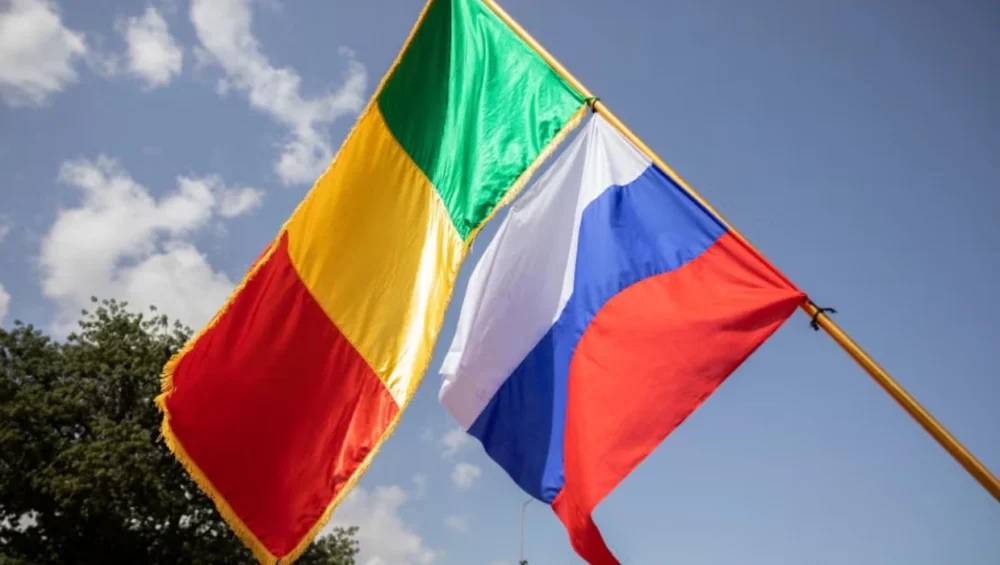
Human Rights Watch has accused Russian government-controlled Africa Corps forces and accompanying Malian soldiers of summarily killing nine civilians, including four children, during an operation in central Mali in early July 2026. The rights organization said dozens of others were beaten, homes were looted and burned, and food stores were destroyed in an assault that allegedly targeted a Fulani neighborhood.
If verified independently, these accusations would be one of the gravest abuses that have been reported against Russia’s Africa Corps since the unit was upgraded after the exit of the Wagner Group from Mali. They also call into question the general issue of the responsibility of foreign troops serving alongside Malian troops and the strategy of the junta in combating insurgency, according to rights groups, who have noted a frequent blurring of the line between rebel groups and civilians.
Raid on Bombori village
As per Human Rights Watch, the event took place on July 10 in the village of Bombori located in the Mopti region of central Mali. The attack was conducted in the morning at about 5 a.m. and ended in the afternoon at about 2 p.m. HRW claimed that more than 100 fighters from the Africa Corps were assisted in their operation by several soldiers from Mali. One witness cited by HRW stated that at least seven pickup trucks carrying the armed men and more than 60 motorbikes were used.
The fighters allegedly moved throughout the area inhabited by the Fulani community and detained at least 80 men and boys in the area under a tree. The village has been controlled by the al-Qaeda-affiliated militant group Group for the Support of Islam and Muslims or JNIM (its Arabic name) since 2017. However, the witnesses informed HRW that the militants have left Bombori the night before and did not take part in the operation conducted by the Africa Corps. This fact is of critical importance for the case.
Human Rights Watch said it interviewed 13 people, including four witnesses and nine civil society members or community leaders, between July 19 and 30. The interviews were conducted remotely because insecurity and access restrictions make independent reporting in central Mali difficult.
Nine civilians allegedly executed
HRW’s account says the detained men and boys were beaten and interrogated. The fighters allegedly accused them of having connections with JNIM and demanded information about Islamist combatants and weapons.
They were apparently threatened that they would be killed in case they did not cooperate. Six civilians were shot at when they tried to escape. In addition, three other young men were picked out from the crowd and made to move in the direction of a JNIM base. It was later learned that the bodies of the three were found. HRW reported that one of the three was reportedly decapitated and the other two had their throats cut and their hands bound behind their backs. Other victims also sustained gunshot injuries, which included headshots.
Among the nine victims were five men who ranged from 19 to 34 years of age and four children ranging from 6 to 17 years old. Two children were reportedly found shot dead near a burnt house and two other bodies were found near the national road. The alleged execution of the children is of particular significance. Even in conflict zones, it is an obligation under international humanitarian law for combatants to make distinctions between civilians and fighters.
A 39-year-old witness quoted by HRW said a white fighter carrying two radios appeared to direct the operation.
“The Russians were in charge … they were over 100, all dressed in military uniforms and heavily armed,”
the witness said.
The same witness reportedly described a Malian soldier translating threats issued to the detainees. The soldier allegedly warned that those who did not provide information about jihadists would be killed.
Alleged ethnic targeting
HRW said the Africa Corps-led force entered only the Fulani section of the village. The neighboring Rimaïbé quarter was reportedly not searched, and witnesses did not report killings or arrests there.
The incident has heightened fears about an operation fueled not just by military suspicions, but also by ethnic profiling. Security forces and vigilante groups have consistently accused Fulani communities across Mali and beyond in the region of the Sahel of backing Islamist armed groups. Human rights groups have warned on numerous occasions that such allegations could be used as the basis for collective punishment. The alleged Bombori incident should thus be understood as part of the cycle of violence in the region. JNIM and other armed groups have perpetrated numerous human rights violations against civilians, including executions, extortion, kidnapping, recruitment, intimidation, and attack on transport networks. However, any human rights violations perpetrated by Islamist armed groups do not justify any reprisal attacks by state forces or their affiliates against entire communities. The focus on the predominantly Fulani area and the lack of JNIM fighters during the assault have raised the possibility that ethnic identity and not individual behavior was the basis of the violence.
Homes burned and food destroyed
The alleged operation did not end with the reported killings. Witnesses told HRW that at least eight homes were looted and burned, while five granaries were destroyed.
According to reports, cash, jewelry, and cell phones were also stolen from the local residents. The burning of the grain bins comes as a particularly devastating action in a rural area where security and humanitarian conditions are already dire. This type of action could lead to a complete loss of livelihood for those affected. Although destruction of civilian property cannot always be considered a violation of the law during a military operation, such destruction cannot take place unless there is a pressing military necessity.
In the case of homes and grain bins being set ablaze as punishment or intimidation of local residents, such actions would amount to a serious violation of the international humanitarian law. The combination of these allegations brings up the possibility of the operation being an attempt to intimidate the residents more than anything else. There are also issues related to the chain of command – whether the operation was sanctioned and whether any higher-ranking officers were aware of what was going on.
Africa Corps replaces Wagner
The incident comes amid a major transformation in Russia’s military presence in Africa. The Wagner Group announced its withdrawal from Mali in June 2025, claiming that it had completed its mission. Africa Corps subsequently took over much of Wagner’s role.
Human Rights Watch said Africa Corps is controlled by the Russian government and retained approximately the same troop strength in Mali. Many former Wagner fighters and some senior Wagner leaders reportedly moved into the new structure.
The change in name and administrative control has not removed concerns about accountability. Instead, it may have made responsibility more politically sensitive. Wagner operated as a private military organization, although governments and rights groups frequently linked it to Russian state interests. Africa Corps, by contrast, is described by HRW as a government-controlled force.
If Russian officials directly command or supervise operations in Mali, allegations of abuse could raise questions about Russia’s responsibility under international law. If Africa Corps fighters operate alongside Malian units, responsibility may also extend to Malian commanders who ordered, enabled or failed to prevent unlawful conduct.
Ilaria Allegrozzi, Human Rights Watch’s senior Sahel researcher, said the alleged operation showed that the Malian authorities could not avoid responsibility by relying on foreign allies.
“The Malian junta appears to have given Russian Africa Corps forces a green light to kill civilians,”
she said.
That statement is an allegation by HRW, not an established judicial finding. Nevertheless, it reflects the organization’s assessment that the pattern of cooperation between Malian forces and Russian personnel creates a shared accountability problem.
Wider pattern of alleged abuses
Bombori accusations come on top of other incidents, which have been reported with involvement of Africa Corps and Malian forces. In particular, on June 15, 2026, Africa Corps airplanes are believed to have conducted airstrikes in central Mali that resulted in deaths of eight civilians, three of them being children. According to the report released by Human Rights Watch, it was an apparent indiscriminate airstrike on Kyrnia village. At least two bombs have been dropped from an airplane believed to be a Sukhoi Su-24, according to two witnesses, who are representatives of Malian military.
HRW also stated that there were no combatants among those killed in the airstrike. These accusations come just several weeks prior to the alleged Bombori killings raising the question of safety of civilians amid counterinsurgency operations backed by Russia. In a separate report issued in June 2026, HRW accused Islamist armed groups, Malian forces and their allies of having committed gross human rights violations since April when the intensity of fighting increased. The report stated that there were military and allied operations by Malian forces in the period from May 14 to 17, resulting in deaths of 38 civilians, including 23 children, in central Mali. The HRW report for 2026 on human rights situation in Mali also described deterioration of the situation in 2025.
These reports do not prove that every incident was ordered by a single command structure. They do, however, indicate a recurring pattern in which military operations against Islamist groups have resulted in allegations of civilian killings and collective punishment.
Government silence and accountability
Human Rights Watch said it sent letters to the Russian and Malian defense ministers on August 4 and 5, seeking responses to the allegations. Neither ministry had replied by the time the organization published its findings.
The absence of a response leaves several key questions unresolved. Neither government has publicly explained the purpose of the Bombori operation, identified the units involved or disputed the reported number of victims. There has also been no announced independent inquiry in the information provided by HRW.
A credible investigation would need to establish the identity of the attackers, determine whether commanders ordered or witnessed the killings, verify the identities and ages of the victims, examine the burned homes and granaries, and recover any available forensic evidence.
Because HRW’s investigation relied on remote interviews, independent on-site verification would strengthen the findings. Access to central Mali is limited, and witnesses may face retaliation. Yet the detailed accounts of vehicles, uniforms, weapons, bodies and destroyed property provide a basis for further examination by the United Nations, the African Union and international investigators.
Possible war crimes
Under international humanitarian law, there is no right to deliberately target civilians and no right to kill, torture or treat any detainee cruelly. Civilians who are trying to escape are also protected if they are not directly participating in hostilities. If these reports prove to be true, the killings would constitute war crimes. Beatings, intimidation, executions and mutilation would also be considered torture, murder or cruelty. Destruction of houses and granaries may have been illegal in the absence of a sufficient military justification.
This situation would also raise the concept of the doctrine of command responsibility. Commanders may be liable if they knew or ought to have known that their subordinates committed atrocities and did nothing to stop them from committing those crimes or punish the perpetrators. The question of whether or not JNIM had control over Bombori is irrelevant. The relevant issue under international law is whether the victims were civilians or were hors de combat, whether they were individually taking part in hostilities and whether the use of force was necessary and proportionate.