
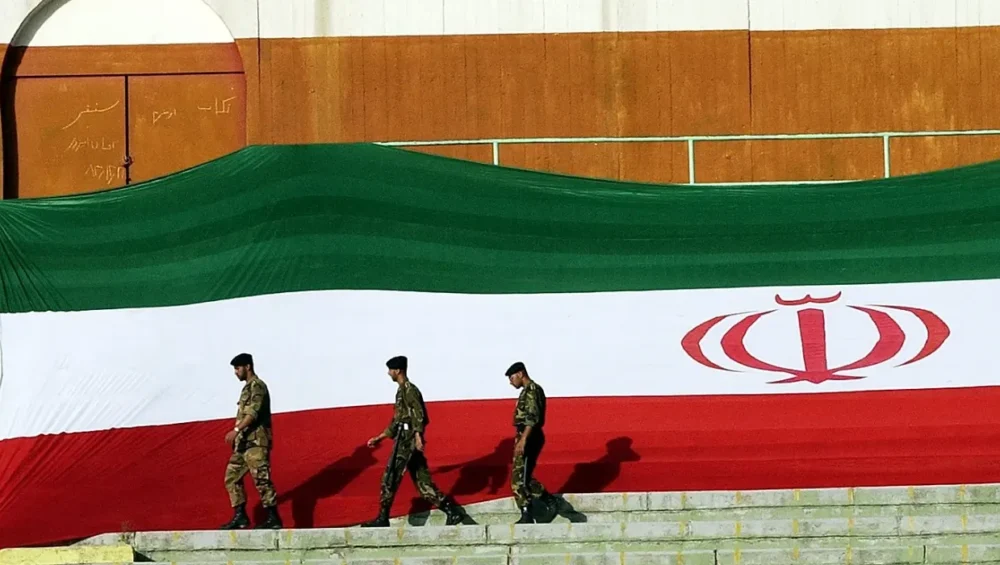
The Iranian government conducted public executions of two individuals in the Shahid Alikhani Square in the city of Isfahan on July 28, 2026, according to reports citing both local and international sources. The executions were said to be related to a protest case that occurred in the same area in January 2026, in which police had responded to protests and arrested several individuals. In addition to the heavy security presence during the night and clashes in the vicinity of the square, the situation leading up to the executions became even more tense. The individuals involved in the executions were reported to be Amirhossein Safari Hosseinabadi and Abolfazl Sepahi Badjiani. Four people have thus been executed in this Isfahan protest file.
The wider protest case
The Isfahan case holds relevance to the larger issue since it entails the sentencing of 12 youth under one trial related to their involvement in the protests of January. As per the account of the UN, the young men have been charged by Iranian officials of participation in the murder of four security members as well as arson and vandalism during the protest period. Such charges have enabled the regime to put forward the case as being a serious violation of violence against the state. However, the UN experts have pointed out that such trials have been flawed in terms of process since they involved one trial of all 12 men, secret hearings and a lack of details on the individual roles of the accused.
UN alarm over trial fairness
The UN was particularly tough in its condemnation of the trial process, noting that the trial process failed to satisfy minimum standards of a fair trial. Coerced confessions had been broadcasted before the trial in a practice that the UN believes had polluted the process and prejudiced the presumption of innocence. The UN was equally critical of the closed hearing nature of the trial since according to them, a closed hearing in a death penalty case is tantamount to denying the ability of conducting a thorough investigation. In the course of its public warning to Iran, the UN called for an immediate stop to the execution of those accused.
“The imposition of death sentences on 12 young men for their involvement in the January 2026 protests, in a single hearing, is deeply alarming,”
the UN experts said in their statement.
“Confessions obtained under coercion and broadcast before trial cannot be used to justify executions,”
they warned, underscoring their view that the process violated both due process and the right to a fair defense.
Security buildup and public reaction
The public nature of the executions appears to have been deliberate and symbolically charged. Reports said heavy security forces were deployed overnight around Shahid Alikhani Square, while civilians gathered nearby and, in some accounts, clashes broke out between guards and those trying to reach the area. That detail is important because it shows the execution was not merely a legal event but also a public show of force designed to control the narrative and intimidate dissent.
Public executions in Iran are relatively rare compared with executions carried out behind prison walls, but when they happen they carry strong political messaging. In this case, the location in a protest-linked square, the overnight security buildup, and the visible fear of public unrest all suggest the authorities were determined to stage the event in a highly controlled environment. The result was not just the death of two men, but a broader warning to protesters and their supporters.
What Iran says
Iranian authorities have presented the men as convicted participants in violence that killed security personnel during protests. That state narrative matters because it seeks to move the case away from the category of political repression and into the category of criminal retaliation for lethal attacks. Officials also say the legal process was completed and that the defendants were convicted on serious charges involving murder, arson and vandalism. At the same time, the UN’s account sharply disputes the fairness of the proceedings, saying the case was rushed through a single hearing and that evidence was compromised by coercion. This leaves two competing versions of the same event: Tehran’s insistence that it punished violent offenders, and the UN’s claim that it executed protest detainees after an unjust and opaque process.
Numbers that define the case
The most significant numbers illustrate the huge size of the problem. According to the UN report, 12 individuals were sentenced in the Isfahan protest file; two individuals were executed on 19 July, and two more were publicly executed on 28 July, which means that there are 8 individuals who can be in danger in this particular case. Moreover, the UN report indicated that according to the information received from the judiciary, there were 23 executions in protest-related cases since March, which means that this campaign goes beyond one file. In addition to this, the UN warned about the fact that more than 60 individuals have been sentenced to death since December in protest-related or related cases, which included three women and two boys.
The political meaning
The Isfahan executions are politically significant because they come at the intersection of protest, repression, and international pressure. The public hanging of two men after UN criticism sends a clear message that Tehran is prepared to ignore global calls for restraint, even when the scrutiny is intense and the case is already widely viewed as controversial.
For Iranian authorities, the executions may be intended to project control and deter future unrest. For rights groups and UN experts, however, the case illustrates the opposite: a justice system being used to punish dissent through harsh penalties, closed courts and confessional pressure. That clash of interpretations is now central to how the story will be judged internationally.
Human-rights implications
Another reason why this case is important is that it demonstrates how vulnerable detainees are when the accusations relate to politically sensitive unrest. The danger here is not only that a person could be wrongfully convicted but that the application of death sentences as political management can become an acceptable practice. The warnings by the UN demonstrate the concerns about the manner in which the protest cases in Iran are treated, with the legal process being equated with punishment by the state. In terms of human rights, the case of public execution brings up a number of interconnected issues: the right to fair trial, prohibition of forced confession, the use of capital punishment in cases of protest-related crimes, and psychological effect of public execution on society. The fact that there were civilians in the vicinity and security forces around overnight demonstrates that the shock effect was taken into account.