
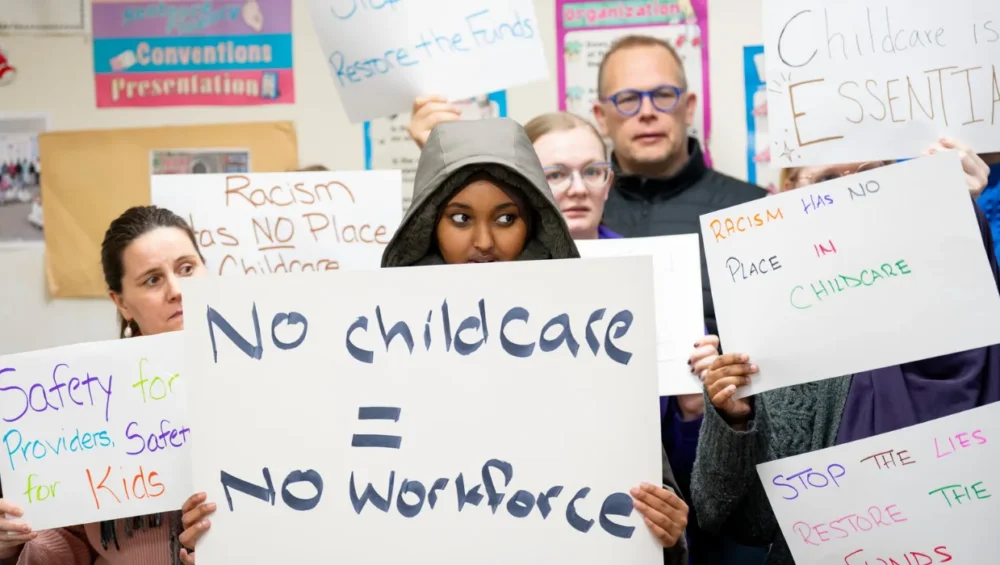
At the midpoint of July 2026, a group of civil rights and legal advocacy organizations, including the American Civil Liberties Union, the National Women’s Law Center, and the National Center for Law and Economic Justice, sued the U.S. Department of Health and Human Services in order to obtain internal documentation and judicial review of a decision made by HHS that, in effect, blocked or froze about $10 billion of federal money meant for child care and family assistance. This suit, filed in the wake of failed attempts at correspondence and document acquisition, portrays the government’s actions as sudden, opaque, and damaging.
The factual canvas — what was paused, where and why
The funding actions that triggered the litigation date back to January 2026, when the administration announced pauses and new documentation requirements affecting major federal streams: the Child Care and Development Fund (CCDF), Temporary Assistance for Needy Families (TANF), and the Social Services Block Grant (SSBG).
All these put together constitute most of the $10 billion estimated by the report as either frozen or subjected to additional restrictions in the state jurisdictions of California, Colorado, Illinois, Minnesota, and New York. The government officials justified these actions as a measure to maintain integrity after allegations of fraud were made against some of the local programs, but the civil rights organizations claim that the government has not provided any documented proof justifying the selection of specific states.
Legal grounds and relief sought by plaintiffs
The action mainly aims at obtaining judicial decrees ordering HHS to process and produce non-exempt information under FOIA and other principles of administrative law as well as allowing judicial review of whether the agency was within its statutory and constitutional authority in imposing the restrictions. According to plaintiffs, such documents as emails, memoranda, letters and minutes of the meetings will help ascertain the source of the order to impose the freeze, whether the department observed the prescribed procedure and whether there were enough grounds to conclude that fraud had been committed to justify withholding of the funds.
Human and operational consequences for families and providers
The consequences of interrupted federal funding are immediate and tangible: subsidies that pay for childcare slots, support for early‑childhood educators, and services for children with special needs — and the payrolls that undergird them — depend on steady disbursements. Advocacy groups and plaintiffs’ filings emphasize that even short suspensions can trigger center closures, staff layoffs, and longer waiting lists for families, disproportionately harming single parents, women, and communities of color that rely heavily on federal assistance. Local administrators and providers reported operational chaos when drawdowns were suddenly constrained or conditions tightened, forcing states to scramble for temporary fixes and increasing pressure on already stretched social‑service networks.
Administration rationale and the transparency dispute
In its public stance, the administration has justified the pauses as necessary precautions that will help avoid the abuse of taxpayer money; the administration has mentioned certain leads and issues of integrity, which they claim required additional documentation and temporary withholding of funds. However, the plaintiffs and the critics claim that the use of the term “fraud” was too vague and, in some cases, politicized, and HHS has failed to provide any documents, which could explain such decisions. It is especially important in the context of the FOIA-related parts of the lawsuit, as the plaintiffs wish to know whether the decision-making process has been based on evidence, political considerations, or even foreign interference.
Judicial and political precedents shaping the dispute
This case plugs into a larger pattern of legal pushback against administration attempts to suspend or condition federal program funding. Earlier in 2026, courts granted preliminary relief blocking aspects of the administration’s $10 billion freeze when states and provider groups argued the actions were procedurally flawed and inflicted irreparable harm, demonstrating judicial willingness to intervene when funding disruptions threaten essential services. Politically, the funding freeze and subsequent legal fights have become entangled in narratives about fraud, immigration and executive authority, amplifying the stakes for governors, congressional actors, and national advocacy coalitions who see both program integrity and program access as urgent priorities.
What discovery could reveal — key questions for courts
If the disclosure order is issued by the judges, then the following issues can be addressed by the documentary evidence: who at the HHS was responsible for issuing the freeze, what proof was available to link the states/providers to fraud, what process, if any, was used by the government before implementing this decision, and whether the decision of the freeze was a result of any outside influence. The plaintiffs had sought documentation related to certain words that appeared in the press reports about this issue, such as “fraud” or “Somali.”
Potential legal outcomes and policy fallout
Even without overturning the decisions regarding the flow of funds right away, a court order requiring disclosure would have an important impact, in the sense that it allows public scrutiny and can result in administrative reconsideration, congressional hearings, or more lawsuits in case of discovered irregularities. If the court finds out that the agency has exceeded its legal powers or failed to follow certain requirements in terms of procedures, there can be such measures imposed as declaratory relief, injunction against further withholding of funds, or orders of reimbursement, which will affect the way future administrations think about large-scale suspensions of benefit payments. On the contrary, if the agency is able to justify its conduct, the court might defer to HHS’s determination of program integrity issues.
The civil rights advocates have couched the lawsuit in terms of transparency and the well-being of families that are reliant on government funding.
“These unprecedented limitations threaten the child care resources in areas where there are already obstacles – we need to know who has done this and why,”
stated the attorney leading the legal team of one of the plaintiffs, illustrating the two-pronged nature of the case. The government responded in kind, stating that
“pause and review actions guarantee the integrity of the federally funded programs and prevent any possible abuse of resources by taxpayers,”
which is meant to show fiscality despite the criticisms that it is selective politics.
Beyond the immediate stakes for $10 billion and the families who depend on it, the litigation raises a fundamental question for American administrative governance: how much latitude may an executive agency exercise to pause or condition long‑standing benefit streams absent full public explanation? The answer, which will be shaped in part by forthcoming filings and judicial rulings, will influence not only child‑care policy but the broader balance between program integrity efforts and beneficiaries’ reliance interests in federal social programs.