
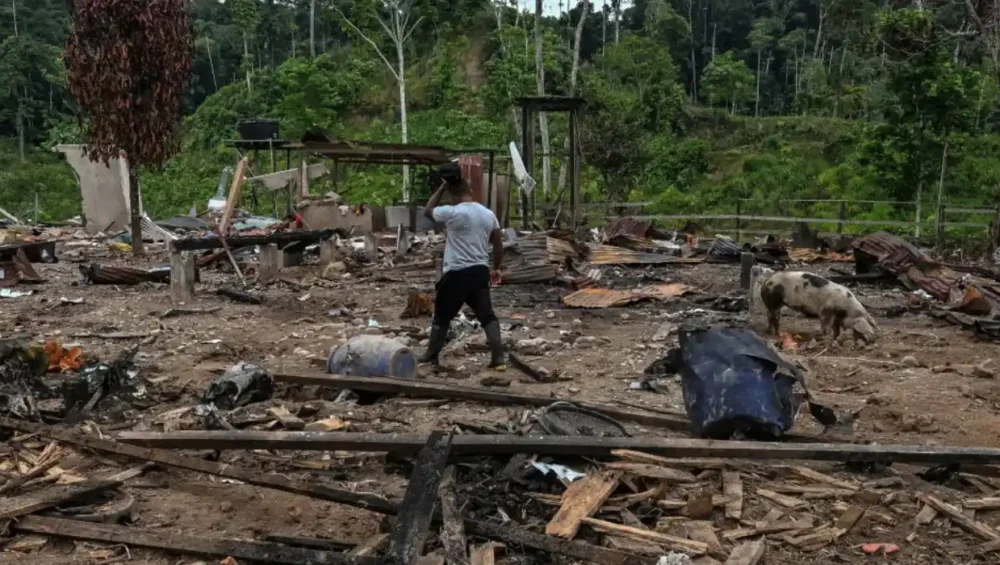
The deepening US-Ecuador security cooperation is now facing one of its most serious tests, as allegations of torture, arbitrary detention, unexplained drone attacks on fishing boats, and the disappearance of several fishermen cast a long shadow over the bilateral anti-crime agenda. Human Rights Watch says the partnership is expanding even as Ecuadorian forces are accused of severe abuses, while other rights groups and international media have raised parallel questions about who was behind maritime strikes and what happened to the missing crews.
The particular significance of the collaboration lies in the fact that the security link is constructed by both governments as an inevitable response to the existence of criminal activity, but the current set of allegations demonstrates inadequate security measures, lack of transparency and significant harm caused to civilians. Thus, the reality of the discussion is not limited to the problem of criminal activities or drugs anymore; it is the question of accountability within the context of security cooperation.
The Core Allegations
Human Rights Watch’s July 2026 report says the United States and Ecuador are deepening cooperation against a backdrop of abuse claims that include serious human rights violations by Ecuadorian forces, unexplained attacks on fishing boats, and the disappearance of fishermen. The report, titled A Dangerous Partnership: Abuses, Unanswered Questions, and US-Ecuador Security Cooperation, is a 94-page document that argues the arrangement is unfolding with insufficient controls and unclear oversight. HRW’s central concern is not a single incident, but a pattern in which force is being used before accountability systems are in place.
One of the most alarming claims is about the torture and arbitrary arrest of civilians during a joint operation by the forces of the U.S. and Ecuador. AP noted that the operation occurred in Ecuador’s San Martín region, close to the Colombia border, from March 1 to March 6. During the operation, four peasants were arrested and, after being tortured, set free without any charge. One of the surviving victims said he was bound, beaten, drowned, choked with plastic bags, and electrified to unconsciousness several times. If proven true, such claims would indicate not only excess of force but also violation of fundamental rights.
Fishermen, Boats, and Missing Crews
The charges related to maritime attacks are just as grave and have made their way into being significant pieces of the conflict. As HRW claims, three Ecuadorian fishing ships were attacked from January 13 till March 18, resulting in four fishermen injured and eight missing around the Galápagos Islands. In the following coverage of the issue, the victims’ relatives and survivors gave a number of conflicting testimonies of drone attacks, gunmen, and transfer between the ships without a proper clarification of who was behind it all. According to Amnesty International, eight fishermen are missing after the attacks on the ship Fiorella, and they requested the investigation into the possible involvement of the USA in the attack on the Ecuadorian ship.
The Guardian states that the crews of several Ecuadorian ships claim to be under the attack of US strikes, while the Pentagon denies the involvement in the destruction of the ships. One of the important pieces of information stated in different stories was that the people detained by the gunmen could speak English, and after that, they were transferred to the hands of Salvadoran coast guards.
What HRW Says
The report by HRW is the latest and most detailed critique of the bilateral security relationship. In this respect, it asserts that the cooperation occurs under circumstances which are “too opaque and dangerous,” and the anti-crime mission itself might be causing much more damage to the local populations than providing safety to them. According to Juanita Goebertus, the Director of HRW for the Americas region, the mission looks spectacular but could be ineffective and even dangerous, as the protection of civilians is rather insufficient. Also, there is no credible evidence of using the seized properties by the armed gangs, which is important as the legitimacy of the mission is based on this assumption.
AP news service concluded that the report provides evidence of major human rights abuses committed during the operations carried out by the Ecuadorian troops with US assistance/participation, and it notes that neither government provided any clear answers to the key questions regarding the responsibility and control. In other words, the position of HRW is not only an accusation but a warning.
Official Positions and Denials
The Ecuadorian government has defended the wider security partnership as part of its fight against transnational criminal groups, while Washington has promoted cooperation as a counter-narcotics and anti-crime effort. The political logic is straightforward: Ecuador is under pressure from organized crime, and the United States wants to support a regional partner facing instability. But the human-rights critique is that these justifications do not excuse abuses, especially when the alleged victims are farmers, fishermen, and local workers rather than cartel commanders.
The Pentagon has denied responsibility in the boat-strike episodes, and neither government has publicly provided a full, credible explanation that answers the survivors’ claims. That gap matters because denial alone does not settle questions of jurisdiction, command, or operational control when the alleged incidents involve uniformed personnel, multinational cooperation, and missing civilians. Billy Navarrete of Ecuador’s Permanent Committee for Human Rights said both governments have responded to the allegations with “deaf ears,” underscoring the sense among rights defenders that the official response is evasive rather than transparent.
Timeline and Scale
This chronology demonstrates how fast this matter became escalated. Although the report by AP stated that joint military operations were being conducted in March 2026, the information exchange and logistics assistance provided by the US had actually been taking place for more than one year prior to that time period. The US Homeland Security Secretary, Kristie Noem, visited Ecuador in November 2025 and March 2026, while President Trump had invited Ecuador’s president to join the “Escudo de las Américas” alliance in March. These details help to explain why this case is important not only for Ecuador but for the entire country since it is linked to the broader US strategy within this region.
This is the reason why the numerical details from the reports have an importance. HRW’s report highlights three properties that were attacked during the border operation, four workers that were detained and alleged to be tortured, three fishing boats that were attacked, four fishermen who were injured and eight missing fishermen. The attacks at sea were carried out in the eastern Pacific near Galápagos region, whereas abuses at the border were committed in the San Martín region.
Why This Matters
The phenomenon has implications far beyond Ecuador’s borders because it reflects a broader dilemma in modern security cooperation: can governments fight crime and armed groups without normalizing abuse against civilians? HRW’s answer is effectively no, at least not under the current safeguards. The report implies that when operations are secretive, oversight is weak, and rules are unclear, civilian casualties and disappearances can become embedded in the system rather than treated as exceptions.
There is also a legal and diplomatic dimension. Allegations of torture, arbitrary detention, and forced disappearance trigger serious human-rights concerns under international law, while unexplained maritime attacks raise questions about the lawful use of force, command responsibility, and state accountability. For Washington, the issue is reputational as well as operational: support for a partner accused of abuse can undermine the credibility of U.S. human-rights messaging elsewhere. For Quito, the risk is domestic legitimacy, because security partnerships that do not protect civilians can quickly erode public trust.
The Bigger Political Context
In fact, one could say that the wider political context here is that Ecuador’s administration has resorted to taking tough measures in security matters due to increasing power of violence and criminal organizations, whereas for the United States, Ecuador is a strategically important ally. This provides the reason why cooperation is progressing rapidly, but also a reason for the omissions – because of the need to develop their relationship, both states have to continue acting despite the accusations that are raised. The human rights groups warn that this is how the problems are not being dealt with. Meanwhile, the family members of the fishermen are still searching for information on where their loved ones have been taken and why. Some sources say that the missing are probably alive, but the family members are sure that the government needs to clarify the situation and where the men were taken.