
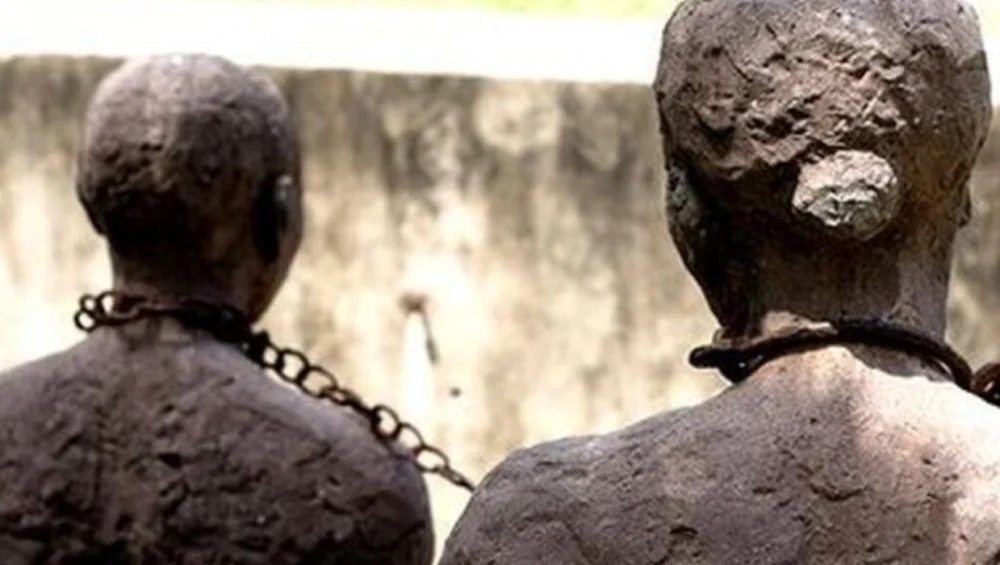
The United Nations has just redrawn the legal and moral map for one of the most contested debates in international justice. On 31 August 2026, the UN Committee on the Elimination of Racial Discrimination (CERD) adopted General Recommendation No. 40, declaring that states party to the 1965 International Convention on the Elimination of All Forms of Racial Discrimination (ICERD) are legally obliged to consider and implement broad reparations for the transatlantic slave trade and racialised chattel slavery.
For human rights advocates, this is not merely a new policy paper. It is a carefully constructed legal argument that reframes slavery not as a closed historical chapter, but as a continuing structural injury that international law now requires states to address through concrete, transformative measures.
The legal pivot: From “was it illegal then?” to “what must states do now?”
The intertemporal doctrine has frequently been used by governments and courts to circumvent reparations cases because of the belief that any action can only be assessed based on the law prevailing at the time and not based on contemporary standards. Since slavery was legal in many nations and colonies from the 16th to the 19th century, the state is not liable according to such a line of argumentation. This is a trap which CERD has carefully avoided in making General Recommendation No. 40.
The text states clearly that
“irrespective of the legal characterisation of the original historical acts, States Parties remain bound by their present obligations under the Convention to eliminate contemporary racial discrimination and address structural inequalities and other continuing consequences linked to colonialism, the trafficking in enslaved Africans and racialised chattel slavery.”
In other words, the question is no longer only whether slavery was a crime under 18th‑century law. The core issue, under CERD’s reading, is whether states today are fulfilling their duty to eliminate racial discrimination and dismantle structures that perpetuate its legacy.
The committee goes further, asserting that denying effective reparatory justice is itself “a distinct form of racial discrimination” under Article 2 of ICERD. This transforms reparations from a political demand into a human rights obligation for the 182 states that have ratified the convention, including the United States, United Kingdom, France, Portugal and other major slave‑trading powers.
A broad definition of reparatory justice
General Recommendation 40 is explicit: reparations are not synonymous with cash payments. The document defines reparatory justice as a comprehensive package combining monetary, non‑monetary and structural measures.
The committee outlines five interlocking pillars:
- Restitution, aimed at restoring rights, property or status where possible;
- Compensation, covering both economic losses and non‑economic harm such as pain, suffering and loss of dignity;
- Rehabilitation, including psychosocial, medical, legal and educational support for affected individuals and communities;
- Satisfaction, encompassing truth‑telling, public acknowledgement, apologies and memorialisation;
- Guarantees of non‑repetition, meaning legal and institutional reforms designed to prevent the recurrence of racial discrimination rooted in slavery’s legacy.
CERD stresses that
“States parties must implement comprehensive reparatory measures for people of African descent, covering all aspects of remedies.”
The guidance makes clear that
“reparatory justice combined ‘a wide range of measures conceived as monetary, non-monetary and structural’.”
This breadth is intentional. The committee argues that the transatlantic slave trade
“distorted global economic relations by distributing unjustly accumulated wealth across societies and borders, creating shared responsibility for its enduring effects.”
If the harm is structural, the remedy must be structural as well.
Who is covered and who bears responsibility?
General Recommendation 40 places people of African descent at the center of reparation measures as the beneficiaries. However, the recommendation is broad in scope in terms of responsibility. The committee notes that the obligation applies to states that were involved in the transatlantic African slave trade both directly and indirectly. This would involve states that had organized, provided finance for the transportation of slaves, passed laws in support of slavery, enforced racial discrimination, or gained economic benefit through slave-produced capital and goods. Notably, CERD does not only deal with state actors. In this case, General Recommendation 40 explicitly requests states to ensure that private and non-State actors, such as religious organizations, universities, companies, banks, insurers, financial institutions, among others, that participated in, supported or benefited from trafficking in enslaved Africans, racialized chattel slavery and associated colonial practices make contributions towards reparations
“in a manner commensurate with their involvement and the benefits they obtained.”
Truth, education and memorialisation as core obligations
Beyond money and policy, CERD places heavy emphasis on truth and memory. The committee says states have an educational obligation
“to investigate and disclose the full truth about transatlantic chattel slavery.”
This includes:
- Opening state and private archives related to slavery and the slave trade;
- Establishing independent truth commissions to document the scale, mechanisms and lasting impacts of racialised chattel slavery;
- Integrating accurate, comprehensive histories of slavery and its legacies into school curricula and public discourse;
- Combating misinformation and ideologies of racial superiority that sanitise or erase this history.
Memorialisation is treated as equally central. States are called upon to use public spaces, monuments, museums and days of remembrance to recognise both the atrocities committed and the contributions of people of African descent.
The numbers behind the moral claim
The 40th general recommendation is based on grim historical truths. The document states again that at least 12.5 million Africans have been forcibly transported to the Americas between the 15th and 19th centuries, calling it “the greatest forced movement of peoples ever known in human history.” Many more people perished in slavery raids or died during or shortly after the journey and because of the destabilization of Africa’s regions through the trade of slaves. According to the committee, such great loss of people and exploitation of their labor led to fortunes, to the creation of industrial economy and financial systems of the world and left descendants of the enslaved people at a disadvantaged position in terms of wealth, health, education and political power.
A human rights lens on a centuries‑old wound
In regard to human rights, the significance of General Recommendation 40 is that it will not treat the issue of slavery as a historical problem. The recommendation asserts that the wrongdoings associated with the enslavement of Africans and racialized chattel slavery have ongoing effects through structural discrimination and inequality and, therefore, result in state duties of reparatory justice.