
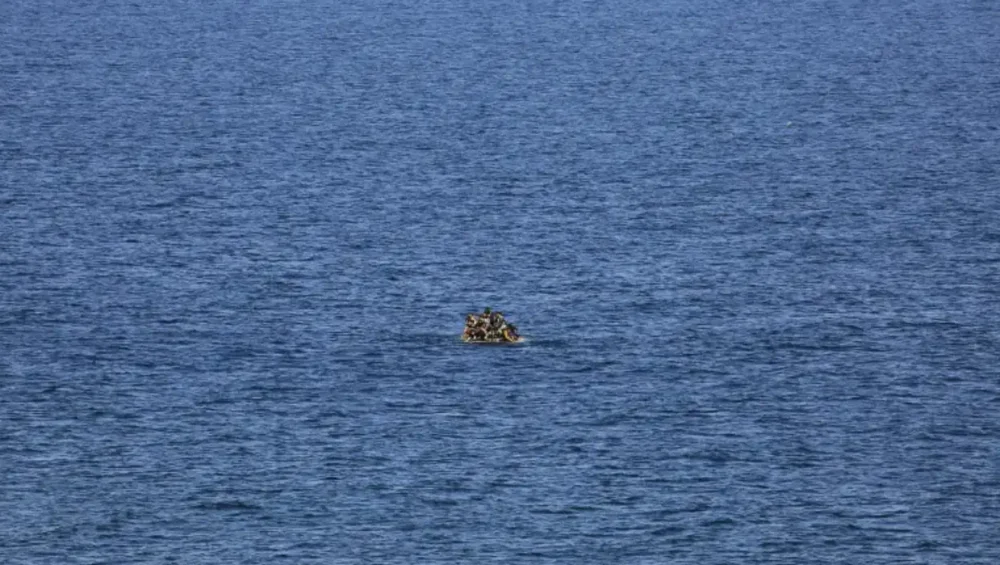
At least 13 Tunisians are missing after a migrant boat sank off the Tunisian coast while sailing towards Italy, according to a migrant rights group. Two people were rescued from the boat, which set off early on Thursday, Mostafa Abdelkebir, the head of the Tunisian Observatory for Human Rights, said on Saturday. The incident, disclosed on August 22, 2026, underscores the enduring lethality of the central Mediterranean route even as departures from Tunisia have declined under tighter controls and European-backed enforcement.
The Incident: What Is Known So Far
The vessel left Tunisia’s coast in the early hours of Thursday, August 20, 2026, carrying Tunisian nationals attempting the hazardous crossing to Italy. By Saturday, the only confirmed outcomes were grim: at least 13 people missing and two survivors pulled from the sea by a local boat. Mostafa Abdelkebir, whose organization monitors migrant rights and maritime incidents, provided the first detailed account, stating that
“the boat set off early on Thursday”
and that “two people were rescued” from the wreckage.
According to Abdelkebir, in addition, one of the survivors claimed to have been “stranded at sea for hours,” following the capsizing of the ship, and the other one was in “critical condition.” These facts, though meager, point to the usual and alarming pattern of a small, overcrowded boat that has fallen prey to the harsh waves or mechanical faults that have left the passengers vulnerable to drowning and/or hypothermia, and drifting in the high seas without any rescue services nearby. The exact cause of the sinking remains unknown at present. There has been no specific official statement made by the Tunisian authorities on the matter at present. Therefore, the account provided by the rights organization is the only available one.
A Route That Remains Deadly Despite Fewer Departures
One of the most lethal migration routes continues to be the central Mediterranean, through which people originating from Africa and the Middle East seek to reach Europe, traveling aboard overcrowded and possibly seaworthiness questionable vessels. While the number of departures from Tunisia has significantly reduced over the course of the past two years, due to a crackdown on migrants along with stricter controls in the maritime environment, supported by European funds and modern border-control technology, notably by Italy, the risk associated with each attempt at crossing may not have necessarily decreased. As departures are curtailed while the demand persists, smuggling gangs can resort to new tactics, such as employing smaller boats that are harder to spot; traveling under unfavorable conditions or during nighttime hours; as well as filling each vessel with fewer travelers to prevent detection, which can lead to an increased frequency of departures and overall risk exposure for migrants.
The fact that the incident took place in August is rather telling in that the August 20 boat sinking follows a well-known pattern of a relatively short journey from Tunisia to Italy becoming deadly because of weather conditions, vessel’s state, or navigational errors. Also, the fact that both survivors in this particular case were rescued by a local boat shows how migrant rescues continue to occur ad hoc rather than through organized assistance by the state or international non-governmental organizations.
The Human Toll Behind the Numbers
Behind the figure of “at least 13 missing” are families left without closure, communities grappling with loss, and a national conversation about why young Tunisians continue to risk their lives at sea. The missing are Tunisian nationals, which adds a layer of domestic urgency: this is not only a migration story but also a story about internal pressures—economic stagnation, limited opportunities, and social frustration—that drive citizens to attempt irregular crossings despite known dangers.
Although Abdelkebir’s narrative is rather limited, it is one that humanizes the incident through the voices of the victims. For example, a victim describing how he was “stranded at sea for hours” highlights the horror of drifting helplessly without knowing if there will be any rescue, while another victim being in a “critical condition” highlights the physical costs of such trips even for those who survive the capsizing incident. Such information is significant since it helps to bring out the personal nature of statistics by making the reader realize that behind every number is not just numbers but an interrupted life, a grieving family, and a set of factors which could have been prevented if only there were a different scenario. In a country like Tunisia, where migration has turned into an occupation and a political topic, such incidents raise debates regarding the accountability of boat capsizing and the responsibilities of states towards preventing and handling departures.
Policy Backdrop: EU–Tunisia Cooperation and Its Critics
The broader context of this tragedy cannot be separated from the contentious EU–Tunisia migration partnership. In a statement issued last month, Human Rights Watch, Amnesty International, and dozens of other groups said the EU–Tunisia migration deal had “fuelled and normalised serious abuses” against migrants and asylum seekers in Tunisia, and called on the EU to “suspend funding” for migration and border-control activities involving Tunisian security forces.
According to critics, external funding and equipment aimed at border security have not only resulted in fewer departures but have also armed security forces with bad human rights records, leading to arbitrary arrests, forcible returns, and violent treatment of refugees. In their view, what ensues is not safe migration but rather secret and dangerous migration, as well as an environment where deaths such as the one that took place in August are more frequent and under-reported. Tunisia claims to be suffering from one of the largest migratory waves in its history, as President Kais Saied claimed in 2023 that the migratory wave had the objective of changing the demographic structure of the country. This discourse is part of the reason why there has been a securitization of migration flows, focusing on preventing and stopping rather than protecting people and facilitating pathways to safety.
The Information Gap: Rights Groups as First Responders
In the absence of an official Tunisian government statement on this incident, the Tunisian Observatory for Human Rights has become the de facto source of record. This reliance on civil society to document maritime disasters is not new, but it raises important questions about transparency, accountability, and the state’s role in crisis communication. When rights groups are the primary conduits of information, there is a risk that data remains fragmented, verification is delayed, and policy responses are slower to materialize.
Abdelkebir’s role as both advocate and informant highlights a dual reality: on one hand, NGOs fill critical gaps in monitoring and reporting; on the other, their prominence can inadvertently allow states to offload responsibility for communication and investigation. For journalists and researchers, this means triangulating accounts, seeking corroborating evidence, and pressing authorities for official updates—even when initial reports come from non-state actors.
What This Means for Tunisia and the Region
The 20th of August sinking is a miniature reflection of what the central Mediterranean migration is going through in general. It is a demonstration of how aggressive approaches could reduce visible migration flows but not remove risks; of how human rights and border security issues converge and of how insufficient official communication may result in a misperception of the scope of the tragedies taking place. For Tunisia, the tragedy is a dual one: it means facing the price paid by humans due to migration policy and the effectiveness of deterrent policy as such.
For the EU and its member states, for example, Italy, the tragedy means realization that the money spent on border control and equipment used for it cannot ensure safety of migration itself. If there are no efforts to develop legal routes of migration and protection mechanisms along with holding accountable for abuse cases, the central Mediterranean will always be a place where people die during migration to a new life. Human rights activists asking for the “suspension of funding for border control activities” is clearly challenging the status quo.