
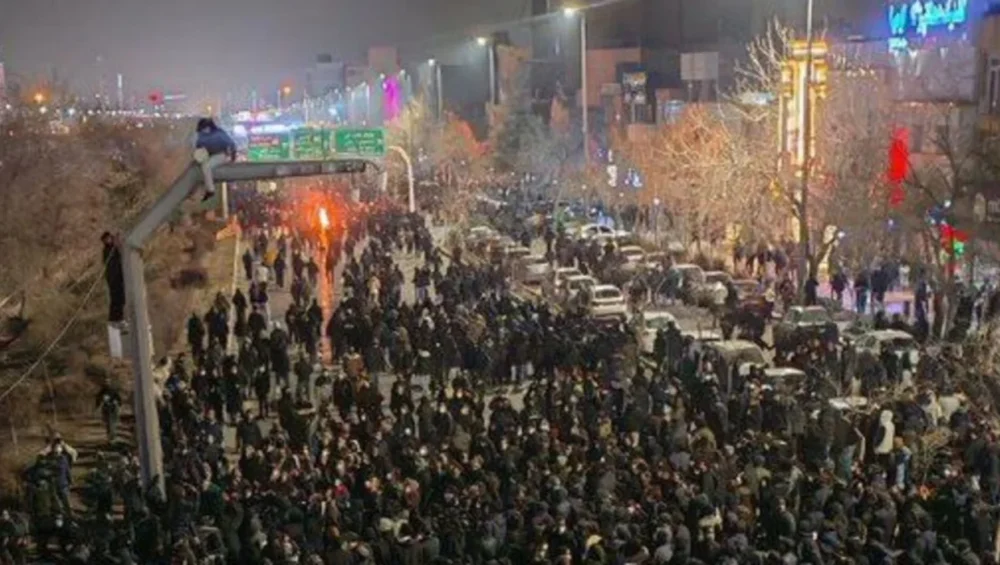
The United Nations has concluded that many of the serious human rights violations committed by Iranian authorities during the suppression of nationwide protests in January 2026 amount to crimes against humanity, bringing renewed international attention to the scale and organisation of the crackdown. The findings of the Independent International Fact-Finding Mission on the Islamic Republic of Iran describe a pattern extending beyond individual incidents of excessive force. Investigators documented killings, severe injuries, mass arrests, torture and ill-treatment, interference with medical care, communications restrictions, enforced disappearance concerns and intensified use of the death penalty.
According to the Mission, these acts formed part of a widespread and systematic attack directed against a civilian population, including protesters, children, supporters and people perceived by authorities as dissenting or opposing actors. The findings are significant because they place the January crackdown within the framework of international criminal law rather than treating the violence solely as a series of isolated abuses.
What Did the UN Find About the January Protests?
The protests began on 28 December 2025 and spread across all 31 provinces and more than 200 cities, drawing people from different sections of Iranian society. The Fact-Finding Mission interviewed 73 people and examined satellite imagery, photographs, videos, medical records and information supplied by credible human rights organisations and experts. It was unable to establish a definitive casualty figure, in part because Iranian government figures lacked sufficient detail and differed substantially from information gathered by independent organisations.
Nevertheless, the Mission said it had strong grounds to believe that the actual number of deaths and injuries was significantly higher than the figures reported by the Iranian Government. This uncertainty over the final death toll is itself an important part of the accountability problem. Where communications are restricted, independent investigators lack access and families cannot reliably establish the fate of relatives, documenting the full scale of violations becomes considerably more difficult.
How Did Security Forces Use Lethal Force?
The Mission identified repeated instances in which security forces used lethal force against protesters who did not present an imminent threat of death or serious injury. Investigators documented a pattern involving tear gas followed by shotgun fire using metal pellets. Medical evidence showed injuries to the eyes, head, chest and upper body, while witnesses described rifle fire from rooftops and other elevated positions.
The severity of the injuries was particularly pronounced among people struck in the eyes. According to the findings, more than 700 people sought treatment for eye injuries at Farabi Hospital in Tehran between 8 and 10 January, with some suffering severe or total loss of vision. The Mission also received witness accounts of people being shot while fleeing. Such findings raise fundamental questions about whether force was being used to address immediate security threats or to suppress civilian protest through lethal means.
Children Were Among the Victims
The crackdown also affected children. The Mission reported that a credible human rights organisation had collected the names of at least 221 children killed during the protests. The figure was not presented as a final casualty count, and the Mission noted that some of those identified were very young, including six children under the age of 10 and two reportedly aged only two.
The presence of children among those killed and seriously injured adds another dimension to the humanitarian consequences of the crackdown. It also underscores the difficulty of assessing the full civilian impact when reliable access to information remains restricted.
Hospitals Became Part of the Repression
The UN findings indicate that the consequences of the crackdown extended into Iran’s healthcare system. Medical facilities in at least nine provinces were reportedly operating beyond capacity because of the number of injured people requiring urgent treatment. At the same time, security forces monitored hospitals, searched for injured protesters and, in some cases, arrested or detained patients or people accompanying them.
The Mission also received information that healthcare workers were threatened, intimidated, arrested or detained for treating protesters or objecting to the presence of security personnel inside medical facilities. This had a direct effect on access to medical care. Some injured people reportedly delayed or avoided treatment because they feared identification, arrest or detention. For families and victims, the result was therefore not simply a violent confrontation in the streets. Fear of state action could continue even after someone had been wounded and needed emergency medical attention.
The Internet Shutdown Complicated the Search for Truth
Information control became another central feature of the crackdown. On 8 January 2026, Iranian authorities imposed a nationwide shutdown of internet and mobile communications during the most violent phase of the protests. According to the Fact-Finding Mission, the shutdown lasted nearly five months, making it the longest nationwide internet shutdown on record.
During 8 and 9 January, virtually all digital communications were suspended nationwide apart from digital landline telephone services. This meant that people struggled to contact relatives, seek emergency assistance, verify information or determine what was happening in other parts of the country. For human-rights investigations, the consequences were equally serious. Restrictions on communication can make it harder for witnesses to document abuses and for families to establish the whereabouts of missing or detained relatives. The UN Human Rights Council had already expressed concern in January over the communications blackout and called for an urgent investigation into violations associated with the protests.
Mass Arrests and Torture Deepened the Crisis
The crackdown did not end when protesters left the streets. The Mission received information concerning large-scale arrests and detention, including the detention of protesters, children and healthcare workers. Lawyers assisting protesters were reportedly summoned, while people who publicly criticised the use of force also faced detention.
Investigators documented allegations involving torture and ill-treatment, prolonged solitary confinement, deprivation of prescribed medication and lengthy interrogations without access to a lawyer. Where families were unable to establish the fate or whereabouts of detained relatives, the Mission said this raised concerns about enforced disappearances. The pattern described by the Mission therefore reaches from public demonstrations into detention facilities and judicial proceedings.
Executions Added Another Layer of Repression
The use of the death penalty has become another major concern following the protests. The Mission reported that the Iranian Government had announced at least 58 executions on security-related charges since the beginning of 2026, including 29 people executed in connection with the 2025/26 protests since March. More than 70 people, including women and juveniles, were reportedly still at imminent risk of being sentenced to death or executed in connection with the protests.
The Mission also identified serious fair-trial concerns, including expedited proceedings, restrictions on access to lawyers, limited access to case information, closed hearings and restricted opportunities for appeal. Allegations that confessions were obtained through torture add further concerns about the reliability and legality of some proceedings. The Mission specifically stated that imposing the death penalty on people who were under 18 at the time of the alleged offence is prohibited under international human rights law. It identified at least three people sentenced to death who were under 18 when the alleged offences occurred.
Why Does the UN Classification Matter?
The classification of violations as crimes against humanity carries significance beyond the description of individual abuses. The Fact-Finding Mission concluded that many of the documented violations amounted to murder, imprisonment and other severe deprivation of physical liberty, torture and other inhumane acts committed as part of a widespread and systematic attack against a civilian population.
This does not mean every individual incident documented during the protests has automatically been adjudicated as a crime against humanity by a court. Rather, the UN investigative body has made a legal assessment based on the evidence available to it. That distinction matters for accountability. International criminal law focuses not only on what happened to individual victims but also on whether serious acts formed part of a broader organised or systematic attack against civilians. The Mission’s findings provide an evidentiary framework for examining that broader pattern.
Families Were Also Drawn Into the Crackdown
The impact of the January violence did not end with deaths, injuries or arrests. The Mission documented allegations that authorities delayed or refused to release bodies and, in some cases, demanded payment. Families were reportedly denied death certificates or pressured to sign statements attributing deaths to terrorists or falsely identifying deceased relatives as members of security forces.
Restrictions also reportedly affected funerals and memorial ceremonies. Authorities limited the number of mourners, restricted burial locations and intimidated families seeking to commemorate those who had died. For relatives seeking answers, these practices can create another layer of uncertainty. The question of how a person died becomes linked to the question of whether the family is permitted to publicly acknowledge that death.
The Accountability Challenge
The central challenge now is what happens after documentation. The UN Mission’s findings add to an expanding body of evidence concerning serious violations in Iran. Earlier in January, the Human Rights Council called for an urgent investigation into allegations connected with the nationwide protests and extended the mandates of the Fact-Finding Mission and the Special Rapporteur on Iran.
UN human-rights officials have also emphasised the importance of preserving evidence because the communications shutdown and lack of access to Iran make independent verification difficult. Documentation therefore serves several purposes. It can help establish the identities of victims, preserve witness accounts, identify patterns of conduct and support future accountability processes. For victims and families, however, documentation is not the same as justice. The unresolved questions include who authorised particular actions, which security units were involved, how command structures operated, whether detainees were unlawfully mistreated and whether officials responsible for serious violations will face credible investigations and prosecution.
The Broader Human Rights Implications
The January crackdown illustrates how repression can operate across several parts of civilian life simultaneously. Lethal force can be followed by hospital surveillance. Arrests can be followed by restricted access to lawyers. Detention can be accompanied by allegations of torture. Communications restrictions can prevent families from finding missing relatives. Death sentences can then extend the consequences long after street demonstrations have ended.
This interconnected pattern is central to understanding why the UN Mission’s findings are broader than a simple account of protest violence. The investigation describes a system in which restrictions on information, detention practices, medical interference, judicial proceedings and executions all formed part of the wider response to dissent. At the same time, the precise scale of the violations remains subject to continued documentation. The Mission itself has acknowledged limitations in establishing a definitive casualty figure. That uncertainty should not be confused with an absence of evidence. It demonstrates the importance of independent access, witness protection and preservation of evidence.
The Road Ahead
The UN findings place renewed pressure on Iranian authorities to address allegations of killings, torture, arbitrary detention, enforced disappearance and unlawful executions connected with the protests. The immediate human-rights concerns extend to people still detained, individuals facing the death penalty and families seeking information about missing or deceased relatives.
The longer-term issue is accountability. Whether the evidence collected by the Fact-Finding Mission contributes to future investigations will depend on the preservation of records, protection of witnesses, continued international scrutiny and the availability of mechanisms capable of examining individual responsibility. For the families affected by the January 2026 crackdown, the central questions remain unresolved: how many people were killed, who was responsible for individual abuses, what happened to those who disappeared, and whether those responsible will ever face justice. The UN’s conclusion that many of the documented violations amount to crimes against humanity marks an important development in establishing the scale and nature of the alleged abuses. The next challenge is turning documentation into a credible path toward truth, accountability and redress for victims.