
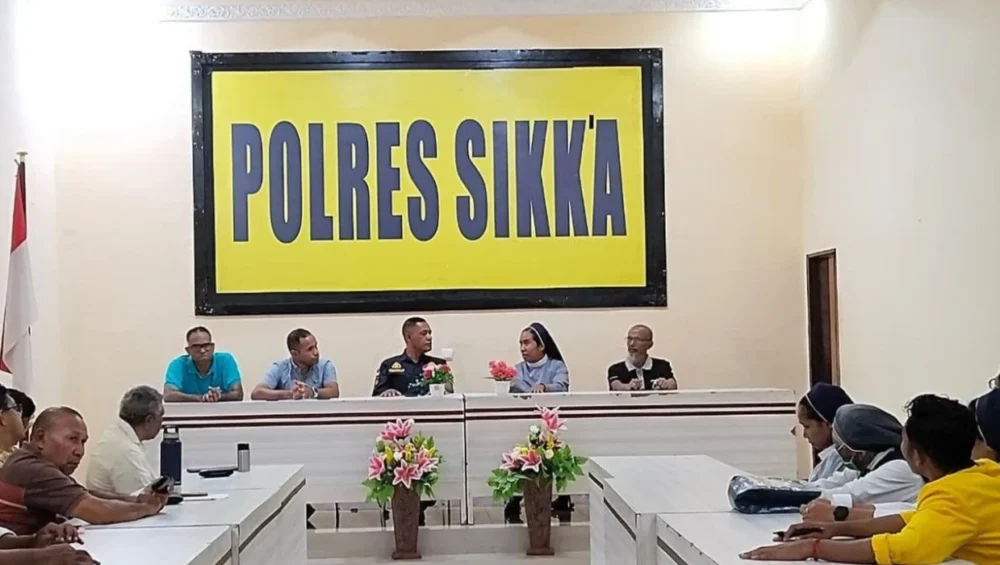
The Flores rescue of 13 young women in a nightclub in Maumere is now a legendary event in the continuing war against human trafficking in Indonesia. Carried out in January 2026 at Sikka Regency on Flores Island, the action was a continuation of long-term intervention by Tim Relawan untuk Kemanusiaan Flores, also known as TRUK-F, or a humanitarian network that was supported by the Church. The subsequent arrest of the owner of the nightclub and his spouse as suspects was later confirmed by the local police, which is a rare example of prompt action by the prosecutors in an area where it is alleged that enforcement is slow.
Victims that were aged between 17 and 26 were allegedly hired on the promise of earning salaries of nine million rupiah per month, accommodation and secure employment. Instead, they were given a fraction of the same and were sexually exploited, abused, and forcibly controlled. There are reports given to defend workers that some workers were forced to abort and were denied fundamental needs. This case is an indication of a larger recruitment model that targeted economically vulnerable women residing in other provinces, especially West Java.
Recruitment Tactics and False Promises
The use of information asymmetry between the rural and urban labor markets is a very common practice by the traffickers. The victims in this case were also recruited externally to East Nusa Tenggara, which explains the inter-provincial nature of recruitment chains. Fraudulent employment opportunities are a recurring system, which is frequently enhanced by social networks and unauthorized agents.
According to provincial advocates, the wage gaps between provinces lead to an effective incentive regime. The financial stability guaranteed by the entertainment establishments masks coercive systems that make the difference between slavery and human trafficking. These instances highlight the importance of pre-departure awareness efforts as well as a closer supervision of the labor intermediaries.
Immediate Response and Victim Protection
After the Flores rescue, TRUK-F took the women to a safe shelter where they were given psychological counseling, legal and education services. Since 2000, the organization has been running safe houses in the area, but it concentrates on the short-term response to the crisis and the long-term reintegration. The church leaders publicly stressed the dignity of the survivors in an attempt to overcome stigma that in most situations discourages the victim to testify.
In February 2026 the governor of West Java personally repatriated most of the women in his home province, and promised to work with investigators to assure their testimony would not be compromised. Although at the beginning some activists were doubting the timing of the repatriation, the authorities assured them that the legal processes would go on inter-provincially.
Church-led Advocacy Gains Momentum
The Flores rescue shows a remarkable increase in the Church’s engagement in anti-trafficking activities. The activities of TRUK-F to find victims, raise community awareness, and work with law enforcement can be viewed as an example of a hybrid approach to faith-based activism and civil society advocacy.
Sister Maria Fransiska Imakulata, the chair of TRUK-F, termed the case an element of a long-standing and troubling trend and highlighted how traffickers target women and minors in economically marginalized communities in systematic ways. Her framing relates the problem to other social justice issues and solidifies collaboration with the state authorities.
Coalition Building and Public Pressure
On February 9, a protest in Maumere unified priests, seminarians, and rights groups that called to be held accountable. This kind of mobilization can be both moralization and politicking. The church networks tend to have grassroots access which is not available to the state agencies especially in the distant or rural regions.
This process of coalition-building can be traced back to previous cases of intervention in East Nusa Tenggara when clergy and activists of other lay groups worked together to reveal labor abuse on palm oil plantations and overseas migration programs. The publicity of religious figures in such endeavors has put trafficking beyond a localized criminal problem to a wider ethical/governance problem.
Institutionalization of Faith-Based Intervention
In addition to the reactive measures, there are the intensified preventive programming by the actors of the church. A formalized awareness effort includes educational seminars, parish-level vigilance committees and associated work with village leaders. These initiatives fit in with the world Catholic guidelines on contemporary slavery and human dignity.
The strategic growth of Church activity does not substitute the role of the state but seals the gaps in implementation. In areas where police have limited resources, the local religious organizations usually tend to be the first in detecting suspicious recruitment trends.
East Nusa Tenggara as a Trafficking Hotspot
Poverty, loss of opportunities and migration rates towards the East Nusa Tenggara have long been identified as the key factors that contribute to trafficking in the province. In 2023, police statistics documented 256 cases of trafficking yet there is advocacy that underreporting is still high.
There is the economic drivers and the geographical vulnerability. All the islands and flores itself serve as an entry point to local exploitation and international migration of labor. Enforcement is complicated due to weak documentation habits and informal labor brokers.
Enforcement Gaps and Legal Framework
Law No. 21 of 2007 of Indonesia criminalizes trafficking, providing strong penalties and protections of the victims. But the level of implementation still varies in the provinces. Cases are frequently stalled because of the difficulty of collecting evidence or discouraging social stigma against cooperating with the investigator.
The Flores rescue shows that there is better coordination between civil society and local police but deep-rooted results of prosecution will define whether deterrence effects will be achieved. The government has indicated that other such facilities in Maumere are also under inspection and a larger dragnet might come.
Social Stigma and Survivor Reintegration
The survivor often faces stigma of the community especially in the conservative regions where identification with the nightlife places can cause moral judgment. TRUK-F and other organizations of its kind focus on trauma-based care and social communications that portray victims as misled and pressured rather than willing participants.
Structural reintegration is a challenge in the long run. A lack of employment options in the native provinces will repeat the process of vulnerability, which has underscored the need to have vocational training and economic empowerment programs.
National and Regional Implications
Flores rescue is being held against the backdrop of the increased attention to the trafficking dynamics in Southeast Asia. The migration corridors in the regions keep exposing the workers to both national and cross-border exploitations. The country of Indonesia has been performing better in the international trafficking evaluation test, but the capacity of shelters and services to victims is under pressure.
In 2025, the central government has presented regulatory changes that are expected to enhance control over the recruitment agencies and the coordination of activity of the provinces. Nevertheless, the enforcement is inconsistent and problems of inter-agency communication remain.
Cross-Provincial Coordination
The case of repatriation of victims to West Java highlights the difficulty of the cross-provincial cases. Procedural clarity is important in ensuring testimony continuity, evidence transfer and witness protection. The law enforcers have committed to well-organized coordination to prevent prosecution interruptions.
To be deterred, it is essential to get convictions of not only the operators of the venue but also recruiters and intermediaries. The interruption of such upstream agents can be more decisive than single venue disruptions.
Scaling the Church-State Model
The Church’s prominent role raises questions about scalability. While TRUK-F’s grassroots networks have proven effective locally, replicating such coordination nationwide would require formalized partnerships and resource allocation. Faith-based organizations possess moral authority and community reach, yet sustained funding and legal backing remain essential.
The Flores rescue illustrates how civil society engagement can catalyze enforcement action. Whether this model becomes institutionalized across Indonesia may depend on political will and the capacity to integrate religious actors within official protection frameworks.
As investigations proceed in Sikka Regency, the case offers a microcosm of Indonesia’s broader trafficking challenge. The convergence of poverty, inter-provincial mobility, and organized exploitation networks demands coordinated responses that extend beyond episodic rescues. The durability of the Church-led surge in advocacy, combined with consistent state enforcement, will shape whether Flores becomes a turning point or another chapter in a cycle that continues to test Indonesia’s resolve.