
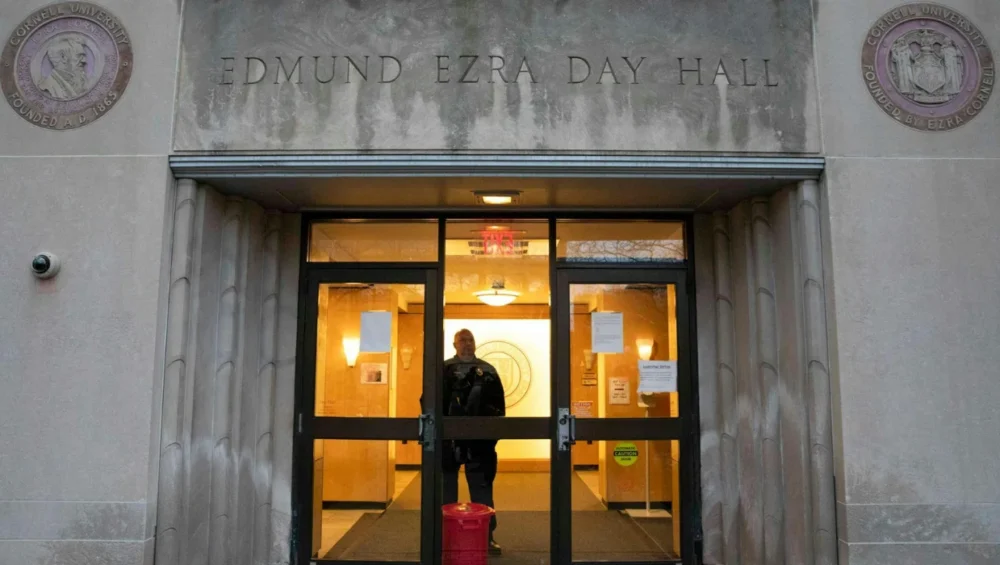
The letter to Cornell University dated October 14 by the Special Rapporteurs of the United Nations is more than a diplomatic warning. This letter represents an important condemnation of how American universities, which are traditionally known to be places of free speech and political liberties, are rapidly being transformed into places of fear and suppression, especially amongst overseas students. The fact that it was sent to Columbia University, Georgetown, Tufts, and the University of Minnesota, in addition to Cornell, shows that it has become a problem that exists in the whole nation.
What makes this letter particularly noteworthy is that it has come from five independent human rights experts appointed by the United Nations Human Rights Council. These Special Rapporteurs are not impartial observers, but are mandated with investigating violations of human rights around the globe. This shows that the situation in American universities has reached a point where it has transcended being an issue in American universities and has become an issue of international concern regarding human rights.
A letter that should have been a wake-up call
It calls attention to the two-student case, Momodou Taal and Amandla Thomas-Johnson, both international students at Cornell and pro-Palestinian activists who fled the United States out of fear of deportation. These cases have come to represent an arc: one in which political activism is treated as a national security threat and as a threat to immigration status.
Taal, who held an F-1 visa, filed a complaint in March 2025 against the Trump administration for violating his First and Fifth Amendment rights by issuing two executive orders aimed at suppressing pro-Palestinian speech. Shortly after he filed his lawsuit, he was instructed to report to Immigration and Customs Enforcement. Thomas-Johnson ran in April 2025 upon discovering that law enforcement were looking for him; his immigration status was revoked the next month.
Both students had been suspended for participating in the September 2024 Statler Hall protest, where more than 100 pro-Palestine demonstrators disrupted a career fair featuring defense contractors Boeing and L3Harris. These events are crucial because they show the intersection of student activism, corporate interests, and state power.
Universities as enforcers, not protectors
The Special Rapporteurs’ letter explicitly criticized “structural changes” in universities that repress solidarity with Palestine. This is not merely a statement of disapproval; it is a warning that campuses have become instruments of state-backed suppression. According to the letter, students are now self-censoring and withdrawing from activism due to deportation fears.
This is a chilling development. Universities are meant to be spaces for debate and dissent, not fear. When students are too afraid to speak because their visa status could be revoked, the university environment becomes political coercion by proxy.
The rights at stake: assembly, speech, and education
The letter expresses grave concerns with regard to the right of expression, assembly, and education. Such rights are not trivial but form the very basis of the Universal Declaration of Human Rights and the International Covenant on Economic, Social and Cultural Rights. The impact of an university’s punishment of students for exercising the right of assembly, especially on foreign students, is far-reaching in nature.
The Special Rapporteurs draw attention to how disciplinary actions can have a disproportionate impact on academic development. Students are being suspended, penalized, or even expelled, often in instances that involved their politically motivated acts and not violent or criminal ones.
The U.N.. inquiry: a symptom of a larger pattern
This investigation was initiated after two University of Chicago law clinics filed a complaint on June 11. The complaint included eight students across several universities, including Taal and Thomas-Johnson. The clinics argued that universities were violating fundamental human rights by disciplining students for peaceful protest.
The fact that U.N. experts took the complaint seriously and sent formal letters to five universities indicates that the issue has international resonance. It also shows that universities in the United States are being viewed as actors in human rights violations, not merely educational institutions.
The demand for structural reform
Cornell’s undergraduate student body overwhelmingly passed a referendum on Dec. 15 calling for an independent disciplinary system. This reflects growing distrust in the university’s internal processes, particularly the Office of Student Code of Conduct (OSCC).
Student Assembly members and Respondent Code Counselors have criticized OSCC’s use of temporary suspensions and other sanctions, describing them as excessive and unjust. The university itself reports that 81 disciplinary actions have been taken since October 2023 against students accused of violating university policies, including dismissals and suspensions. But these numbers alone do not capture the atmosphere of intimidation and fear.
Why Cornell’s silence is the real issue
The U.N. letter demanded that Cornell provide detailed information about how it plans to safeguard freedom of expression and assembly under international human rights standards. Yet no response has been publicly released, and the university did not respond to requests for comment. This silence is telling. It suggests that the university may not have a coherent plan to protect student rights, or that it is unwilling to acknowledge its role in a larger political crackdown.
A chilling precedent for international students
International students are uniquely vulnerable. Their presence in the United States depends on maintaining visa status, and their families often have no alternative options if deportation occurs. When universities collaborate—directly or indirectly—with government agencies to punish protest, international students become collateral victims of political conflict.
The letter suggests that these students are being treated as “soft targets” because they are easier to silence. Deportation fear creates a powerful deterrent that suppresses dissent without the need for overt violence.
What this means for American higher education
The U.N. letter is a harsh reminder that universities have shifted from being guardians of free speech to becoming extensions of state policy. The repression of pro-Palestinian activism has become a test case for how far universities will go to align with political and national security agendas.
The question now is whether universities will respond with meaningful reform or continue to treat dissent as a disciplinary problem.