
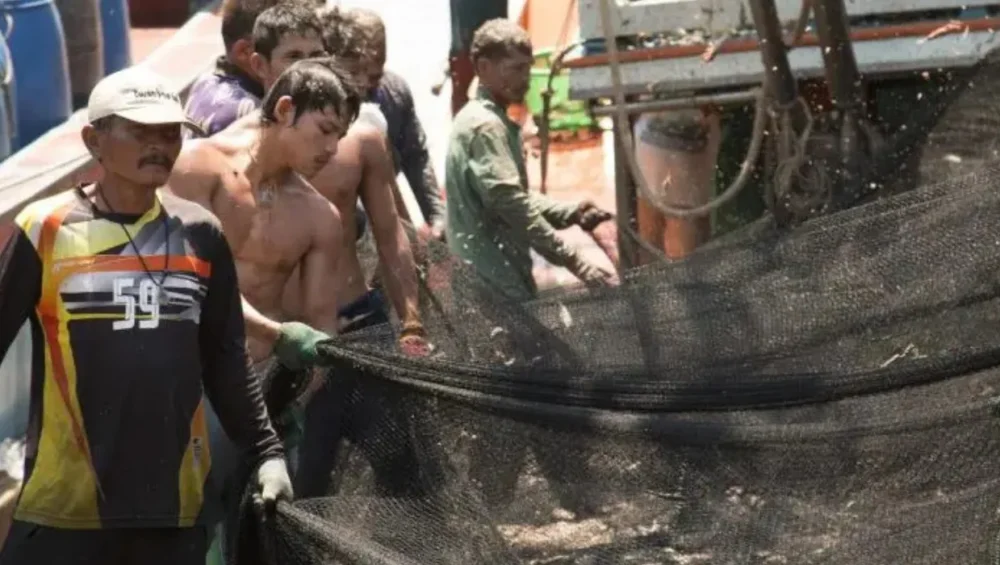
By the year 2025, the scales of modern slavery are only expected to grow, with the issue of forced labor being impactful on an estimated 27.6 million individuals across the globe. Recent estimates of the International Labour Organization indicate that the total number of victims of modern slavery has exceeded 50 million people in the case of forced marriage and forms of trafficking. Analysts observe that the 20 years of international commitments have not led to progress, some areas are even going backward because of the conflicting situation, financial stress, and the deterioration of labor rights.
Asia-Pacific has the highest rate of forced labour totalling over 15 million cases due to the vast manufacturing industries and migration routes. Europe and Central Asia have the highest numbers of victims of more than four million, and 3.8 and 3.6 million in Africa and the Americas respectively. The Arab States have the highest prevalence in comparison to population size as it is indicative of the fact that migrant-driven economies and crises of the region increase the risk exposure.
Understanding demographic vulnerabilities
About 3.3 million victims of forced labor are made up of children around the world. Increasing household economic strains, the long-running conflict in countries like Sudan and Myanmar and lack of investment in education have overturned previous progress in child protection. Even though the number of child labour in general has decreased since 2000, organisations that track trends in 2025 worry that the pace at which it has decreased has been sluggish in decades.
Gender-driven exploitation patterns
Of the total victims of forced labor, 61 percent are women and girls, which depicts a long-standing exploitation trend that is based on gender. Sexual exploitation trafficking is amongst the most lucrative criminal businesses across the globe. According to UN agencies, forced marriage, which has been experienced by approximately 22 million individuals, keeps spreading in the case of humanitarian crises when the displacement interferes with legal protection.
Migrant and refugee risks
Migrant employees are still one of the most vulnerable classes. With the increase in displacement through political instability, economic collapse or climate shocks, gaps in border management and asylum systems are exploited to a greater extent by traffickers. According to UNODC data published at the beginning of 2025, the number of identified victims of trafficking in the global context has increased by a quarter of those before the pandemic, and cases of forced labor cases are soaring.
The financial machinery sustaining exploitation
The scale of forced labor is reflected in the fact that every year it brings around 236 billion in illegal income, which generates the forced labor as one of the most profitable criminal economies. This figure is estimated to represent the theft of unpaid wages by the workers in agriculture, domestic work, construction, manufacturing, and the illicit markets. In the view of economists, these types of profits distort the legitimate industries by lowering the cost of production through exploitation by allowing abusive employers to undercut the cooperating entities.
Social financial expenses are also high. Nations dispose of as much as 250,000 dollars a victim on enforcing, medical, legal and rehabilitation. This puts burdens on the developing economies with high external borrowing rates and short fiscal space. These problems are aggravated by the global economic slowdown prognosis of 2.6 percent growth in 2025 that makes the chances of vulnerable populations being driven to exploitative circumstances more likely.
Supply chain infiltration and profit drivers
Criminal groups often change operational methods to act in response to pressure on enforcement by incorporating forced labor more deep into supply chains. New exploitative methods are being pointed out by analysts this includes forced involvement in online scams, a trend that is picking up pace in southeast Asia where victims of trafficking have been forced into cybercrime activities.
Agricultural and manufacturing exposure
Massive agricultural exports with large-scale manufacturing centres still depend on sophisticated subcontracting, which hides the working conditions. Anti-slavery organisations underline that, unless forced labour risks are rooted in clear auditing and direct monitoring of workers, even in high regulation markets, they will persist.
Environmental and economic stress
Climate-related catastrophes exacerbate the condition of forced labor by raising the level of migration and annihilating the local livelihoods. According to a study on climate finance, the countries with the most exposure to environmental shocks pay an extra 20 billion a year in interest due to their being high-risk, which makes them vulnerable to economic crises and leads to the exploitation cycles.
Global policy efforts and governance gaps
Repetitive government and international commitments on the eradication of modern slavery have been made as a part of Sustainable Development Goal 8.7. According to the 2025 Trafficking in Persons Report, the legislation and prosecution have been improved, especially in the areas that implemented the extensive anti-forced labor regulations. In spite of this development, privately imposed forced labor, a type which also encompasses coercive employers, traffickers and criminal networks is the most common and hard to control.
Multilateral organisations still demand improved coordination of national legislation, migration policy, and economic development policies. Policymakers believe that enforcement is only not enough to end the structural causes of exploitation when the underlying causes, including poverty, gender inequality, conflict, and climate frailty are not addressed.
Technological monitoring and detection advances
In 2025, the cross-border cooperation was increased by data-sharing programs that are aimed at determining hotspots of forced labor. The Global Data Partnership Against Forced Labor asks governments, civil society groups, and the tech industry to share real-time data, which enhances detecting and assisting survivors.
AI-enabled trafficking pattern analysis
Artificial intelligence is currently helping investigators trace the routes of trafficking, oversee suspicious recruitment operations, as well as to analyze trends across various supply chains. Such innovations accelerate the process of intervention and make the process more accurate, but rights groups warn against excessive use of automated systems that can miss some community-specifics.
Blockchain for supply chain transparency
Pilot programmes have been introduced to use blockchain technology to track the origin of ethically sourced products and verify labor procedures. Although these systems are promising, their use is low and it needs heavy investment by the players in the private sector to scale.
Corporate accountability and compliance pressures
Companies involved in multinational businesses are increasingly under pressure to avoid forced labor in their international activities. Mandatory due diligence, through tightening of regulations in the jurisdiction like the European Union and the United States, requires firms to trace labour conditions across suppliers. However, the compliance is still not even, and a lot of industries cannot have control over remote subcontractors.
Awareness by the consumer has increased tremendously and surveys have shown that there has been increased demand to use the ethically certified products in 2025. This change has pushed certain firms to embrace tougher audits, employee feedback mechanisms and third party checks. However, according to advocacy organizations, reputational gifts cannot replace systematic application of regulations.
The evolving future of modern slavery challenges
The discovery of modern slavery in its entirety is an eye-opening giant that is influenced by the changing economic context, population vulnerability, climate crises, and innovation in criminal activities. Together, these forces, as 2025 unfolds, bring to the fore how deeply ingrained is the aspect of exploitation in the global markets and day-to-day economic exchanges.
Understanding this complication implies that the development in the future will depend on the ability to incorporate economic policy, digital transparency, climate resilience and labor protection in a manner that will eliminate the primary sources of coercion. The future of world action will probably be determined by the ability of these interwoven strategies to keep up with a system that is constantly evolving to take advantage of new opportunities to exploit new vulnerabilities.