
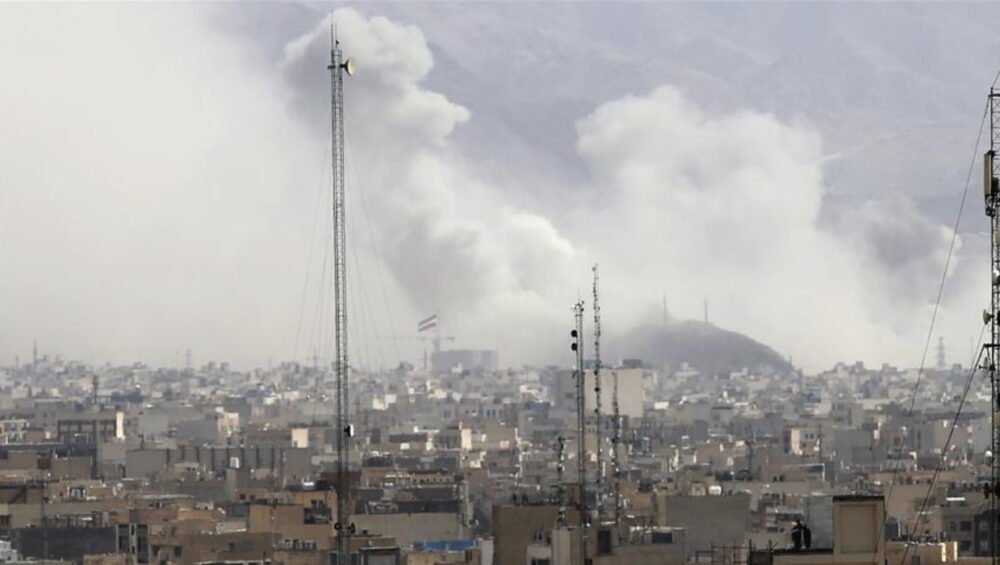
A missile attack on a secondary school of girls in Minab in the Hormozgan province of Iran, March 2, 2026, has quickly become one of the deadliest one-sided attacks on students in the ongoing US-Iran conflict. The Iranian government announced the death of at least 150 people including the majority of girls in the age group of 12-17, and the rest over 200 injured. The rescue operations were still going on the next day as hospitals in the area had problems with capacity.
UNESCO, the educational, scientific, cultural organization of the United Nations gave an exceptionally direct reproach. The attack was declared as a clear violation of the international humanitarian law that safeguards education as explained by the Director-General Audrey Azoulay, making the juridicalization of the strike the main topic of the international discourse instead of restricting the response to the manifestations of concern. Her words were an indication that the agency does not perceive the incident as a collateral tragedy but as a possible violation of laid down standards of warfare.
Iranian leaders blamed U.S. or Israeli troops, with the strike being traced to still ongoing U.S. operations. Washington has not publicly affirmed the targeting details, with broader statements that its campaign is on the military infrastructure. This lack of operational clarity has increased the questioning on whether the legal processes of targeting were adhered to.
Legal Framework Governing Protection of Schools
Minab strike is being discussed in the main aspects of international humanitarian law, especially, rules used to control distinction and proportionality and precautions during attack. Civilian objects, such as schools, are also considered to be under protection unless and during the time when they are utilized by the military.
Proportionality Under Additional Protocol I
Article 51(5)(b) of the 1977 Additional Protocol I to the Geneva Conventions forbids anticipated attacks likely to result in the excess civilian casualties not reasonably proportional to the resulting concrete and direct military benefit. The number of reported deaths in Minab has raised concerns on whether the proportionality calculations were done with rigor.
According to the Iranian media, the school was in an area close to a supposed Islamic Revolutionary Guard Corps location. The closeness to a military target does not necessarily deprive a civilian building of its protection. The juridical standard is whether the school per se was under military use and whether the probable injury to civilians was offset by the military usefulness of the target.
According to legal experts, recent International Criminal Court investigations of assaults against educational institutions in other theaters have put much emphasis on assaulting intelligence and pre-strike examination measures. The proportionality evaluations could even be reflected in international diplomatic and reputational consequences, even though the United States and Iran are not signatories to the Rome Statute.
Distinction and Precautionary Measures
The principle of distinction means that the parties always must distinguish between civilians and combatants. When a school is operating as a pure educational institution between classes, it is presumptively civilian in nature.
The leaders of Iran state that there was no warning given. Effective advance warning should be provided where the circumstances are favorable according to the international humanitarian law. The fact that operational constraints were used as an excuse to forego warning is bound to be part of any independent investigation.
Precautionary duties also require that reasonable care shall be undertaken to ensure there is target checking and less harm is caused. This may involve changing the munitions, the time or strike angles in a densely populated urban environment. The time of the Minab attack at school will always play a role in evaluating the situation as to whether precautions that were possible were depleted.
Conflict Escalation and the Epic Fury Campaign
It was a strike during a growing American military operation called Epic Fury, started on February 28, 2026. This has seen the use of air and naval attacks against Iranian missile bases, naval resources and the infrastructure related to nuclear capabilities. The U.S. officials have defined the campaign as a reaction to the growing regional menaces.
In the first month of March, it was claimed that hundreds of sorties had been made. The number of civilian casualties throughout Iran remains a disputed area with Iranian authorities claiming that there were a number of thousands of deaths due to cumulative attacks whilst that number has not been confirmed independently.
The Minab incidence is a qualitative change due to the fact that the victims of child abuse are concentrated in one educational environment. Even during the long wars, massacres of schools are usually more likely to bring the world to its knees than scattered civilian fatalities.
2025 Legal and Diplomatic Precedents
In 2025, previous US attacks on enrichment plants were criticized by foreign law activist organizations, such as the Center to Constitutional Rights, who cast doubt on the legality of cross-border actions which were not accompanied by an explicit imminent threat. As much as those measures were aimed at strategic infrastructure, it created a trend of legal battle regarding the campaign.
Diplomatic relations around the remains of the 2015 nuclear structure have since been encouraged by the governments of Europe. In a move that prompted Russia and China to cry foul at the United Nations deliberations at the end of 2025, the two nations contended that the escalation would destroy the non-proliferation measures in place. The Minab strike makes those diplomatic fault lines urgent.
Sectarian and Regional Implications
Minab is located in the Sunni dominated province of Hormozgan in a country that is largely Shia Iran. The place of the strike has been a factor that has increased sectarian marginalization sensitivities. Images of blood-streaked school uniforms in rubble circulated by the local media have stoked the outrage of most people, especially in communities that already feel economically and politically marginalized.
The regional actors are on alert to find out whether the incident will lead to retaliatory mobilization via proxy groups. The history of escalation between the United States and Iran has frequently also been carried out indirectly by non-state actors in the Levant region and the Gulf. A strike as one that included children would reinforce the hardline discourses in Iran and make a discussion of de-escalation more difficult internally.
There has also been a nervous reaction of the oil markets. Even minor disturbances of the Strait of Hormuz route have traditionally created volatility. Although there is no reported sustained supply disruption, risk premiums increased during early trading sessions in March as a result of the fear that additional retaliation would trickle into the maritime routes.
Accountability Pathways and Institutional Responses
The independent investigation on the Minab strike has been requested by UN experts who have echoed the call by UNESCO to hold the people accountable. The limited access to the strike location and politicization of the information environment of the conflict, in general, complicate the establishment of facts in real time.
There are structural constraints to legal accountability mechanisms. The US is not a signatory to the international criminal court and Iran has not been cooperative with international investigators in the past. However, when UN agencies and human rights agencies engage in documentation, they impact on the future diplomatic negotiations and sanctions regime.
Within the United States, congressional debate has resurfaced over executive war powers and funding authorities tied to the campaign. Lawmakers from both parties have requested classified briefings on targeting criteria, reflecting domestic as well as international scrutiny.
Education as a Protected Sphere in Armed Conflict
UNESCO’s intervention highlights a broader concern about the erosion of protections for educational institutions in conflict zones. The 2005 Safe Schools Declaration, endorsed by more than 100 states, affirms commitments to safeguard education from attack. While not legally binding in itself, it reinforces existing obligations under international humanitarian law.
Attacks on schools in conflicts in Syria, Yemen, and parts of Africa over the past decade have often resulted in limited accountability. Each new incident risks normalizing the militarization of educational spaces. In Minab, the reported absence of military use by the school, if substantiated, would underscore the fragility of these norms.
Whether independent investigators ultimately determine that the strike constituted a violation of international humanitarian law will depend on detailed evidence about targeting intelligence, military advantage assessments, and precautionary steps taken. Yet even before formal findings emerge, the scale of loss in Minab has already reshaped diplomatic narratives around Epic Fury, placing legal compliance and civilian protection at the forefront of a conflict that shows few signs of immediate containment.