
Florida is currently among the most vulnerable states in the United States regarding human trafficking, and the annual statistics of reported cases, as well as deeply rooted weaknesses, are associated with its economy, which greatly depends on tourism. Records of the state indicate almost 2,100 reported cases in 2023, which is not the first case of similar patterns, with the 781 cases being reported in 2021 having over 2,250 victims. Analysts reveal that such statistics indicate only a small part of the whole activity, as trafficking is likely to take place in a shadowy or temporary environment where the victims are hard to identify.
Central Florida is in the middle of these dynamics. The city of Orlando that receives an annual volume of over 74 million visitors has a history of fighting demand-side risks that are fueled by hospitality, entertainment, and convention industries. Historical metrics are still applicable, such as the city of Orlando being ranked in the 3rd position statewide in 2016 in terms of per-capita calls to the National Human Trafficking Hotline. Law enforcement indicates that they find about 80 percent of their sex trafficking victims in hotels and motels, which demonstrates how the industry has been left vulnerable and that even with a requirement of training, gaps still exist in the industry despite the 2019 House Bill 851 on sex trafficking mandates in Florida.
UCF Student Organization Initiatives
A student organization of UCF is involved in human trafficking awareness creation by designing events, workshops, and peer-to-peer interventions directed at the education of the large and diversified student population of the university. These activities indicate the growing awareness that students especially in the hospitality, tourism, technology, and public service professions are in the best position to detect signs of exploitation in the course of internships, part-time work, or community service.
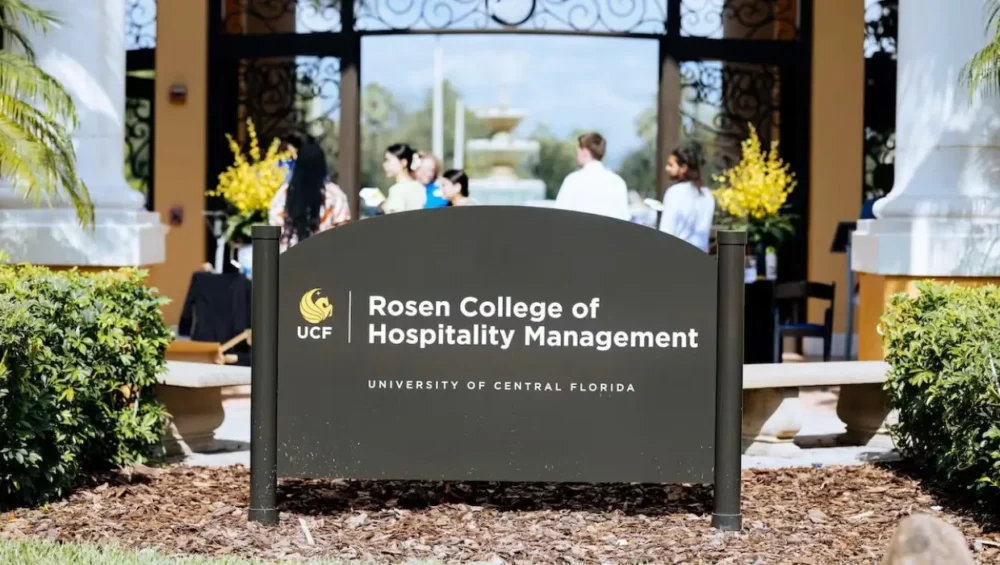
These activities of the organization have increased with institutional programmes. Since 2020, the Rosen College of Hospitality Management at UCF has educated over 5,700 undergraduate students in anti-trafficking-related protocols incorporated into the hospitality coursework. According to faculty members, over 30 students had already reported being subjected to suspicious circumstances during internship, which triggers a reshaping of curriculum in such a way that early-career workers are ready to identify and report evidence of exploitation.
Training Scale And Impact
This model of training increases the student readiness by relating the classroom training to the real world in the industry. These workshops map out signs of behaviors, reporting, and methods that support the victim in events that are victim-based supported by local professionals. These efforts saw the Center of the Study of Human Trafficking and Modern Slavery at UCF achieve an increased presence in the community by 2025 by holding events that recognized 18 community champions such as survivors, educators, law enforcement officials, and nonprofit advocates during the Polaris Star Awards.
Workplace-Relevant Skill Building
Students gain practical frameworks that apply directly to hospitality settings, where long shifts, high turnover, and transient guests can mask criminal activities. Hospitality executives collaborating with UCF emphasize that trained workers strengthen early detection, reducing the lag time between exploitation and intervention.
Recognition Of Real-World Exposure
Faculty stress that the program’s evolution began with student experiences rather than administrative mandates. As one instructor recalled, early reports “highlighted a training gap that industry partners could no longer ignore,” driving the university to scale its commitment.
Collaboration With External Partners
UCF student volunteers work with regional organizations, including United Abolitionists, Inc., which coordinates the Annual Human Trafficking Awareness Conference. The 18th iteration is scheduled for January 22, 2026, at UCF’s Rosen College, featuring panels on survivor experiences, digital exploitation, and technological countermeasures. These partnerships extend student impact beyond the campus, placing them within a broader network of advocates navigating Florida’s complex trafficking landscape.
Shared Knowledge Platforms
Hybrid conference formats allow students to engage with policymakers and technologists examining how recruitment, grooming, and exploitation shift across digital platforms. This exchange keeps student activism aligned with emerging methods traffickers use to avoid detection.
Survivor-Led Approaches
Events emphasize survivor narratives as a foundation for response frameworks, building understanding of how victim pathways intersect with tourism, unstable housing, or economic precarity.
Institutional Backbone At UCF
UCF’s Center for the Study of Human Trafficking and Modern Slavery serves as the campus hub for research, outreach, and professional training. Executive Director Jessica Wickey Byrd introduced anti-trafficking modules after students reported confronting concerning behavior. She argues that “every trained professional becomes a point of prevention,” highlighting education’s role in reducing systemic blind spots.
The center employs National Institute of Justice-funded artificial intelligence tools to analyze trafficking patterns and online indicators. This research strengthens partnerships with the Metropolitan Bureau of Investigation, where embedded social workers support victim-centered response protocols that minimize revictimization and improve trauma-informed case handling.
2025 Developments In Technology And Policy
UCF expanded its use of technology-driven initiatives in 2025, hosting events such as “Behind the Click: Rewriting the Algorithm to Reduce Demand Against Exploitation.” Panels featured experts exploring how traffickers leverage encrypted communication, short-term rental platforms, and AI-driven anonymity to evade conventional policing. These insights inform curriculum updates and reinforce the need for interdisciplinary problem-solving.
Digital Risks And Emerging Trends
Researchers note increases in online recruitment cases linked to social media platforms with ephemeral messaging features. As Florida processes thousands of hotline calls each year, equipping students with digital literacy becomes critical to improving reporting accuracy and reducing false positives.
Policy Integration With Campus Training
Law enforcement partners have shifted toward victim-centered models, echoing recommendations from UCF Professor Roberto Potter, who advocates for community-wide education as the most reliable prevention tool. This alignment ensures that student-trained reporting methods support existing investigative frameworks rather than compete with them.
Broader Implications For Campus Activism
The model through which one UCF student organization raises awareness on human trafficking illustrates how campus activism can influence statewide response capacities. Since Florida is one of the top three states that engage in trafficking, university based programs can address the training gaps within industries where the exploitation takes place without anyone paying attention.
The research-based, community-based, and survivor-centered practice of UCF makes it clear that institutions of higher learning may be modified to meet changing threats. It is also through campus activism that cultural knowledge is formed in addressing the misconception that trafficking is usually international or secretive in remote settings. Rather, students are taught to see the exploitation in the places that they have been to before, to hotels, and even theme parks and large-scale events that attract millions of tourists.
With the volumes of tourism constantly increasing and traffickers using more advanced digital technologies, the question needs to be how academic, technological, and community collaborations will evolve over the next few years and whether student-led efforts will persist in transforming the way Florida addresses one of its most endemic issues in the field of public safety.