
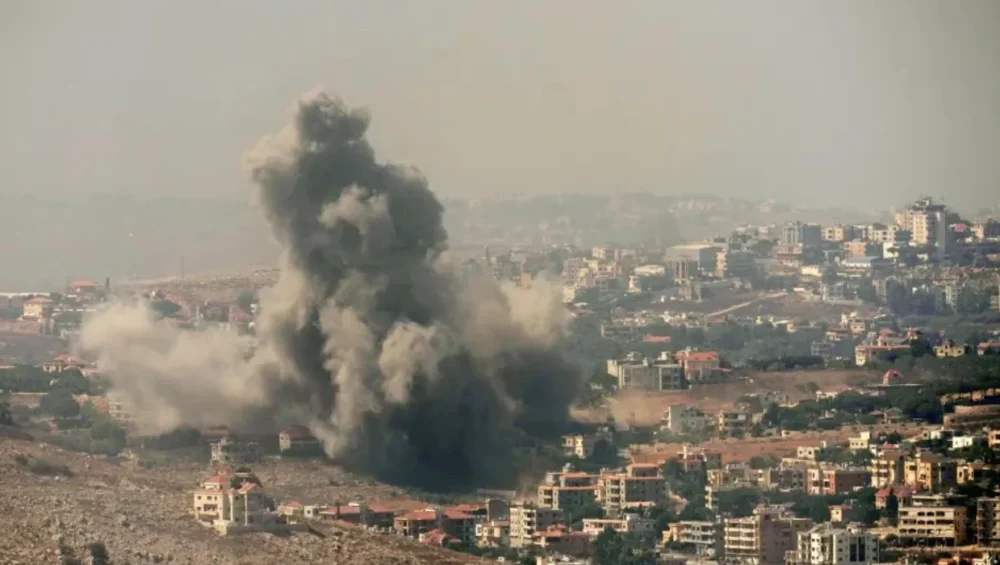
The warning from the United Nations that recent military actions may constitute possible war crimes in Lebanon marks a significant moment in the legal and diplomatic discourse surrounding the conflict. When UN human rights officials state that certain strikes “may amount to war crimes,” the phrasing reflects a careful legal threshold rather than a political judgment. Such language signals that available evidence suggests potential violations of international humanitarian law but still requires formal investigation and verification.
This approach has been consistent with previous UN assessments in regional conflicts. Analysts note that the current escalation involving Israeli military operations and Hezbollah positions has expanded the geographic and humanitarian scope of violence. Residential areas, temporary shelters for displaced families, and key infrastructure have reportedly been affected, prompting renewed international scrutiny.
Legal standards guiding UN assessments
International humanitarian law relies on several core principles to determine whether conduct in armed conflict crosses into illegality. Distinction requires parties to separate civilians from combatants, while proportionality prohibits attacks expected to cause excessive civilian harm relative to military advantage. Precaution obliges forces to take steps to minimize harm before launching operations.
When UN officials reference these principles in relation to Lebanon, they are signaling that incidents observed on the ground may challenge these obligations. The legal process involves examining targeting decisions, intelligence reliability, and whether alternative tactics could have reduced civilian risk.
Historical parallels shaping interpretation
Observers of Middle Eastern conflicts recognize that similar language has been used in past investigations concerning hostilities in Gaza, Syria, and earlier confrontations in southern Lebanon. In those cases, UN commissions eventually produced detailed findings outlining patterns of strikes that raised legal concerns.
The current debate therefore draws on an established investigative framework. Analysts see the UN’s wording not as a final verdict but as an early stage in a process that could lead to broader international inquiries if violence persists.
Patterns of harm influencing legal scrutiny
Reports emerging during the latest escalation suggest that civilian harm and displacement are central to the UN’s concerns. Humanitarian organizations and local authorities describe significant destruction in densely populated neighborhoods, reinforcing questions about targeting practices.
The scale and speed of displacement have also intensified attention from legal experts. In a country already dealing with multiple refugee populations, large movements of civilians create additional pressure on humanitarian systems and increase the complexity of accountability discussions.
Civilian casualties and displacement dynamics
Casualty figures alone do not determine whether war crimes have occurred, but they provide context for evaluating military conduct. Analysts often examine whether harm to civilians appears incidental or part of a recurring operational pattern.
Displacement trends have been particularly notable in recent months. Entire districts have reportedly emptied following warnings or evacuation orders, raising questions about whether such measures were temporary safety steps or contributed to broader forced movement of populations.
Damage to infrastructure and essential services
Another factor shaping scrutiny is the repeated reporting of strikes affecting infrastructure used by civilians. Health facilities, shelters, and emergency response services receive special protection under international law. When such sites are damaged or destroyed, investigators typically assess whether they were being used for military purposes or were unintentionally affected during operations.
Documentation efforts by humanitarian groups increasingly rely on satellite imagery, open-source data, and survivor testimony. These methods have become more prominent in 2025, reflecting changes in how modern conflict evidence is collected and analyzed.
Legal pathways from investigation to accountability
Although the UN can identify potential violations, determining responsibility for possible war crimes in Lebanon requires formal legal processes. These processes often involve multiple institutions, each with its own mandate and limitations.
UN investigative mechanisms and evidence collection
One possible step is the establishment of a fact-finding mission or commission of inquiry. Such bodies gather evidence, interview witnesses, and examine specific incidents in detail. Their reports can shape international opinion and provide a foundation for future prosecutions.
However, these investigations often face logistical barriers. Access to affected areas may be restricted by security concerns or by the parties involved in the conflict. Despite these limitations, UN inquiries historically play a crucial role in documenting events that might otherwise remain contested.
International criminal court considerations
The International Criminal Court is frequently mentioned in discussions about war crimes accountability, yet jurisdictional questions complicate its involvement. The court can typically act when crimes occur in countries that accept its authority or when the UN Security Council refers a situation for investigation.
In the case of Lebanon, legal and political complexities make such steps uncertain. Debates during 2025 regarding ICC actions in other regional conflicts illustrate how contentious international justice mechanisms can become when major geopolitical interests are involved.
National courts and universal jurisdiction
Another pathway involves national courts using universal jurisdiction laws to prosecute serious international crimes. Several European legal systems have pursued cases related to conflicts abroad when suspects enter their territory or evidence becomes available through international cooperation.
While theoretically possible for incidents connected to Lebanon, such cases are often difficult to pursue. Prosecutors must meet high evidentiary standards and navigate diplomatic sensitivities tied to international relations.
Political realities shaping the accountability landscape
Legal frameworks alone rarely determine whether individuals face consequences for alleged war crimes. Political considerations frequently influence how investigations evolve and whether states support or resist accountability measures.
Regional dynamics play a major role in the Lebanon situation. The confrontation is intertwined with broader tensions involving Israel, Hezbollah, and Iran, making international consensus difficult. Governments that are strategically aligned often emphasize restraint and humanitarian protection while avoiding measures that could escalate diplomatic conflict.
Within global institutions, divisions among major powers further complicate action. Debates throughout 2025 on related conflicts demonstrated how veto powers and competing alliances can stall efforts to launch investigations or impose legal measures linked to alleged violations of the laws of war.
Domestic political factors also matter. Lebanon’s internal divisions and fragile governance structure limit its ability to lead complex legal processes. This environment makes international cooperation essential but also uncertain.
2025 developments influencing accountability discussions
Recent developments during 2025 have shaped expectations about how allegations of possible war crimes in Lebanon might be addressed. Several international legal and political trends are particularly relevant.
First, the growing use of digital evidence and independent verification has strengthened the ability of investigators to reconstruct events in conflict zones. Analysts increasingly rely on satellite analysis, geolocation techniques, and archived online footage to corroborate witness accounts.
Second, legal challenges within national courts concerning arms exports to conflict regions have drawn attention to the responsibilities of states supplying military equipment. These cases have broadened discussions about accountability beyond direct battlefield conduct.
Third, diplomatic tensions surrounding international justice institutions have become more visible. The debates sparked by high-profile legal actions in other conflicts during 2025 illustrate how accountability processes can trigger strong political reactions, affecting both cooperation and public perception of international law.
These factors together create a complex environment in which legal analysis, political calculation, and public scrutiny interact simultaneously.
Evolving questions about responsibility and future outcomes
As the conflict continues to evolve, the question of whether individuals will ultimately be held responsible remains unresolved. UN warnings about possible war crimes in Lebanon have placed the issue firmly on the international agenda, but translating concern into concrete legal action depends on several interconnected developments.
Evidence gathering must continue despite operational challenges, and international institutions must navigate political divisions that often slow investigative efforts. Meanwhile, governments face increasing pressure from humanitarian groups and domestic audiences to demonstrate commitment to the laws of war.
The trajectory of accountability will likely depend on how these forces intersect over time. If documentation strengthens and political conditions shift, the legal landscape could change rapidly. For now, the unfolding situation illustrates a recurring pattern in modern conflicts: early warnings signal the potential for future legal battles, leaving observers watching closely to see whether international mechanisms will eventually convert those warnings into enforceable justice.