
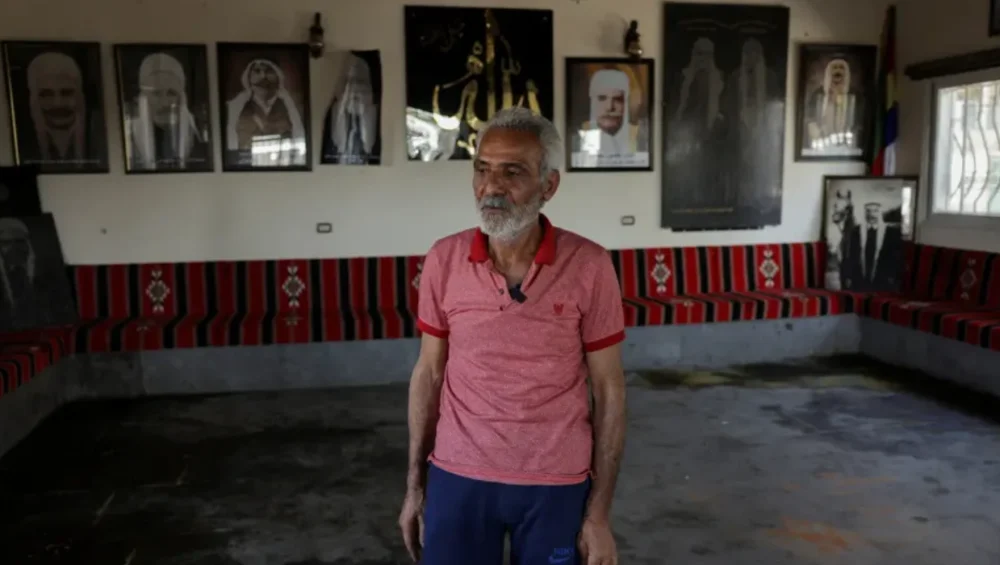
The clashes in Syria’s southern Sweida governorate in July 2025 were more than just a local problem pitting Bedouin armed groups against Druze ones. They revealed a more general pattern of systemic violence, impunity, and state-enabled repression that has marked Syria’s transitional government. Events in Sweida formed part of a serious human rights crisis, consisting of summary killings, abductions, and large-scale displacement-all indicative of deeply entrenched lawlessness in the ranks of armed forces and allied militias.
Human Rights Watch has documented 86 apparent unlawful killings, including 67 from the Druze community and 19 from the Bedouin community, using interviews, photos, and confirmed video footage. However, the Syrian government has not taken adequate steps in investigating and holding those with responsibility for these acts accountable, mainly within leadership levels. This current situation continues a pattern that has emerged over time, where the Syrian government has been known to deny these acts and protect their military command and supported militias.
A conflict shaped by state intervention: government forces as a catalyst for violence
The Sweida conflict began with a checkpoint altercation on July 12, but it quickly intensified once the Syrian government got involved. Rather than serving as an impartial body that would ensure the safety of civilians and mitigate the conflict, the government decided to side with the armed Bedouins and bomb the Druze positions. This resulted in the escalation of what began as a local conflict between the parties.
Through its alignment with various factions among the Bedouin, it entrenched divisions along sectarian lines and, in turn, its professed role as the “government for all Syrians.” This was bound to trigger violence, but there is little indication that it treated the issue with the requisite concern for the welfare of the civilian population and humanitarian considerations. Through its role in the Sweida incident, it is evident that the Syrian stateensures its forces disregard humanitarian law and the rights of minorities.
Mass displacement and humanitarian collapse: the human cost of state-enabled violence
The magnitude of the displacement in Sweida is breathtaking. According to the UN Office for the Coordination of Humanitarian Affairs, there are over 93,000 displaced individuals in one week alone, and 187,000 by the end of July. The scale of the displacement has led to adequate food, shelter, and medicine being unavailable, and the likelihood of contracting illness and violence is a major concern.
What is even more alarming is the hampering of humanitarian aid. Human Rights Watch has found that restrictions, red tape, and slow distribution of aid have been sufficiently pervasive to extend the suffering of displaced civilians. This does not seem to be the result of administrative inefficiencies, but seems to amount to a deliberate attempt to manipulate aid and punish communities considered politically undesirable.
The state’s obstruction of aid not only violates international humanitarian standards but also suggests an intent to weaponize suffering against minority populations. This is a clear human rights violation that demands international scrutiny.
The silence of accountability: investigations that never deliver justice
The Syrian government made a commitment to investigate “these shocking violations.” However, their history suggests that mere commitment to investigate has little to no value unless it was followed by concrete steps. A team has been established to submit their findings in three months, and now it has been months since their investigation has not been fully completed and concluded. This display of bureaucracy delays compliance to evasion.
The lack of investigation on the part of the state regarding senior officials is even more disturbing. Previous investigations about abuses committed against the Alawi sect in March 2025 had exonerated senior officials on the grounds of the lack of direct orders. This disregard for reality disregards the clearly established principle of Command Responsibility. This holds leaders responsible for any atrocities committed by them when they had knowledge or should have had knowledge about it.
In Sweida, the same pattern is repeating: low-level perpetrators are blamed, while those who directed and enabled violence remain untouched. Without prosecuting commanders and senior officials, any investigation is merely a public relations exercise designed to placate international criticism.
A pattern of repression: violence against minorities as state policy
Sweida’s violence cannot be seen in isolation. In January 2026, renewed clashes between government forces and Kurdish-led Syrian Democratic Forces resulted in 23 deaths and displacement of over 100,000 people. These repeated confrontations with minority-led groups reflect a broader strategy of suppression and control rather than conflict resolution.
The Syrian state’s approach to minority communities appears rooted in fear of political dissent and opposition. The government’s reliance on armed militias and proxy forces creates a system in which violence is outsourced, yet responsibility remains with the state. This system enables atrocities while providing the government plausible deniability.
The UN’s own reporting indicates that attacks by militias and affiliated armed groups killed about 1,000 people in just three villages, including 539 Druze civilians. These figures likely underestimate the true toll, as bodies remain trapped in homes inaccessible to recovery teams. This is a chilling indicator of how deeply the conflict has undermined basic human dignity and rights.
The international community’s responsibility: action beyond statements
The international community cannot continue to treat Sweida as a regional incident. The scale of human rights violations demands urgent action. The UN Independent International Commission of Inquiry on Syria’s visit to Sweida in October is a step, but it is not enough.
If the Syrian authorities refuse to conduct impartial investigations that meet international fair trial standards, then international mechanisms must step in. This includes supporting accountability efforts through independent tribunals or strengthening documentation and evidence collection for future prosecutions.
Governments that claim to support human rights must stop accepting the Syrian government’s rhetoric as sufficient. Accountability must be pursued through targeted sanctions, support for human rights monitoring, and pressure on Syria to allow independent investigations.