
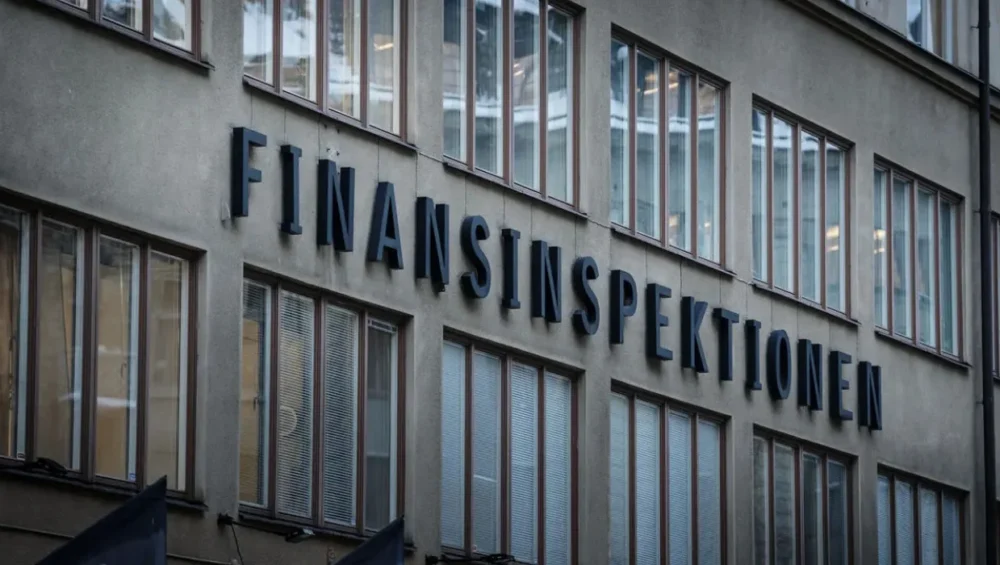
The Sweden Aml Crackdown is currently on a new stage with the regulators focusing more on the financial institutions of high standards and its compliance systems. Sweden Financial regulator, Finansinspektionen (FI) attested to a formal investigation into Handelsbanken, centered on the bank anti-money laundering procedures with corporate clients between March 2025 and March 2026.
The probe is an extension of an overall regulatory initiative to enhance the financial defenses of Sweden against illegal finance. The governments have become particularly worried by the fact that advanced laundering networks can now use corporate entities, international movement, and online banking systems.
According to Petra Bonderud, who is the head of risk analysis and AML supervision of FI, a proper framework of customer knowledge is one of the most important areas described as the financial institutions should have a good grasp of their customers and the activity that encompasses the financial flows. The nature of her comments reflects how the regulator would prefer banks to be proactive in observing the nature of complex relationships with clients as opposed to the use of automated screening systems only.
Such regulatory impetus is reflective of wider European attempts to strengthen financial integrity in the wake of a succession of high-profile banking scandals of the last ten years. Swedish officials are now seeking to prove that the banking industry of the nation is able to react favorably to the dynamic money-laundering strategies.
Regulatory context shaping the Sweden AML crackdown
The ongoing investigation of Handelsbanken is a reflection of an overall enforcement trend in the Swedish banking industry. Supervisory reviews have become more intense and regulators have grown their oversight authority to ensure that the weaknesses that were found during past investigations are fixed.
Recent probes into major Swedish banks
In 2026, before, Finansinspektionen initiated an equivalent review of Swedbank of transactions that occurred between late 2023 and late 2025. The question that was put was whether the bank had sufficiently identified high-risk customers and kept track of suspicious transactions.
Market responses towards the Swedbank probe showed how regulatory scrutiny would drive investor sentiment. The stocks of the bank have been volatile in the short term after the announcement although analysts have added that such investigations are becoming a norm within the prevailing regulatory environment.
These instances prove that regulators no longer employ smaller institutions as the only limit in enforcement. Alternatively, there is a growing tendency among the biggest Nordic banks of subjecting themselves to deeper inspections of their internal compliance systems and actual data on transactions.
Legacy of earlier banking scandals
The AML strategy in Sweden has had its fair share of influences by the outcomes of previous regional scandals. In 2019, when the large-scale money laundering scheme carried out by the Baltic branches of the bank was uncovered, the Nordic financial regulation revealed its flaws.
The amount of money thought to have been transported through dubious means during this time was worth billions of euros and this sparked criticism among people and a global bias of looking into the banking system of the area. The Swedish regulators have then added a new phase of stricter compliance requirements and inspection frequency of the supervisory checks.
Government and financial regulators had more resources by 2025 on financial crime monitoring. These provisions formed the basis of the present Aml Crackdown in Sweden whereby major focus is on preventive supervision instead of reactive enforcement.
Handelsbanken under investigation for corporate client due diligence
The emphasis on Handelsbanki is indicative of an increasing regulatory interest in the relations of a corporate banking. Big corporate customers usually act in complex ownership forms, and it becomes harder to find the owners that are beneficial and track the transactions successfully.
Corporate structures complicate compliance
The opaque corporate ownership structures have been warned against by financial regulators as having the potential to hide illegal financial operations. Shell companies, tiered subsidiaries, and cross-border holdings often conceal the names of ultimate beneficiaries.
The investigation conducted by Handelsbanki is likely to focus on its way of verifying the beneficial ownership information and determining the degree of risk levels related to corporate accounts. Included among internal records that regulators may examine are the records of know-your-customer practices and transaction monitoring systems.
Corporate clients usually create a significant transaction volume, and this is associated with the probability of the illegal flows going undetected in case of the poor oversight systems. Due to this fact, regulators consider corporate banking as one of the weakest links in the financial system.
Previous compliance penalties
Handelsbanki has in the past been subjected to regulatory fines associated with inadequacy in AML controls. Previously, the Swedish government fined large banking institutions, such as Handelsbanken and Nordea tens of millions of kronor, in the earlier enforcement measures.
Though these fines were not a sign of systemic malpractices, they pointed at the flaws in monitoring the practices and customer identification. Regulators claimed that banks should have increased supervision over the complicated accounts and international transactions.
The new probe is thus a continuation of the previous scrutiny as well as an opportunity that the regulators can consider whether the previous reforms have yielded any meaningful results.
Technological changes influencing compliance expectations
The Sweden Aml Crackdown is aligned with the speedy technological change in the banking market. Banks and financial organizations are becoming more and more dependent on the digital platform, automated supervision systems, and artificial intelligence to identify suspicious transactions.
Rise of AI-driven monitoring systems
Machine learning systems that detect suspicious transaction patterns have cost banks throughout Europe a lot of money. The technologies have the capacity to process large amounts of data in real time and compliance teams are able to identify anomalies faster than the manual process of reviewing the data.
The 2025 industry standards implied that AI-based surveillance had a false notification rate of almost a third of the older rule-based systems. This enhancement enables the investigators to concentrate on the activity that is truly suspicious as opposed to usual transactions.
Nevertheless, regulators emphasize that human control cannot be replaced by technologies. The contextual factors that apply in many complex financial crimes can be difficult to capture using algorithms without human judgement.
Challenges of digital banking expansion
Over the past few years, Handelsbanki and other Nordic banks have increased the number of digital services, such as mobile banking and automated financial platforms. Although the innovations make the work of customers much more convenient, they also make it more difficult to track financial flows.
Electronic transactions may be used to transfer across borders and institutions within a short period. Due to this, regulators require banks to tighten checks and balances and keep current risk assessments of individuals, as well as corporate customers.
The audit on Handelsbanki can therefore look into whether compliance systems have been developed fast enough to keep with the pace of technological advancement.
European regulatory alignment and cross-border implications
The AML crackdown in Sweden is also an indication of the larger trends in the financial regulation model of the European Union. EU officials have attempted to standardize the implementation of anti-money laundering in member countries.
Emergence of EU-level supervision
In 2025, European policymakers proceeded with the plans to create the Anti-Money Laundering Authority (AMLA), an oversight central body that will provide leadership in terms of supervising activities throughout the EU. It is assumed that the authority will start operating in the next few years.
The creation of AMLA signals a shift toward stronger cross-border supervision. National regulators such as Sweden’s Finansinspektionen will increasingly coordinate investigations and share data with European counterparts.
This approach aims to prevent financial criminals from exploiting regulatory gaps between jurisdictions.
Nordic regional cooperation
Nordic countries have also expanded regional collaboration on financial crime monitoring. Denmark, Norway, and Sweden now share intelligence on suspicious financial activities and coordinate enforcement actions where necessary.
These partnerships reflect recognition that money-laundering networks rarely operate within a single country. Cross-border cooperation therefore plays a crucial role in identifying complex financial schemes.
Handelsbanken’s international operations, including branches in several European markets, mean that the outcome of the Swedish investigation could attract attention from regulators beyond Sweden.
Market reactions and long-term implications
Financial markets responded cautiously to the announcement of the Handelsbanken investigation. Analysts generally view the probe as part of the ongoing regulatory cycle rather than evidence of systemic misconduct.
Short-term fluctuations in bank share prices often accompany regulatory announcements, but investors typically focus on long-term compliance improvements and financial resilience.
Strong capital reserves across Sweden’s banking sector have helped maintain investor confidence despite increased regulatory scrutiny. Many analysts argue that rigorous enforcement ultimately strengthens financial stability by reducing reputational risks.
For banks themselves, however, compliance costs continue to rise. Major institutions now allocate substantial portions of their operational budgets to anti-money laundering programs, including technology upgrades, staff training, and regulatory reporting.
The broader impact of the Sweden Aml Crackdown may therefore extend beyond enforcement actions. It could reshape how Nordic banks approach risk management, corporate client screening, and digital financial innovation.
As regulators deepen their investigations and banks refine their compliance strategies, the evolving balance between strict oversight and financial competitiveness remains a central question. Whether Sweden’s approach becomes a model for European financial governance or triggers a wider debate about the limits of regulatory expansion may depend on how effectively these measures deter the next generation of financial crime.