
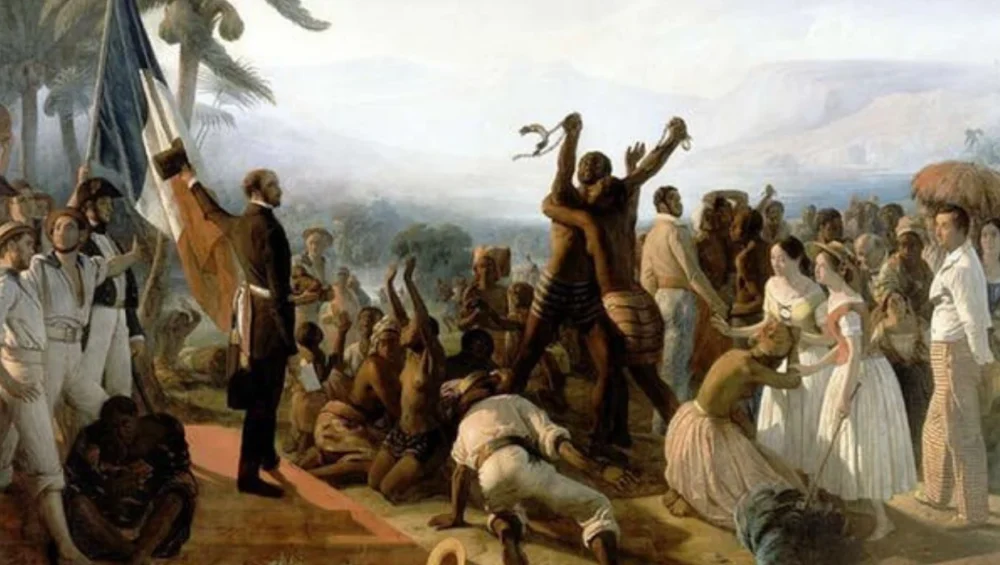
The 2026 vote at the United Nations General Assembly has revived a long-standing global debate captured in the phrase slavery’s atrocities had many global masters. The resolution did not merely acknowledge the transatlantic slave trade as a historic injustice; it reframed it as a shared international crime with enduring consequences. This reframing has pushed states to confront not only moral responsibility but also the political implications of that acknowledgment.
The vote’s broader significance lies in how it shifts the conversation from isolated historical narratives to interconnected systems of exploitation. The transatlantic slave trade was not sustained by a single empire or region. It was enabled by overlapping commercial, political, and financial structures that extended across continents. This complexity complicates modern efforts to assign responsibility, especially in a global order where many of the benefiting institutions have evolved but not disappeared.
The 2026 UN Vote And Its Political Meaning
The resolution passed with strong support, yet the absence of consensus revealed underlying tensions. While many states endorsed the language condemning slavery as a grave crime, others hesitated to align with provisions that could carry implications for reparative justice.
Majority Support Without Unified Interpretation
The wide margin of approval suggests that there is global agreement on the moral gravity of slavery. However, agreement on principle does not translate into agreement on action. States that supported the resolution often did so with differing interpretations of what responsibility entails, ranging from symbolic recognition to more material forms of redress.
This divergence highlights a central contradiction. Governments can collectively condemn past atrocities while maintaining divergent positions on whether those condemnations should lead to tangible obligations. The vote therefore reflects both unity and fragmentation within the international system.
Language As A Legal And Moral Signal
The wording of the resolution played a critical role in shaping its impact. By defining the transatlantic slave trade as one of the gravest crimes against humanity, the text aligns historical injustice with contemporary legal frameworks. This classification elevates the issue beyond memory and into the realm of accountability.
Such language carries implications for future claims. Once an act is framed in terms associated with the highest level of international wrongdoing, the expectation of remedy becomes more difficult to dismiss. This explains why some states expressed caution, recognizing that legal framing can influence political and financial expectations.
Distributed Responsibility Across Historical Systems
The phrase slavery’s atrocities had many global masters reflects a growing recognition that responsibility for the slave trade was widely distributed. This understanding challenges simplified narratives that focus on a limited number of actors.
Multinational Networks Of Trade And Power
Historical evidence shows that the slave trade operated through complex networks involving European empires, colonial administrations, local intermediaries, and global markets. Financial institutions, shipping companies, and port authorities all played roles in sustaining the system.
This interconnected structure means that accountability cannot be confined to a single region or political entity. The system functioned because of collective participation, even if that participation varied in scale and form. Recognizing this complexity is essential for any meaningful discussion of reparative justice.
Beyond National Narratives Of Guilt
Modern political discourse often narrows responsibility to specific countries, particularly those most visible in historical records. While these actors were central, focusing exclusively on them risks obscuring the broader system that enabled exploitation.
A more comprehensive approach acknowledges that many societies benefited indirectly through trade, industrial growth, or financial integration. This perspective complicates efforts to define responsibility but provides a more accurate reflection of historical reality.
Selective Memory And Contemporary Political Frictions
The debate following the 2026 vote has revealed how selective memory continues to shape global responses to historical injustice. States often emphasize aspects of history that align with current political narratives while minimizing others.
Visibility Versus Structural Benefit
Some countries that played secondary roles in the slave trade have positioned themselves outside the primary accountability framework. However, historians and policy analysts argue that structural benefits from the system extended beyond direct participation.
Economic development, trade networks, and institutional growth in many regions were influenced by the global system that slavery supported. This raises questions about whether indirect beneficiaries should also be considered within the scope of responsibility.
Political Sensitivity Of Expanding Accountability
Expanding the scope of responsibility introduces political challenges. Governments may resist interpretations that broaden accountability due to potential financial or diplomatic consequences. This resistance is evident in the abstentions and cautious statements that accompanied the vote.
The tension between historical accuracy and political feasibility remains a defining feature of the debate. While broader accountability aligns with historical evidence, it complicates efforts to reach consensus on practical measures.
2025 Developments And The Build-Up To The Vote
The 2026 resolution did not emerge in isolation. It followed a series of developments in 2025 that intensified global attention on historical injustice and reparations.
Growing Momentum In Reparations Discourse
Throughout 2025, discussions on reparations gained visibility across international forums, academic institutions, and civil society organizations. These conversations emphasized the long-term economic and social effects of slavery, linking historical exploitation to contemporary inequality.
This growing momentum created a foundation for the UN vote. By the time the resolution was introduced, the intellectual and political groundwork had already been established, allowing the issue to gain broader support.
Institutional And Diplomatic Engagement
Governments and international organizations increasingly engaged with questions of historical accountability during this period. Initiatives related to cultural restitution, educational reform, and archival access reflected a shift toward more substantive engagement with the legacy of slavery.
These developments contributed to a more coordinated global response. The 2026 vote can therefore be seen as part of a larger trajectory rather than an isolated event.
Reparations Debate And Diverging Policy Approaches
The renewed focus on slavery’s legacy has brought the issue of reparations back to the center of international discourse. However, there is no unified approach to addressing this question.
Symbolic Recognition Versus Material Redress
Some states advocate for symbolic measures, such as official apologies and commemorative initiatives. Others argue that these steps are insufficient without material compensation or structural reforms aimed at addressing inequality.
This divide reflects differing interpretations of justice. For some, acknowledgment is a necessary first step. For others, it is only meaningful if accompanied by tangible change.
Linking Historical Injustice To Present Inequality
A key argument in favor of reparations is that the effects of slavery are not confined to the past. Economic disparities, social hierarchies, and patterns of marginalization can often be traced back to historical systems of exploitation.
By linking past injustice to present conditions, advocates strengthen the case for policy interventions. However, this approach also increases the complexity of implementation, as it requires addressing deeply embedded structural issues.
Future Implications For Global Governance And Historical Justice
The 2026 UN vote has set the stage for ongoing debates about how the international system addresses historical injustice. While it represents a significant step in acknowledging shared responsibility, it does not resolve the underlying challenges.
The persistence of disagreement suggests that the path forward will involve gradual and contested progress. States will continue to negotiate the balance between moral recognition and practical obligation, with outcomes likely to vary across regions and contexts.
What remains clear is that the framing of slavery as a global system with many contributors has altered the terms of the debate. The question is no longer limited to identifying perpetrators but extends to understanding how historical structures continue to shape the present. As discussions evolve, the challenge will be to translate this broader understanding into policies that address both memory and material reality, without reducing a complex history to simplified narratives that are easier to manage but harder to justify.