
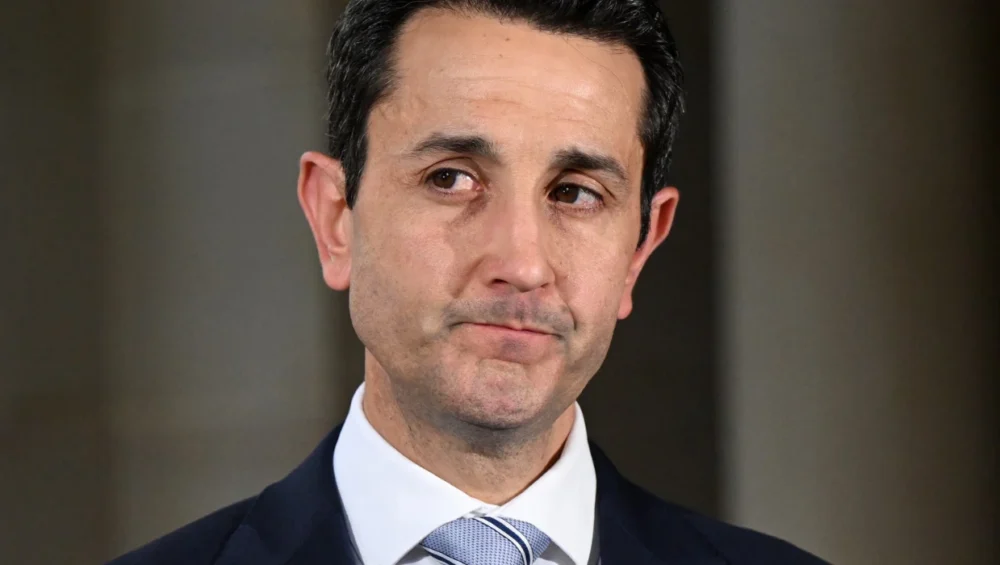
Australia’s state of Queensland has announced that it will enforce some of the strictest bail conditions ever seen in Australia, despite the fact that the government itself admits that these regulations are a violation of human rights and that they will lead to overcrowded prisons and juvenile detention facilities. The “Breach Bail, Go to Jail” law introduces a new offense for those individuals who have committed a serious crime whilst on bail.
The law at a glance: what changes and who it covers
The Breach Bail, Go to Jail and Other Legislation Amendment Bill 2026 introduces a standalone offence for committing a “significant offence” while released on bail or after failing to appear in court. For young people, “significant offence” maps onto Queensland’s existing Adult Crime, Adult Time (ACAT) regime, which now covers 47 serious offences including murder, manslaughter, robbery, rape and dangerous operation of a vehicle. For adults, the scope is broader still, adding coercive control and child sexual offences under “Daniel’s Law” to the ACAT list.
Upon being charged with the breach of bail as an offence, one becomes liable for a jail term of up to three years. A person found guilty of this offence will automatically get a mandatory jail term of at least 12 months, to be served completely in jail without parole. The 12-month jail term will run alongside the jail term of the offence committed while on bail. The bill makes it more difficult to get bail. Bail can only be granted if there is a high degree of satisfaction that the accused will not offend again while on bail.
Why the government says it had to go this far
Premier David Crisafulli has framed the package as a necessary response to persistent reoffending on bail, declaring it the “strongest bail laws in the nation” and the
“most significant bail reforms this state has ever seen.”
Attorney‑General Deb Frecklington has been equally blunt, saying “bail is a privilege, not a right” and arguing the override is justified by the
“prevalence of serious repeat offending committed while on bail”
and the risk of serious harm to the community. She has also told parliament the changes will “save lives.”
The government cites statistics from their own reports that over 60 percent of juvenile offenders commit offenses when out on bail, as well as highly publicized cases involving individuals on bail causing injuries or deaths. According to the ministers, this system will discourage any violations, will be there to protect victims and ensure that offenders on bail receive immediate consequences.
Human rights concessions: what the government admits it is breaching
In a rare move, the government’s own compatibility statement acknowledges that the bill is incompatible with several rights protected under Queensland’s Human Rights Act 2019. To proceed, ministers are invoking the Act’s “exceptional circumstances” override, a mechanism designed for precisely this kind of politically charged, rights‑limiting legislation.
This statement admits restrictions to the right to liberty, including the right of those who are on trial not to be automatically locked up, and the rights of children, including the requirement to take into account the best interest of the child as one of the main considerations. This statement also recognizes violation of the right to humane treatment upon deprivation of liberty, since the government anticipates that the legislation would make it so that more people would be sent to correctional centers and youth detention centers, thus increasing overcrowding and poor conditions. The bill also deletes the obligation of the police to look at other possible courses of action before laying charges against a child and extends an existing exemption to the Human Rights Act in police watch houses.
Operational reality: overcrowding, watch houses and system strain
There is no attempt to avoid the implications of the changes in terms of operations in the documents provided by the government. The reforms will lead to a rise in numbers of prisoners in both adult prisons and youth detention facilities as well as increased demand for places in watch houses. This admission coincides with the current statistics indicating that Queensland holds more kids in its juvenile facilities than any other state, with 300 kids being locked in detention centers on an average night and many kids awaiting a place in youth detention facilities in police watch houses.
Moreover, the numbers of prisoners in adult jails have gone up by 54 per cent over the past decade, reaching 11,278 prisoners, with 47 percent of released inmates reentering prison within two years, according to state auditor-general. With the cost of incarceration being around $334 per prisoner per day ($122,000 per prisoner per year), the financial burden of the additional number of mandatory sentences cannot be underestimated.
When pressed on cost, Frecklington replied:
“It’s going to save lives — that’s what it’s going to cost.”
Legal and expert criticism: deterrence, discretion and ‘cruel outcomes’
According to human rights lawyers and criminologists, mandatory minimums deprive courts of flexibility when sentencing individuals based on their particular cases, especially when a young offender himself or herself can be a victim or suffer from any form of trauma. One scholar interviewed by the Guardian says that such measures might lead to “cruel consequences” because they end up sending kids to jail even though they could have been controlled by being supervised or treated in some way other than incarceration. There is also no proof that a minimum period of one year will serve as a deterrent for young criminals not to commit crimes again.
Youth Advocacy Centre CEO Katherine Hayes has described detention centres as “bursting at the seams”, arguing that overcrowding means children are “not rehabilitated”, their rights are breached daily, and they become
“more damaged, traumatised and likely to reoffend.”
The politics of toughness: victims, voters and the ‘adult crime, adult time’ brand
The bill falls into a wider political strategy wherein the LNP government has doubled the number of offences to be tried by the ACAT court to 47 and kept reiterating its commitment to visible and tough-on-crime policies. According to government ministers, the reforms will enhance the safety of the victim, mainly because they will include coercion and controlling behavior, choking, aggravated assault, stalking, rape and sexual assaults on children. According to Amanda Camm, the domestic violence minister and Dan Purdie, police minister, these additions are integral to making the bill protective in nature.brisbanetimes. However, the government understands the optics of an overcrowded prison as well. The data revealed at the time the bill was finalized suggested that thousands of additional prison beds were needed to house the criminals who would go to prison as a result of these new laws. Nevertheless, the ministers seem prepared to make such a sacrifice, as a headline in the Brisbane Times suggests: “Queenslanders over crooks.”
It has been brought before the parliament since late August 2026, and the bill is anticipated to pass committee consideration and public consultation before becoming law. The government has pledged to have the laws implemented by the end of 2026. After implementation, the new breach offense as well as the “high degree of confidence” bail criteria will be applied to ACAT-listed youth offenses and the wider adult list. Legal challenges are likely. Civil society organizations might challenge the use of the “exceptional circumstances” override, contending that the mandatory minimum penalties and reverse onus provision are disproportionate. If the laws withstand judicial challenges, their impacts – increased number of youth and adults in custody, increased watch-house remand, and strict bail criteria – will immediately put a strain on corrective services and youth justice agencies.