
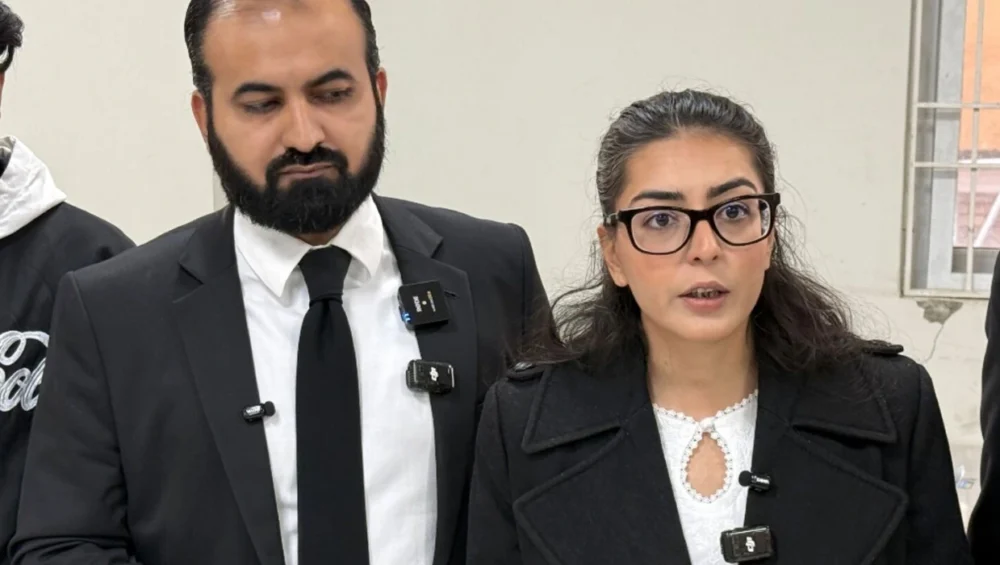
A Pakistani court handed a Pakistani human rights activist, a lawyer by profession, and her husband, Hadi Ali Chattha, a 10-year sentence for “anti-state social media posts.” The sentencing has been handed down in a country where the government has been intensifying the suppression of dissent, particularly through legal means like the Prevention of Electronic Crimes Act, also known as the cybercrime law.
However, the court asserted that Mazari “disseminated highly offensive” content through her X social media account. Mazari was found guilty, along with her husband, of committing cyber terrorism, intentional dissemination of false information, and hate speech. They face a decade-long imprisonment behind bars, concurrently.
What does this say about Pakistan’s justice system?
The case has been argued by opponents as a politically motivated case and an example of how the legal system in Pakistan may be exploited for suppressing dissent in the country. The case has been described in a communiqué issued by rights activists as an example of the “blatant abuse” of the justice system in the country by echoing that
“the case…amounts to a blatant case of trumping up charges and an endeavour at the criminalisation of freedom of expression.”
Such a case has been marked by
“denial of the right to fair trial by the accused by denying him an opportunity…to confront evidence or attend an important hearing.”
What was more, the arrest was a dramatic scene in which videos emerged showing police vans intercepting a bar association car carrying Mazari, only to arrest her under an underpass, and then stop journalists from taking photos of the scene, the kind of suppression of the press, which is happening repeatedly in the country, according to various reports.
Who is Imaan Mazari, and why is she a target?
Mazari is not a random activist. She is the daughter of Shireen Mazari, Pakistan’s former human rights minister, and comes from a prominent professional family. As a lawyer, she has represented some of Pakistan’s most politically sensitive cases, including:
- Enforced disappearances of ethnic Balochs
- Defense of Baloch rights activist Mahrang Baloch
- Representation of those accused under blasphemy laws
- Defense of Afghan migrants and asylum seekers facing crackdowns
These cases directly challenge Pakistan’s security state, particularly the military and intelligence agencies, which have long been accused of repression.
How does Pakistan’s repression compare to global standards?
Pakistan has consistently been on the receiving end over allegations regarding human rights abuses. Since 2022, Pakistan has witnessed an alarming spike in arrests, forced disappearances, and persecutions under anti-terror laws targeting critics, activists, and journalists. Often, these laws have been used for intimidation purposes.
The current government crackdown seems to have intensified after various constitutional changes and new legislation implemented by the parliament, which have extended the powers of the government and restricted civil freedoms. All this seems to fall in a larger category of rising authoritarianism and its excuse: national security.
Why is PECA being used to silence critics?
The PECA law, originally intended to curb cybercrime, has been repeatedly criticized for its broad and vague definitions that allow authorities to arrest anyone for:
- “Anti-state” speech
- “Hate speech”
- “False information”
- “Cyber terrorism”
This has led to an explosion of arrests and prosecutions of activists, journalists, and ordinary citizens for expressing dissent online.
What is the scale of state repression in Pakistan?
While official statistics are rarely transparent, the rise in cases under PECA and other anti-terror laws suggests a systemic campaign of control. Human rights organizations have repeatedly documented:
- Mass arrests of activists and journalists
- Forced disappearances, especially in Balochistan and Khyber Pakhtunkhwa
- State intimidation of lawyers and human rights defenders
- Repeated detention of critics under “terrorism” charges
In the past year alone, dozens of activists have been arrested under similar charges, many of whom have faced extended detention without trial.
Political and legal voices in Pakistan have condemned the ruling. Senate opposition leader Allama Raja Nasir Abbas described the verdict as a “chilling message” that peaceful criticism will be met with harsh repression.
The Islamabad High Court Bar Association president also alleged police manhandled the couple before arresting them.
Why is this case significant?
While the sentencing of Imaan Mazari and her husband appears to target the individuals, it also represents a warning for all the critics out there: how the Pakistani government is relying more and more on the rule of law to quash opposition and mandate loyalty.
It also demonstrates the influence of the military, even if not officially in power, on politics and society as a whole. Mazari’s views on the military also appeared to put her directly at odds with the most powerful organization in the country.
Already, Mazari and Chattha were under considerable legal pressure, especially beginning in August 2025, with a case filed against them under PECA laws. Earlier, they had been granted bail, but Judge Arshad Malik had canceled their bail in January 2026, ordering their arrest. The trial and arrest of Mazari and Chattha indicate how civil rights in Pakistan, in general, appear to diminishing.