
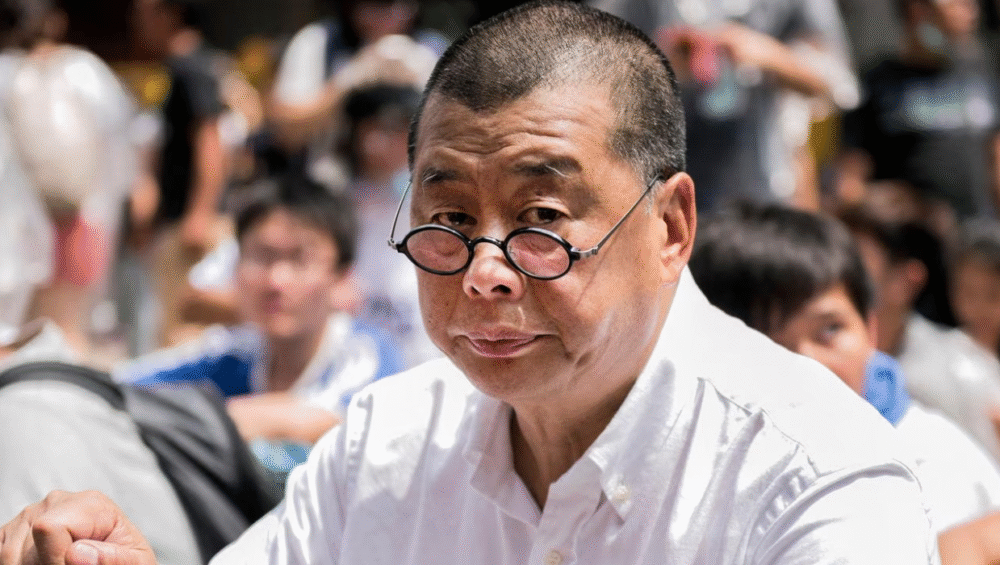
The sentencing of Jimmy Lai, a prominent advocate for democracy in Hong Kong and the founder of the widely read pro-democratic tabloid Apple Daily, to 20 years in prison by the Hong Kong High Court constitutes the worst violation of the rights to a free press in the city. The sentence is the most severe to be meted out under the broad-sweeping National Security Law that was established in June 2020 by the Chinese government, highlighting the extent to which the formerly independent legal system in the territory has been perverted for political goals.
At 78, Lai’s sentence effectively amounts to a life term. In December 2025, he was found guilty of “conspiracy to commit collusion with foreign forces” and “conspiracy to publish seditious publications”-two broad and politically flexible offenses that critics say have become catch-all instruments to silence dissent.
A Chilling Signal to Journalists and Civil Society
Human rights groups have claimed that the trial of Lai represents the overarching Chinese attempts to destroy the independent media industry in Hong Kong. According to Elaine Pearson, the Asia director of the Human Rights Watch, the sentence on Lai represents the Chinese government’s resolve to destroy dissenting journalism and opposition.
Following the implementation of the NSL, numerous independent media outlets have closed their doors, while many journalists have abandoned the city. Moreover, self-censorship is evident. Reporters Without Borders rates Hong Kong 140 out of 180 countries on the World Press Freedom Index. Such a sharp decline is seen from where the city was rated in the top 20 countries two decades ago.
Collective Punishment of Apple Daily and Its Staff
Similarly, six former Apple Daily officials and editors, who have pleaded guilty to national security charges, have been handed prison sentences between seven years and ten years. The testimonies provided against Lai, according to sources, which were given in exchange for a lighter sentence, show a strategy implemented by the government to break opposition groups.
Two human rights activists, members of the advocacy group “Stand with Hong Kong,” also testified against Lai after they pleaded guilty to the charge of colluding with foreign forces and received multi-year prison sentences. This is similar to the mainland’s tradition of “coerced confessions” and raises questions about the validity of confessions and the impartiality of the judicial system.
Politicized Judiciary and Fair Trial Violations
There have been notable due process violations with serious implications during Lai’s trial, as Lai was tried without a jury by judges appointed directly by the government, was denied his chosen legal representation, and was not allowed to hire British lawyer Timothy Owen.
Lai was denied his request for consul, thus violating the Vienna Convention on Consular Relations. Analysts believe such moves prove that the judicial system in Hong Kong, previously perceived to be amongst the freest in Asia, now bows to the political custody of Beijing. Almost all those tried under the NSL are found guilty.
Harassment, Intimidation, and Courtroom Repression
Authorities deployed a heavy police contingent around the courthouse, frisked attendees, and confiscated symbolic UK-flag accessories and further restricted journalists from speaking to the public. Each one of these measures spoke to a climate of fear enveloping political trials and eroding civil liberties, including freedom of assembly and expression.
Health Concerns and Allegations of Torture
Lai is serving several extra sentences on fraud and unauthorized assembly charges and has been in prolonged solitary confinement since 2020. Long-term solitary confinement, according to international experts, is a form of psychological torture. Lai reportedly suffers from diabetes, heart problems, and serious physical deterioration, raising concerns that the sentence could amount to a death-in-custody risk.
Legal Contradictions and Human Rights Violations
That represents prosecutions for peaceful expression, in direct violation of the ICCPR, nominally enshrined within Hong Kong’s Basic Law. However, legal scholars argue the NSL has actually overridden those protections to establish a parallel security regime aligned with mainland China’s authoritarian legal framework.
Since 2020, at least 365 people have been arrested and 174 others convicted on national security laws with conviction rates nearing 100%. Analysts warn this reflects systemic judicial pressure rather than any sense of impartial justice.
Global Reaction and Geopolitical Hypocrisy
His sentencing has been condemned by governments including the United Kingdom, the United States, Australia, and the European Union, all of whom have called for Lai’s release. Yet many have avoided confronting Beijing directly while pursuing trade and diplomatic engagement. High-profile visits by Western leaders to China continue, more often than not shelving human rights concerns.
Critics argue this reflects a broader pattern of geopolitical hypocrisy, with economic interests trumping democratic values. Though the US has levied sanctions on some Chinese and Hong Kong officials, other democracies with equivalent sanctions regimes have so far mostly refrained from taking serious action.