
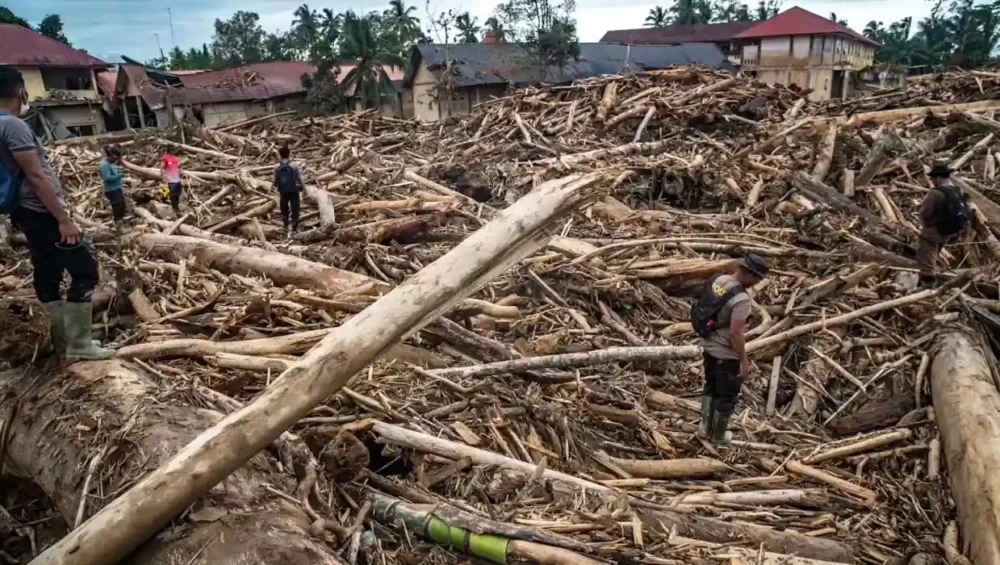
The Sumatra floods of late 2025, one of Indonesia’s deadliest disasters, not only caused immense human suffering but also sparked a controversy over media censorship that has deeply concerned press freedom advocates. Multiple news outlets removed content detailing the floods’ aftermath and government response failures, while officials publicly cautioned against reporting “shortcomings,” raising alarms about democratic backsliding.
The Catastrophic Sumatra floods
The floods and landslides that devastated northern Sumatra beginning November 25, 2025, were fueled by Cyclone Senyar, an unusual weather system dumping record rainfall on vulnerable mountainous regions. By December 29, the National Disaster Mitigation Agency (BNPB) reported 1,140 confirmed deaths: 513 in Aceh, 365 in North Sumatra, and 262 in West Sumatra with 163 missing, making it Indonesia’s toll heaviest since 2018’s Sulawesi tsunami. Displacement affected 399,200 people, many sheltered in 1,200+ temporary camps, while infrastructure damage included 166,743 houses, 3,000 schools, 215 clinics, and 97 bridges obliterated, costing billions in reconstruction. Survivors in remote Aceh villages like Samalanga endured weeks without electricity, clean water, or aid, raising white flags as distress signals amid mud-entombed communities.
The IHCP situation reports detailed flash floods washing away entire hamlets, with ongoing risks from unstable soil exacerbating the humanitarian crisis into January 2026. Climate experts linked the event to intensified monsoons from global warming, part of a regional wave claiming over 1,600 lives across Asia.
Economic fallout compounded the tragedy, with agriculture rice paddies and palm oil plantations under meters of silt, threatening food security for millions in Sumatra’s breadbasket. International aid offers from Australia, US, and UN poured in, but President Prabowo Subianto declined foreign assistance, insisting on self-reliance to avoid dependency. Domestic efforts mobilized 20,000+ personnel, air-dropping supplies, but logistical nightmares from blocked roads hampered delivery, leaving many reliant on community networks. Public anger simmered, with social media amplifying unverified claims of negligence, setting the stage for media-government tensions.
Government response and shortcomings
Prabowo’s administration framed the response as efficient, avoiding a national emergency declaration since only three provinces were hit, unlocking no extra funds but claiming control via BNPB coordination. Helicopters ferried aid to cut-off areas, and Prabowo visited sites, pledging Rp100 trillion ($6.3 billion) from budgets for housing temporary barracks first, permanent homes later. North Aceh Governor Ismail A Jalil teared up publicly, questioning Jakarta’s awareness: “Are they blind to our suffering?” highlighting provincial frustration. Yet, reports surfaced of delayed heavy equipment, bureaucratic red tape for local funds, and aid mismanagement, with some villages waiting 10 days for basics.
Critics pointed to preparedness gaps: outdated early warning systems failed amid the cyclone’s speed, and deforestation worsened landslides, issues flagged pre-disaster but unaddressed. No foreign aid acceptance stemmed from sovereignty pride but drew flak for prolonging hardship, as UN teams noted. By mid-December, as tolls climbed past 900, white flags proliferated, symbolizing abandonment and fueling narratives of central indifference. These “shortcomings” of slow mobilization, resource shortages dominated initial journalism, clashing with official positivity.
Incidents of news content removal
Censorship peaked post-December 18, with detik.com abruptly deleting all Sumatra flood articles, erasing survivor testimonies and aid delay exposés. CNN Indonesia suspended live coverage from Aceh, scrubbing videos of desperate crowds and self-editing reports to omit criticism. Kompas journalists reported TNI officers confronting them at disaster sites, demanding footage deletion of military aid shortfalls. Tempo and other nationals faced similar pressures, pulling pieces on government rejection of international help. Nikkei Asia documented at least 20 instances across platforms, often after social media virality contradicted BNPB updates.
Platforms like YouTube saw videos demonetized or flagged, while Twitter/X accounts of citizen journalists were shadowbanned for “misinformation” on casualties. This wasn’t haphazard; patterns suggested coordination via Kominfo (Communications Ministry), which monitors “hoaxes” under UU ITE laws. Removed content highlighted incongruities: official “recovery underway” versus ground realities of buried bodies and starvation. Such erasures created information vacuums, compelling reliance on state channels and breeding distrust.
Public officials’ remarks against criticism
Army Chief General Maruli Simanjuntak’s December 19 press conference crystallized the stance:
“If there are shortcomings… please inform us privately, do not expose them through the media, as it disrupts national unity.”
He urged “constructive journalism” focusing on heroism over flaws during crises. Coordinating Minister for Political, Legal, and Security Affairs Budi Gunawan echoed, calling critical reports “unhelpful” to morale. Prabowo himself tweeted praise for responders, implicitly rebuking detractors. These remarks, amid peak displacement, framed journalism as adversarial, invoking Pancasila unity against perceived sabotage.
Military spokespeople reiterated, warning of legal action under defamation statutes for “exaggerated” coverage. The tone recalled Suharto-era controls, where disasters justified information lockdowns for “stability.” Officials argued private feedback enables fixes without panic, but advocates saw intimidation quelling accountability.
Media advocacy groups’ concerns
AJI issued a December 22 statement blasting Simanjuntak’s words as “direct censorship calls,” warning of self-censorship chilling effects harming public safety via opaque aid info. They invoked Press Law No. 40/1999 banning prior restraint and Constitution Article 28F guaranteeing expression. KKJ demanded a government apology, labeling media restrictions rights violations and urging Press Council probes into military interference. Indoleft.org’s December 19 open letter called for state retraction, solidarity with reporters facing threats.
Asia-Pacific Solidarity Network amplified globally, tying it to Prabowo’s authoritarian leanings from past military roles. AJI surveys post-flood showed 70% journalists self-censoring disaster stories, fearing reprisals. Groups rallied for legal reforms curbing Kominfo powers and protecting embeds in crises.
Broader implications for press freedom
This episode signals fragility in Indonesia’s post-1998 press gains, ranked 111/180 in RSF’s 2025 index amid rising attacks. Disaster censorship precedents like 2018 Palu predict patterns where vulnerability justifies controls, undermining SDGs on information access. Economically, intimidated media hampers investor confidence in transparent governance. Globally, it draws UN rapporteur scrutiny, potentially straining aid ties. Prabowo’s defense background risks normalized suppression, but civil society pushback offers hope for resilience. Sustained advocacy could fortify laws, ensuring journalism aids recovery not hinders it.