
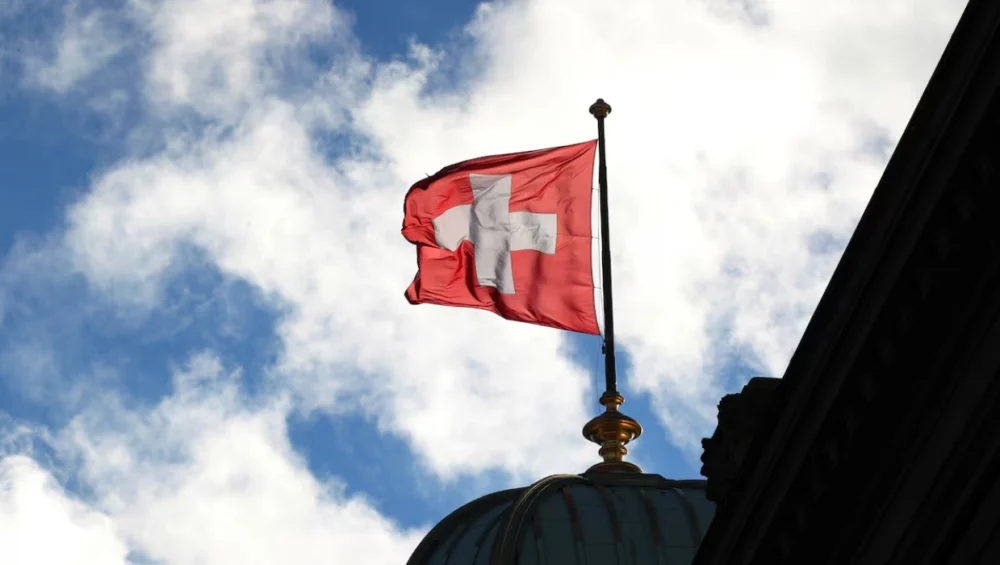
Switzerland’s updated anti-money-laundering direction represents a notable shift in regulatory philosophy, moving from reliance on traditional banking confidentiality toward structured transparency over corporate ownership. The policy initiative endorsed by the Swiss Federal Council in March 2026 aligns with legislative changes approved in September 2025, particularly the Federal Act on the Transparency of Legal Entities and the Identification of Beneficial Owners and revisions to the Anti-Money Laundering Act. Together, these measures aim to address structural weaknesses previously identified in international evaluations of Switzerland’s financial governance.
Authorities framed the reform as necessary to preserve the credibility of the Swiss financial center in an environment where global scrutiny of illicit financial flows intensified during 2025. International regulators and policy groups increasingly emphasized the need for traceable ownership data, particularly after cross-border investigations revealed how shell companies and layered corporate structures were used to obscure assets. In this context, Switzerland AML transparency and beneficial ownership rules are positioned as a response both to domestic risk assessments and to global expectations.
International Pressure and Policy Evolution
The reform trajectory reflects years of gradual adaptation following recommendations from the Financial Action Task Force, which has repeatedly encouraged stronger beneficial-ownership frameworks across advanced financial hubs. Switzerland’s policymakers have acknowledged that maintaining access to global markets requires alignment with evolving transparency standards, particularly as jurisdictions across Europe and Asia strengthened their AML monitoring regimes during 2025.
Balancing Transparency With Financial Privacy
Swiss officials have emphasized that the strategy aims to reinforce financial integrity without abandoning long-standing traditions of privacy. The policy design therefore reflects a compromise: authorities gain deeper visibility into ownership structures while limiting public exposure of sensitive information. This balance remains central to how Switzerland AML transparency and beneficial ownership oversight is being implemented.
Central Register as Cornerstone of Transparency
A central element of the reform package is the creation of a federal beneficial-ownership register, administered under the supervision of the Federal Office of Justice. The registry represents a structural transformation in how ownership information is collected and verified, replacing fragmented internal records maintained by individual firms with a national data system designed for regulatory access and analysis.
The introduction of a unified registry responds directly to findings from earlier AML assessments indicating that dispersed ownership data limited the ability of authorities and financial institutions to detect complex control arrangements. By consolidating information in a standardized digital system, Switzerland AML transparency and beneficial ownership oversight now relies on centralized verification rather than decentralized reporting.
Scope of Entities and Information Captured
The reporting framework applies broadly to Swiss legal entities including corporations, limited liability companies, cooperatives and collective investment structures. Certain foreign entities connected to Switzerland, such as those with effective management in the country or those holding domestic property, also fall within the reporting regime. These organizations must identify their ultimate beneficial owners and submit detailed ownership data within defined deadlines after establishment or regulatory inclusion.
Information requirements extend beyond basic identification. Entities must provide full names, dates of birth, nationality, address and explanations of the ownership chain linking individuals to corporate control. Where beneficial ownership cannot be definitively determined, companies are expected to document the investigative steps taken rather than leaving reporting gaps.
Non-Public Design and Controlled Access
Unlike some jurisdictions that initially introduced publicly accessible ownership registers, Switzerland opted for a restricted access model. Information is available primarily to supervisory authorities, financial intermediaries conducting due diligence and certain enforcement agencies. The design reflects legal sensitivities around privacy following court rulings in parts of Europe that questioned fully open ownership databases.
This approach allows regulators and banks to examine corporate control relationships while maintaining a layer of confidentiality that policymakers believe remains important for the Swiss financial environment. It illustrates how Switzerland AML transparency and beneficial ownership policy seeks equilibrium between regulatory visibility and institutional trust.
Expanding AML Oversight to Professional Enablers
Another defining feature of the reform strategy is the extension of AML responsibilities beyond traditional financial institutions. Authorities concluded that complex ownership arrangements often involve intermediaries who design corporate structures rather than manage financial transactions directly.
Bringing Advisors and Consultants Into the AML Framework
The revised Anti-Money Laundering Act broadens compliance obligations to include certain professional service providers such as lawyers, notaries, trustees and corporate service consultants when they participate in structuring activities linked to asset management or corporate formation. These professionals are now expected to perform due diligence, identify beneficial owners and document the purpose behind corporate structures created for clients.
Where risk indicators appear, advisors must report suspicious activities to the Money Laundering Reporting Office Switzerland, integrating previously peripheral actors into the national AML monitoring framework. This shift reflects recognition that financial crime risks often emerge before funds move through banking channels.
Shifting Focus From Reactive Investigation to Preventive Transparency
Experts analyzing financial crime patterns noted during 2025 that enforcement often began only after suspicious transactions were detected by banks. The expanded oversight model aims to intervene earlier, requiring transparency at the point where structures are created. In effect, Switzerland AML transparency and beneficial ownership reforms seek to prevent concealment rather than merely uncover it.
Interaction With Existing Banking Compliance Systems
Banks remain central to AML supervision, but the new rules encourage closer interaction between financial institutions and professional intermediaries. Access to verified ownership data enables both sides to compare information and identify inconsistencies that may signal risk. The collaborative model reflects a broader shift toward system-wide monitoring rather than isolated institutional compliance.
Strengthening Data Integrity, Supervision and Information Flows
Transparency measures depend heavily on the accuracy and usability of collected data. Swiss authorities therefore paired the beneficial-ownership register with mechanisms designed to maintain reliability and encourage continuous oversight.
Verification, Discrepancy Reporting and Enforcement
Companies are required to update beneficial ownership information whenever control relationships change, ensuring that the register reflects current realities rather than static historical filings. Financial intermediaries conducting due diligence must report discrepancies when their internal data diverge from registry records, creating an additional verification layer.
Regulatory authorities have signaled that administrative penalties will apply when entities fail to report accurately or repeatedly neglect compliance duties. The supervisory framework is intended to ensure that the registry evolves as a dynamic tool for AML enforcement rather than a passive database.
Enhancing Inter-Agency Coordination
The strategy also emphasizes stronger coordination between supervisory bodies, financial intelligence analysts and investigative authorities. By improving information flows, officials aim to accelerate investigations into cross-border financial networks and reduce delays associated with fragmented data requests.
During 2025, several European investigations highlighted the importance of rapid access to beneficial ownership data when tracking illicit financial movements linked to sanctions evasion and cyber-enabled fraud. Swiss policymakers referenced these developments while designing systems that allow authorized agencies to consult ownership information more efficiently.
Integrating National Risk Assessments Into Policy Development
Switzerland is preparing an updated national risk assessment to guide future AML priorities, building on earlier studies conducted in 2015 and 2021. The assessment process examines sectors where money-laundering vulnerabilities remain significant and evaluates how regulatory tools should evolve. Insights from these analyses are expected to influence how Switzerland AML transparency and beneficial ownership oversight is refined after initial implementation.
Implications for the Swiss Financial Center
The introduction of a central ownership register and broader compliance responsibilities marks one of the most significant adjustments to Switzerland’s financial governance in recent years. While the reforms aim to strengthen international confidence, they also signal that Switzerland recognizes the changing expectations placed on global financial hubs.
Observers note that the country’s regulatory model is gradually transitioning from a reputation built primarily on discretion toward one defined by structured transparency and robust institutional controls. As implementation advances through 2026, attention will focus on whether the integration of corporate data, professional oversight and coordinated supervision produces measurable improvements in detecting illicit financial networks and maintaining the credibility of Switzerland’s financial system in a rapidly evolving regulatory landscape.