
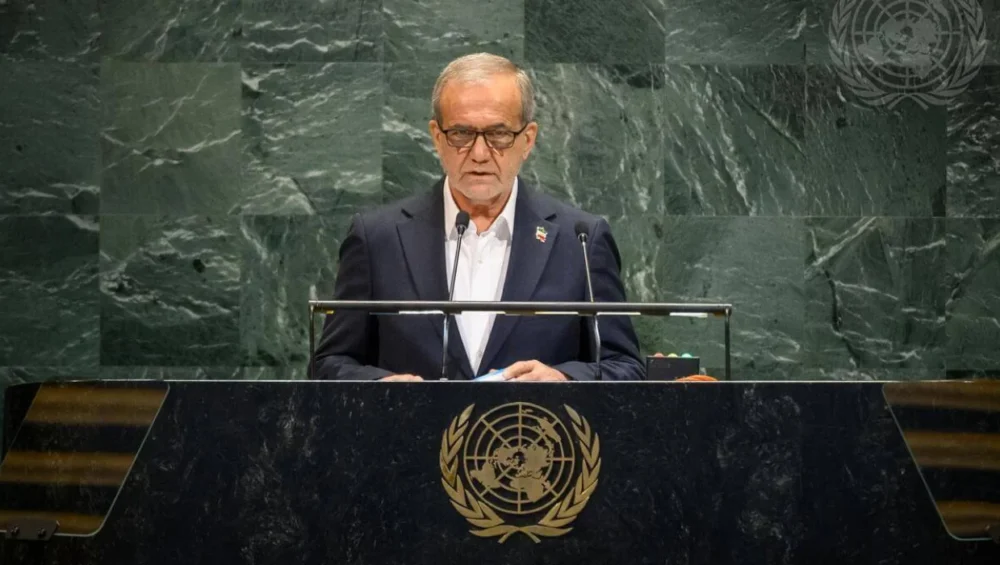
The international confrontation of the most recent Middle East conflict has rekindled an old debate on how the UN is perceived to be hypocritical in the management of global security. With the tensions increasing in 2026 when U.S. and Israeli attacks on the Iranian infrastructure took place in the first part of the year, the United Nations Security Council was subjected to additional criticism about its reactions to the military moves of major powers as opposed to those of their rivals.
The retaliation of Iran by launching missiles and drone strikes on the Gulf is what led to the rapid passing of a resolution at the Security Council denouncing the actions of Tehran. However, the critics of the entire diplomatic blocs contend that the very same organization was unable to come up with binding resolutions to deal with the strikes, which led to the reaction by Iran. This dichotomy has been the focus of wider arguments regarding equity, plausibility as well as the structural limitations of international diplomacy.
The scandal is a manifestation of greater gaps in the international system. Other states view the actions of the Council as supporting geopolitical alliances in international law enforcement. Others say that the retaliation by Iran posed immediate threats in the region that would need condemnation urgently. These opposing versions point to the pressure to which multilateral institutions are subjected in the situations when the major powers are involved in conflicts.
Historical precedents shaping perceptions of UN hypocrisy
The argument on UN Hypocrisy did not appear out of blue in 2026. It is a culmination of decades of diplomacy debate on the manner in which the Security council is conducted to address issues that concern the Middle East players and the intercession of the western armies.
Legacy of nuclear diplomacy and Resolution 2231
In 2015, the Joint Comprehensive Plan of Action, which has been referred to as the Iran nuclear deal, was endorsed by the Security Council Resolution 2231. The accord removed some of the sanctions on Tehran without lifting the limitations on some military operations and transfer of arms.
Even though the deal was a rare agreement point, it led to a new wave of conflict in 2018 when the United States pulled out of the agreement and imposed sanctions once again. Iran subsequently accused western powers of having unequal equalities in this regard, by the fact that, even after the application the economic pressure was on, even though Tehran had already complied in the initial stages of implementation.
By 2025, the International Atomic Energy Agency indicated that the quantity of uranium enriched by Iran had increased manifold after the failure of the talks to revive the accord. This increased the anxiety of the nuclear build-up and the mistrust between Iran and the western governments.
Military confrontations during 2025 escalation
Numerous military events in 2025 worsened the situation in the diplomatic field even more. The Israeli airstrikes on the Iranian-associated facilities and the targeted assassinations of senior military figures provoked the retaliatory measures of the Iranian-related organizations in the region.
The US also engaged in missions against the militant groups associated with the regional network of Iran. Even though such strikes could be considered counterterrorism- or deterrence-related, it did not lead to the unanimous condemnation by the Security Council.
These previous episodes were the groundwork of the charge of selective responsibility. According to critics, the veto power contained in the UN Charter was often used to ensure that the Council was unable to deal with actions of permanent members or those of their close allies.
February 2026 strikes trigger renewed scrutiny of UN responses
The scandal of UN Hypocrisy escalated following organized attacks on Iranian infrastructures at the end of February 2026. The targets of the attacks were the facilities related to the military and nuclear programs of Iran, including the ones located around Tehran and various industrial facilities.
Iranian officials indicated that there were heavy casualties and civilian infrastructures such as schools and medical centers were destroyed in places close to the target. Iranian officials at the UN termed the operations as against the international law and demanded the Security Council action at once.
Western authorities however justified the attacks as a necessity to curtail military powers of Iran. The U.S diplomats claimed that the growing missile and nuclear project of Iran posed a grave security threat that must be dealt with.
Civilian impact and humanitarian concerns
According to the Iranian officials, the strikes have cost the lives of over one thousand civilians, and there was large scale destruction of civilian infrastructure. In some regions, hospitals, residential places and learning institutions were also reported to be affected.
Humanitarian groups in different countries demanded independent investigations on the incidents. Nevertheless, the Security Council was still split on whether to seek formal resolution to the attacks.
UN Secretary-General Antonio Guterres cautioned that an escalation of hostilities would lead to a larger regional war. His comments were indicative of the rising concerns in the United Nations that further military exchanges will destabilize a few of the neighbouring states.
Security Council response to Iran’s retaliation
As the first strikes were discussed, Iran fired counterstrikes in the form of missiles and drone attacks against military bases and critical infrastructure in a number of Gulf states. These activities caused an instant diplomatic response in the Security Council.
Resolution condemning Iranian attacks
In March 2026 the Council issued a resolution denouncing Iranian retaliatory strikes, and urging Tehran to cease attacks on civilian infrastructures and on regional countries. The action was well-welcomed by the western nations as well as some governments in the Middle East.
The Gulf country representatives stressed that the attacks had threatened the civilians and the stability of the region. Saudi diplomats claimed that the Security Council has to hold Iran completely responsible in the case of the acts that endanger the neighbors.
It was also confirmed in the resolution that states have the right to self-defense as under Article 51 of the UN Charter, the legality of defensive actions in reaction to Iranian attacks.
Diplomatic reactions from global powers
Russia and China complained that the resolution gave much attention to the response by Iran but failed to mention the original attacks that fuelled the escalation. Both governments demanded a wider ceasefire campaign and new diplomatic talks.
The Iranian ambassador of the United Nations attacked what he termed as blatant double standards in the Council. The response of the representatives of Tehran is that disregarding previous attacks weakens the validity of international law.
Israel and American diplomats denied such claims saying that the problem of instability lies in the Iranian missile program and proxy operations in the region. They insisted that the retaliation of Tehran was a threat to several nations at the same time and was enough to condemn it urgently.
Structural dynamics behind perceived UN hypocrisy
The discussion of UN Hypocrisy frequently circles back to the very institutional set up of the Security Council. The five permanent members of the body have veto power where they can block resolutions that are against their national interests.
Influence of permanent member veto power
The power of the United States, Russia, China, France, and the United Kingdom to veto almost all the decisions made at the Council. In cases where these countries are in conflict with each other or their strategic allies, it becomes especially challenging to reach some consensus.
This structural feature explains why some military actions generate binding resolutions while others remain unresolved. Diplomatic negotiations frequently stall when permanent members disagree on how to interpret international law or assign responsibility for escalation.
In the current crisis, the United States has opposed proposals condemning the initial strikes on Iran, while Russia has warned it could block additional measures targeting Tehran.
Growing divide between global blocs
The dispute also reflects widening geopolitical divisions between Western powers and several countries in the Global South. Some governments argue that international institutions still operate according to power dynamics established after World War II.
Others maintain that the Security Council remains the most practical forum for managing international crises, even when consensus proves elusive. They emphasize that diplomatic engagement within the UN often prevents conflicts from escalating further.
This divide complicates efforts to craft unified responses to modern security challenges. As new regional powers gain influence, debates over fairness and representation within the UN system are likely to intensify.
Broader implications for international governance
The controversy surrounding UN Hypocrisy has implications beyond the immediate conflict involving Iran. It raises broader questions about how international institutions enforce rules during periods of geopolitical rivalry.
Analysts note that the credibility of global governance structures depends heavily on consistent application of international law. When major powers appear exempt from scrutiny, smaller states may question whether the system truly protects their interests.
At the same time, the complexity of modern conflicts makes consensus increasingly difficult. Military actions often occur within dense networks of alliances, proxy actors, and strategic rivalries, complicating attempts to assign responsibility.
These realities highlight the tension between legal principles and political realities in international diplomacy. Multilateral institutions must navigate competing narratives, national interests, and humanitarian concerns simultaneously.
As debates over UN Hypocrisy continue to reverberate across diplomatic corridors, the broader challenge remains unresolved. Whether the Security Council can adapt to shifting geopolitical dynamics or whether its credibility will erode further under the weight of competing power blocs may ultimately determine how effectively the international community responds to future crises.