
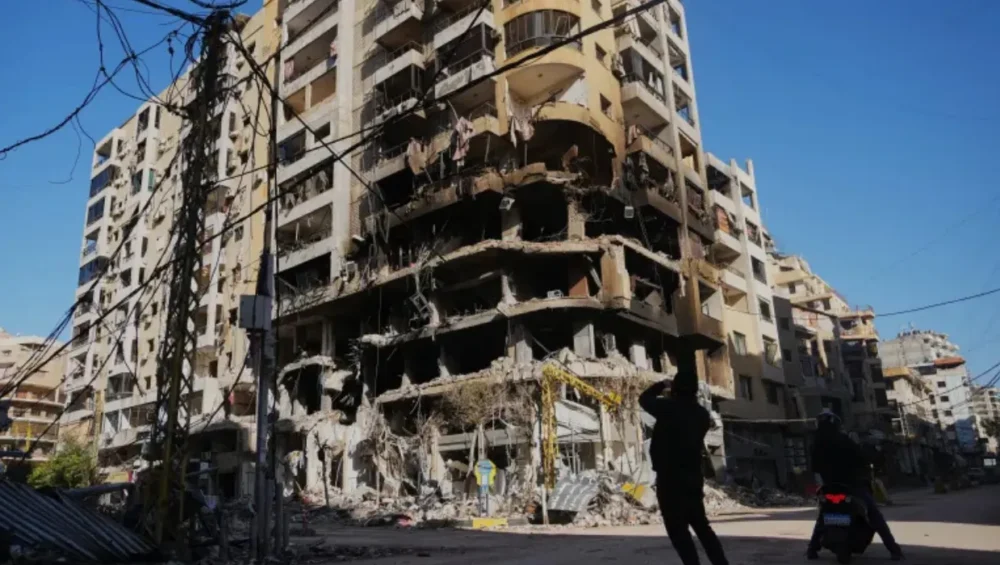
The latest briefing from the Office of the United Nations High Commissioner for Human Rights has placed the legal principle of distinction at the center of scrutiny regarding military operations in Lebanon. In its March 17, 2026 update, the agency stated that some Israeli airstrikes and ground activities “may amount to war crimes” if evidence confirms that civilians or civilian infrastructure were intentionally or recklessly targeted. Spokesperson Thameen Al‑Kheetan emphasized that international humanitarian law requires combatants to clearly differentiate between military objectives and civilian populations.
This framing is significant because it transforms humanitarian concern into a structured legal assessment under international humanitarian law. The principle of distinction, embedded in the Geneva Conventions and their additional protocols, defines the baseline for lawful military conduct. By invoking this rule explicitly, the OHCHR Lebanon findings on distinction and displacement are interpreted not merely as observations about harm but as an indication that potential violations could reach the threshold of international criminal accountability.
Legal Foundations of the Distinction Principle
The concept of distinction obliges parties in armed conflict to direct attacks only against combatants and legitimate military targets. Civilian homes, medical facilities and infrastructure not directly contributing to military operations must remain protected from deliberate targeting. Violations of this principle can become prosecutable offenses under international law when evidence demonstrates intent or reckless disregard.
Legal scholars point out that this principle forms the backbone of modern battlefield regulation. Without adherence to distinction, the structure of international humanitarian law risks losing its capacity to limit the scale and scope of violence against civilian populations.
Distinction in Contemporary Conflict Analysis
In recent years, analysts monitoring conflicts across multiple regions have highlighted how urban warfare complicates the practical application of distinction. Military planners frequently operate in environments where combatants and civilian populations exist in close proximity. The OHCHR Lebanon findings on distinction and displacement highlight how these operational realities are increasingly being assessed through legal frameworks rather than purely strategic narratives.
Patterns of Attack and Civilian Harm in Lebanon
Reports referenced by the United Nations describe a pattern of strikes affecting residential areas and public infrastructure since early March 2026. Lebanese health authorities cited by the UN indicated that hundreds of civilians were killed and many more injured during operations linked to the escalating conflict. Damage to homes, shelters and urban neighborhoods has drawn attention from international observers evaluating compliance with humanitarian law.
These developments are being analyzed not only in terms of casualty figures but also in relation to how military targets were identified and whether precautions were taken to minimize civilian harm. The OHCHR Lebanon findings on distinction and displacement thus connect statistical data with legal evaluation, shaping the broader narrative surrounding the conflict.
Civilian Infrastructure and Urban Impact
UN briefings referenced repeated strikes affecting densely populated areas in Beirut and southern regions of Lebanon. Observers noted that residential buildings, temporary shelters and facilities used by displaced families were among the locations affected during the escalation. Such incidents raise questions regarding whether sufficient verification procedures were followed before attacks were conducted.
The concentration of civilian structures in urban zones complicates the distinction analysis. Nonetheless, humanitarian law maintains that even within contested environments, attacks must be directed exclusively at legitimate military objectives.
Protection of Medical Facilities and Personnel
Another point emphasized in the UN briefing concerns the impact on healthcare infrastructure. Damage to clinics, ambulances and hospitals was documented in several areas. International humanitarian law provides additional protection for medical personnel and units, recognizing their essential role in assisting the wounded and sick during hostilities.
When attacks affect these facilities, investigators examine whether the sites were being used for military purposes or remained purely humanitarian in function. This aspect of the OHCHR Lebanon findings on distinction and displacement contributes to ongoing debates about proportionality and targeting verification.
Displacement Orders and Legal Concerns
Beyond direct strikes, the OHCHR briefing addressed the implications of evacuation orders issued in parts of southern Lebanon and areas of Beirut. Authorities in Lebanon estimate that large numbers of civilians have moved from their homes since hostilities intensified. According to humanitarian agencies, these movements are among the most significant population displacements recorded in the country in recent years.
The legal issue lies in whether such evacuation directives meet the strict conditions set by international humanitarian law. Displacement may be permissible if it protects civilians from imminent danger or is required for imperative military reasons. However, forced relocation unrelated to these criteria could constitute a violation under the Fourth Geneva Convention.
Scale and Dynamics of Displacement
Humanitarian updates describe extensive movement of civilians away from frontline areas and urban districts exposed to military operations. The displacement pattern includes both organized evacuations and spontaneous flight by families seeking safety. Analysts observing the OHCHR Lebanon findings on distinction and displacement argue that the magnitude of population movement itself is becoming part of the legal discussion surrounding the conflict.
When displacement reaches large-scale levels, investigators often examine whether infrastructure destruction, warning messages or ongoing hostilities left civilians with no realistic alternative but to leave their homes.
Humanitarian Conditions and Legal Interpretation
Legal analysis of displacement does not focus solely on the act of relocation but also on the conditions that follow. Access to shelter, food, healthcare and safe return opportunities plays a role in determining whether displacement measures align with international humanitarian law. Observers note that displacement combined with continued attacks on housing areas may influence how accountability frameworks interpret the situation.
Implications for Accountability and Evidence
The phrasing used in the OHCHR briefing indicates that preliminary information suggests possible violations while further investigation remains necessary. Establishing war crimes requires detailed evidence concerning targeting decisions, intelligence assessments and command responsibilities. International legal bodies typically rely on documentation from multiple sources to build a comprehensive picture of events.
Organizations including Human Rights Watch and Amnesty International have conducted parallel documentation efforts during the escalation. Their investigations into alleged unlawful weapons use and destruction patterns form part of the broader evidentiary environment that could influence future legal proceedings.
Documentation and Investigative Pathways
Human rights monitoring groups and UN agencies often collect satellite imagery, witness accounts and forensic analysis to reconstruct incidents. Such evidence becomes crucial when assessing whether attacks were indiscriminate, disproportionate or intentionally directed at civilians.
The OHCHR Lebanon findings on distinction and displacement therefore contribute to a growing record that legal institutions may later examine. Courts assessing potential violations often rely on patterns established through multiple independent investigations rather than isolated claims.
Role of International Legal Institutions
Institutions such as the International Criminal Court and other tribunals operate within defined jurisdictional frameworks. When allegations reach the threshold of war crimes, prosecutors must determine whether jurisdiction exists and whether sufficient evidence supports formal proceedings.
The current situation highlights how UN reporting can act as an early warning system that signals potential legal consequences. Even when immediate prosecutions are not initiated, the accumulation of evidence increases scrutiny on military operations and policy decisions.
Enforcement Challenges in the Current IHL Landscape
The OHCHR Lebanon findings on distinction and displacement are emerging within a broader international conversation about the effectiveness of humanitarian law enforcement during modern conflicts. Throughout 2025, debates intensified among diplomats, legal experts and policymakers about how existing legal frameworks can address the realities of high-intensity warfare in densely populated environments.
Recent conflicts have demonstrated that compliance with humanitarian law often depends on political will as much as legal standards. While the Geneva Conventions establish clear obligations, enforcement mechanisms rely on cooperation among states, investigative bodies and judicial institutions.
Influence on Diplomatic and Military Calculations
When UN bodies publicly highlight potential violations, the statements often influence diplomatic discussions and operational planning. Governments supplying military assistance to parties involved in conflict must consider whether their support aligns with international legal obligations.
Analysts suggest that warnings such as those issued by the UN can shape how military strategies are evaluated by allies and international partners. The scrutiny associated with the OHCHR Lebanon findings on distinction and displacement may therefore extend beyond the battlefield to broader policy deliberations.
Broader Implications for Regional Stability
The conflict in Lebanon has implications for regional security dynamics in the Middle East. Armed groups operating within the area are also bound by international humanitarian law, and attacks directed indiscriminately at civilian populations on either side of the border fall under the same legal prohibitions.
This dual accountability reinforces the principle that humanitarian law applies universally regardless of the asymmetry between state and non-state actors. As international attention remains focused on the conflict, the ongoing documentation of events will likely influence future debates about how effectively humanitarian law can shape conduct in complex and rapidly evolving conflict environments.
Across diplomatic circles and legal forums, the emerging narrative surrounding the OHCHR Lebanon findings on distinction and displacement reflects a broader question confronting the international system: whether established legal norms retain the capacity to influence behavior during intense hostilities, or whether their authority depends increasingly on how decisively states and institutions respond when violations are publicly identified.