
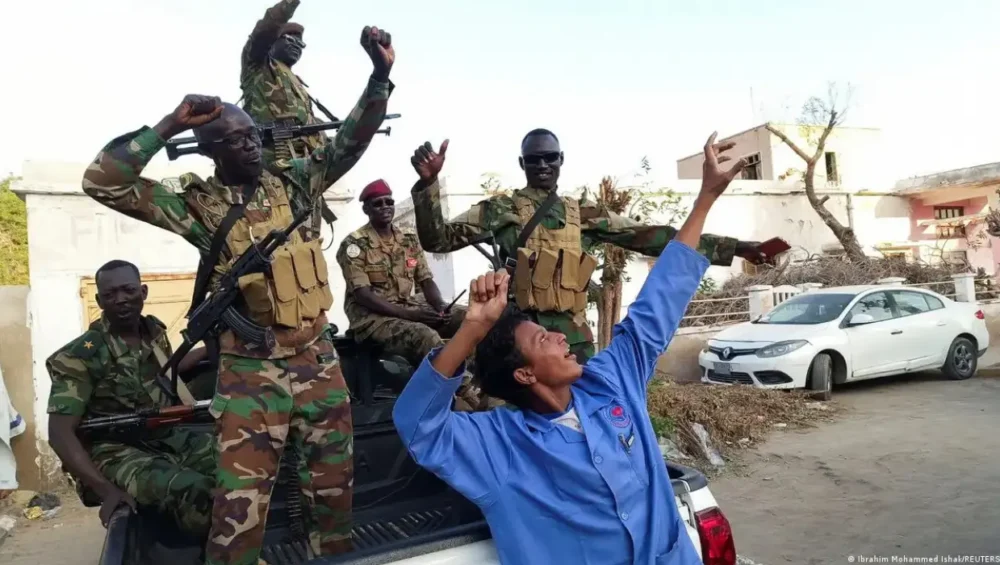
The RSF War Crimes El Fasher charges were once more given new urgency when the Rapid Support Forces stormed in the North Darfur capital at the end of October 2025, concluding an eighteen-month siege that had already decimated civilian infrastructure. The attack led to mass exodus and a series of alleged atrocities, especially on civilians with disabilities who could not evacuate as fast as others.
The pattern described in the interviews conducted by Human Rights Watch with both the survivors and disability rights advocates is that physical impairment increases vulnerability to detention, extortion, and summary violence. An example is one 33 year old man who was on crutches and was held up four days before relatives paid the ransom of what could be regarded as thousands of US dollars. These reports indicate that there is a systematic exploitation of vulnerability as opposed to unintentional damage in the face of anarchy.
Humanitarian monitors estimate that around 22 percent of the total households in displacement locations like Tawila camp, have at least one person with a disability. However, less than 10 per cent have access to assistive devices or specialized care, which highlights the effect the siege had on the aftermath of the war, accelerating structural neglect.
Siege dynamics and heightened exposure
The extended siege of El Fasher resulted in many people confined to bed or wheelchairs being abandoned as food and supplies ran low. Witnesses talked of house-to-house hunting where fighters were taking wheelchairs and crutches and in some cases claimed that they were being used to conceal combatant identities.
Survivors also noted offensive speech used towards the disabled presenting them as a liability or suspects. In a range of testimonies, combatants claimed that amputees were wounded soldiers, which assumed that there was a gray area between being a civilian and a fighter, which is against accepted humanitarian practices.
Post-takeover detention and executions
Once the city was taken down, there were more reports of unjustified detention. One man aged 22 years and who sustained an injury before reported that he had been kept behind bars (10 days) and that his release was negotiated by the family members by payment. Others were not released. There are instances that disability rights activists reported of killings of those seemingly slowing down the groups during evacuations.
The director of the disability rights division of Human Rights Watch reported that the Rapid Support Forces implicated people with disabilities as suspects, burdens, or expendable, claiming that some amputees were just executed without any trial. These testifications indicate that there is a pattern that can be determined and not single misconduct.
Legal implications under international humanitarian law
The RSF War Crimes El Fasher accusations overlap with several branches of international law. Article 3 of the Geneva Conventions in 1949 forbids the use of violence against civilians and all those people who are not actively involved in combat, such as the use of cruel treatment and an outrage to personal dignity. In the event that torts were systemic or prevalent, they can qualify as crimes against humanity in Articles 7 of the Rome Statute.
In 2010, Sudan signed the Convention on the Rights of Persons with Disabilities and committed to guard persons with disabilities in risk situations; one of them was the armed conflict. Article 11 commits state parties to make sure that the access is safe and humanitarian. The Rapid Support Forces is not a state actor, although Sudan overall has a role in preventing and acting up on violations.
War crimes classification and evidentiary hurdles
Deliberately targeting civilian individuals who are under protection is a war crime of the Additional Protocol I to the Geneva Conventions. The alleged discrimination by targeting persons based on disability status, in particular, in case proven, would support the allegations of discriminatory violence.
Nonetheless, issues of documentation are still there. El Fasher is still closed and numerous testimonies have been received of refugees who fled to Chad during the period between December 2025 and early 2026. When the responsibility of command is to be established, it is necessary to evidence how the abuses were ordered, condoned, or not averted by the structures of leadership.
Intersection with ethnic persecution
Ethnic targeting has also been used to describe the violence in North Darfur, especially on Zaghawa and Fur people. The abuse stemming out of disability seems to cross into these trends because the amputated persons belonging to specific ethnic groups were reportedly assumed to be ex-fighters.
This intersectionality makes it harder to classify the law, but could also make prosecutorial cases more convincing that persecution was made on more than a single grounds that is protected. The documentaries continued to raise seriousness to demands of specific accountability as in February 2026, the UN investigators cited signs of genocide in wider Darfur violence.
Accountability mechanisms under strain
The disjointed politics of Sudan has been a barrier to accountability in the country. The judiciary functioning in the country is a situation where there is fragmented territorial authority between the Sudanese Armed Forces and the Rapid Support Forces, which restricts the consistent investigative power over the territory. The officials of RSF have refuted the systematic malpractice, showing the operations as security measures.
The International Criminal Court still has jurisdiction over Darfur due to a referral in 2005, but cannot proceed in regard to more recent events due to logistical and political obstacles. With the escalation of conflict in Sudan in 2025, and a possible repeat of fighting in Khartoum, attention was split among the international community.
Regional and international diplomatic responses
In November 2025, the United States imposed sanctions on the RSF commanders and other financial networks. Although it was not explicitly presented in terms of disability abuses, the measures pointed to an increasing pressure on the outside.
The United Nations and African Union have demanded ceasefires in El Fasher, and mediation has not yet given way. Hybrid accountability mechanisms based on the Central African Republic experience have been proposed as a possible way to reduce corruption in developing nations, although only political alignment, which has proved hard to date, can make this happen.
Global disability protections tested by conflict realities
The War Criminal El Fasher charges by the RSF demonstrate these inconsistencies between the international disability systems and their implementation in the active war scenes. Convention on the Rights of Persons with Disabilities has put down a normative floor but its practice in conflict areas is unequal.
In 2019, the United Nations Security Council passed Resolution 2475, which urges to protect and include people with disability into the armed conflict and ensure the better quality of data collection. In reality, in 2025 Sudan-reporting underestimated the prevalence of disability in displacement reports which constrained specific response planning.
Humanitarian system constraints
The funding gaps experienced in aid agencies are acute. By 2025, Sudan had a vast population of humanitarian appeal with an insufficient level of funding, limiting the purchase of assistive devices and rehabilitation services. Disability inclusion screening tools were not placed in a systematic manner in Darfur, as they had been experimented in other conflict regions.
With the increasing displacement numbers after El Fasher takeover, the specialized services fell back compared to the general food and shelter distributions. This difference supports the fear that the inclusion of disability remains secondary when responding in case of an emergency scale-up.
Precedents from other conflicts
Comparative experiences of Yemen, Gaza, and Ukraine have shown that when disability metrics are incorporated into ceasefire monitoring and evacuation planning it can minimize harm. The guidance of the International Committee of the Red Cross is based on the idea of preventing the detection of mobility and sensory loss, which is a part of crisis response.
Sudan’s case underscores how absence of such measures can transform impairment into a direct risk factor. The targeting of individuals based on visible disability not only violates humanitarian norms but signals a broader erosion of civilian protections.
Strategic implications for future protection frameworks
The trajectory of RSF War Crimes El Fasher allegations will depend on documentation, diplomatic leverage, and sustained advocacy by disability rights networks. Embedding disability indicators into UN investigative mandates could strengthen evidentiary records and ensure that prosecutions reflect the full scope of harm.
At the same time, humanitarian actors face immediate operational choices. Scaling up assistive device provision, rehabilitation services, and inclusive shelter design requires predictable funding and secure access. Without these, normative commitments risk remaining aspirational.
The events in El Fasher reveal how quickly civilians with disabilities can become collateral in power struggles marked by ethnic tension and urban siege warfare. As Sudan’s conflict enters another year, the degree to which international legal and humanitarian systems respond to these specific patterns of abuse may shape not only accountability in Darfur, but the credibility of global disability protections in future conflicts where vulnerability is too easily weaponized.