
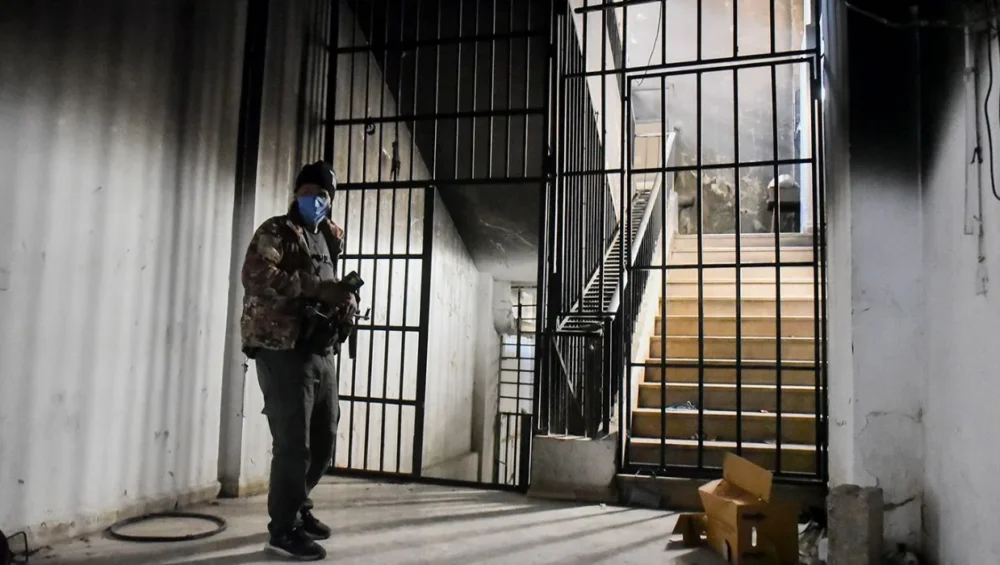
One of the largest intelligence releases so far on the Syrian state violence is the Damascus Dossier Leaks, released in December 2025. With the support of the International Consortium of Investigative Journalists and allies in Belgium in the forms of De Tijd, Le Soir and Knack, the investigation analyzed over 134,000 internal documents retrieved out of the security apparatus in Syria. These documents expose trends in torture, forced disappearance and extrajudicial executions that were perpetrated from 2015 to 2024 during the regime of Bashar al-Assad.
The hacked files contain image records of more than 10,200 dead prisoners, with the records organized by internal security documents which show interrogation cycles, transfer of detainees and reporting of chain of command. According to Belgian sources, some of the leaked information singles out names of those who are currently members of the Syrian diaspora in Belgium, leading to an imminent fear that regime facilitators and actual offenders might have returned to Europe in the last years of the war.
These disclosures are after Assad fled to Russia in December 2024 and the transitional government of Ahmed al-Sharaa was installed in early 2025, a turmoil that prompted the international community to revisit the cold war crimes cases. Greater attention paid in Europe to scrutinize has increased pressure on national jurisdictions to do so and Belgium is one of the most active states in trying Syria-linked cases this year.
Belgian Prosecutorial Response To Damascus Dossier Leaks
The Federal Prosecutor, the office of Belgium, affirmed the renewal and the extension of Syria-related investigations after the Damascus Dossier Leaks. As of December 2025, 27 international humanitarian law violations of the Assad era were already prosecuted. Eight cases were terminated without proceeding further, but 19 are still on the move as an indicator of serious operational commitment.
Judicial Escalation Following Leaked Evidence
The four of the active files have already been forwarded to investigating judges, which is a step further than investigation. The spokesperson of the Prosecutor Office, Yasmina Vanoverschelde, was quoted saying that the investigations included not only loyalists of Assad but also the Islamic State members whose operations overlapped the regime-era offences. The dual focus indicates that Belgium is more inclined to apply international criminal law as opposed to the regime figures that it pursues.
Belgium has previous experience in prosecuting Syrian atrocities, such as the 2024 indictment in Brussels of Hossin A., a former Ba’athist militia officer for allegedly taking part in the commission of torture and unlawful murders between 2011 and 2016. That case showed that the mechanisms of universal jurisdiction are viable and established an evidentiary precedent on future cases in 2025.
Scope Of Investigations And Early Case Patterns
Prosecutors are reviewing the logs on detainees transfers, security memorandums, and intelligence briefs in the Damascus Dossier Leaks and cross-examine them with the immigration databases, asylum testimonies, and community reports. The necessity of forensic corroboration is stressed by investigators because of the sensitive origin of the leaked files and the necessity to verify each piece of paper prior to putting it into the courtroom.
Resource Constraints Shaping Investigative Progress
Although the operational capacity of the Belgian authorities has been increasing, the number of cases they have is not proportional to the growth, and this may slow down the prosecution process. Ghent University researcher Brigitte Herremans said that Belgium has long had a problem with war crimes and international criminal law investigators being the least trained. The number of documents published by the leaks is vast, which puts pressure on the available resources even though the federal authorities increased the number of people in 2025.
Forensic Verification Of Leaked Intelligence
Intelligence materials that are thousands of pages in length have their chain of custody which has been partly opaque, to be authenticated by investigators. This requirement causes delays, because forensic teams are required to authenticate metadata, examine the provenience of documents and verify compliance with recognized Syrian intelligence systems.
Coordination Across Belgium’s Federal Framework
The Belgian judicial structure, which consists of both federal and local jurisdiction, should be carefully coordinated. A case of war crimes requires very high evidentiary standards, multi-skilled evaluations, and international collaboration, which puts a long-term pressure on legal capacity.
Despite these obstacles, prosecutors do not stop their work and base on the cooperation with international institutions and Syrian civil society groups that managed to save the testimonies since the first years of the conflict.
Universal Jurisdiction And Its Expanding Applications
Belgium has one of the oldest systems of universal jurisdiction in Europe, which allows authorities to declare genocide, war crimes and crimes against humanity committed in any country irrespective of its location. This juridical ground makes Belgium a major location to seek retribution over horrors reported in the Damascus Dossier Leaks.
Legal Foundations And 2025 Strengthening Measures
This effort by Belgium is in line with a wider European tendency since the fall of Assad with countries like Germany, Sweden and France all raising the number of Syrian suspects prosecuted. The proposals to update the procedural tools and enhance the safety of the witnesses were analyzed by the Belgian legislators in 2025, opening more avenues on how the victims can safely engage in the process.
Precedent Cases Influencing Current Strategy
The Hossin A. conviction in 2024 demonstrated that Belgian courts are capable of proving the charges that are based on intricate conflict settings. Prosecutors use that case to perfect the evidentiary approach to the 2025 cases particularly in assessing command responsibilities, militia hierarchies, and documentation of detention facilities that are prominent in the leaked intelligence.
Diaspora Dynamics And Community-Level Implications
The Damascus Dossier Leaks caused the doubling of attention among the Syrian diaspora of Belgium, refugees, long-term residents, and newcomers to the country as part of recent population migration. The governments launched specific investigations to ascertain whether people featured in the leakages had gained Belgium through asylum or family reunification.
Balancing Integration With Accountability
Belgian officials insist that there is a necessity to differentiate the needs of refugees which are created by state violence and the needs which may be committed by the state itself. The stigmatization has been protested by the community leaders, who observe that most of the Syrians in Belgium are victims of the regime repression. The human rights organizations emphasize the importance of due process, which is crucial, as well as acknowledge that the leaked documents are an invaluable chance of justice.
Cross-Border Collaboration In Identifying Suspects
European agencies and NGOs are exchanging data in order to provide identity matches based on facial recognition analysis of corpse photos, detention lists and militia lists. The model of cooperation is based on the fact that the Syrian-related justice routes in 2025 will have a multi-state character.
Broader Transitional Justice Environment
The Damascus Dossier Leaks contribute to the movement of global responsibility in that it came in a time when the transitional government of Syria struggled with the restoration of judicial institutions and decades of systematic violations. This has not been formally placed under the jurisdiction of international courts and therefore national cases in Europe have become the leading means of justice.
The 19 ongoing investigations of Belgium are part of a greater coming to terms that goes beyond the imposition of punishment. They influence international anticipations of the reaction of states to the release of large-scale documentary material and show how global jurisdiction structures can work when they have a large amount of information of intelligence-grade.
The ongoing court case raises issues that go way beyond the European boundaries of Belgium. With the courts facing the scale of the 134, 000 documents leaked and possibly involving people who are leading normal lives in the European cities, a wider question arises regarding the scope of responsibility and the capacity of the national apparatuses to respond to the crime that has hitherto remained untouched in the realms of political society.