
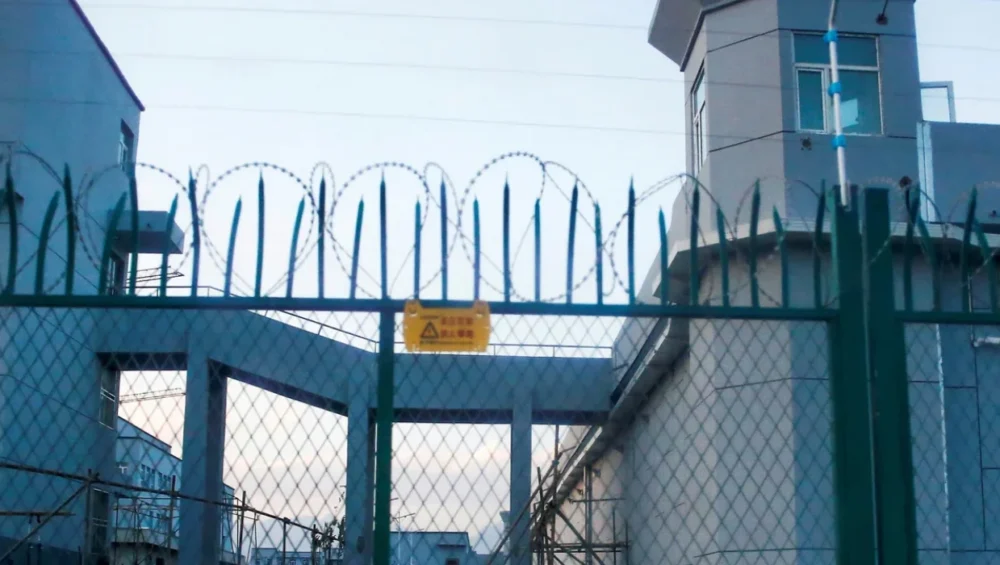
A Chinese citizen who recorded footage of alleged human rights abuses in China’s Xinjiang region has been granted asylum in the United States, following an immigration judge’s ruling that he has a “well-founded fear” of persecution if he is sent back to China.
Guan Heng, 38, secretly recorded detention centers in northwestern China in 2020, capturing footage from a region that is strictly controlled by the Chinese government and off-limits to foreign journalists. According to human rights organizations, over a million ethnic Uyghurs and other Muslim minorities have been arbitrarily detained in Xinjiang over the past ten years.
This is a rare legal success for a whistleblower reporting on abuses within China and reflects the increasing international acknowledgment of the dangers faced by those who reveal state repression.
How Did Guan Document Xinjiang’s Detention System?
In 2020, Guan secretly traveled throughout Xinjiang, recording footage of what he would later say were “concentration camps,” including secure facilities, observation towers, barbed wire fencing, and armed guards. Such footage is very hard to come by, given the level of surveillance in China and the criminal penalties for recording and distributing sensitive information. Once outside of China, Guan released much of the footage on YouTube.
What Do International Investigations Say About Xinjiang?
Several governments, such as the United States of America, the United Kingdom, Canada, and the Netherlands, have formally accused China of committing crimes against humanity in Xinjiang. Some parliaments have even gone further to describe the actions of the Chinese government as genocide against the Uyghur Muslim community.
In 2018, a UN human rights committee reported that it had credible information about the detention of as many as one million people in what the Chinese government calls “counter-extremism centers.” Later studies by independent researchers have indicated that the actual number may be higher.
The leaked police documents, which were obtained by the BBC in 2022, included internal police directives on the camps, such as the deployment of armed police, extensive surveillance of the detainees, and directives that include shoot-to-kill policies in the event of escape attempts.
The survivors who have escaped from Xinjiang have reported physical torture, psychological torture, ideological indoctrination, and sexual violence. The women have reported mass rape and forced medical procedures.
What Is China’s Response to the Allegations?
China rejects all allegations of mistreatment and claims that the camps are vocational “re-education camps” aimed at fighting terrorism and religious extremism. Beijing argues that the initiative has enhanced security and economic development in Xinjiang.
But exiled Uyghur communities claim that their family members have gone missing, cannot be contacted, or received lengthy jail sentences after being detained in the camps.
How Did Guan End Up Detained in the US?
Guan entered the United States illegally in 2021 and later sought asylum. In August, he was arrested as part of a mass deportation operation launched by the Trump administration, which saw a substantial increase in immigration enforcement actions, including the arrest of asylum seekers with pending cases.
Guan was once scheduled for deportation to Uganda by US authorities, which raised concerns among human rights groups due to China’s known policy of persuading third countries to arrest and extradite dissidents. The deportation was later abandoned in December after public attention was drawn to the matter.
Did Guan Film the Camps to Strengthen His Asylum Claim?
During the hearing on Wednesday, Guan was asked if he deliberately distributed the footage shortly before entering the US to support his asylum claim. Guan denied this, saying that his purpose was humanitarian.
“I sympathized with the Uyghurs who were persecuted,”
Guan said during the video hearing from a US correctional facility where he was being held.
Guan said that he distributed the footage only after he felt safe enough to do so after leaving China, traveling through Hong Kong, Ecuador, the Bahamas, and finally Florida.
Why Did the Judge Grant Asylum?
The immigration judge found that Guan had shown a credible risk of reprisal from the Chinese government if he were to be sent back. The court observed that the Chinese government had already interrogated members of his family, which was a common practice employed against dissidents and whistleblowers.
The immigration judge held that Guan satisfied the legal requirements for asylum under US law on the grounds of both political expression and the risk of persecution by the state.
The Department of Homeland Security has the right to appeal the decision and must do so within 30 days. If the decision is upheld, Guan will be allowed to stay in the United States on the grounds of asylum.
Guan’s lawyer, Chen Chuangchuang, said that the case was a “textbook example of why asylum should exist,” and that the US has a moral and legal obligation to protect people who reveal serious human rights abuses.
Why Is This Case Symbolically Significant?
Guan’s asylum grant comes at a time when relations between Washington and Beijing remain tense, particularly over human rights, surveillance, and national security. The case highlights the personal risks faced by citizen journalists and whistleblowers operating inside authoritarian systems and reinforces the role of asylum law as a safeguard for those who expose abuses that governments seek to hide.