
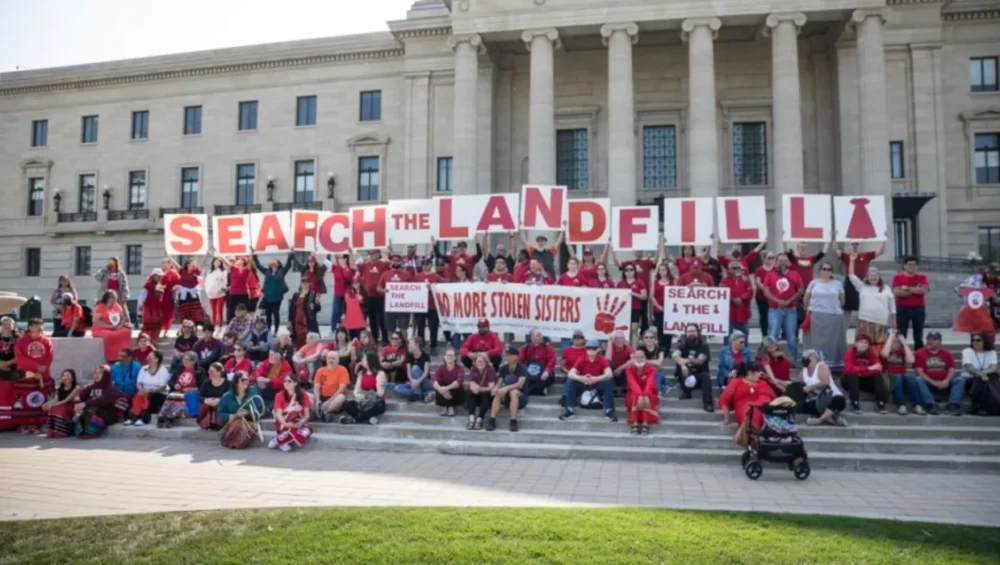
There is an increase in the scope of anti-trafficking in Manitoba with the authorities grappling with one of the most endemic human rights issues against the Indigenous population in Canada. In the recent years, provincial agencies, the police services, and the advocacy organizations have been provided with more funding and arranged special initiatives, however, the province records some of the most significant levels of violence and exploitation of Indigenous women, girls, and two-spirit people.
Statistics that are compiled by federal research and community surveillance indicates that Manitoba is still disproportionately impacted in its citizens based on the population size of the state. In 2025, an analysis of cases related to trafficking connected with the Missing and Murdered Indigenous Women, Girls and Two-Spirit people (MMIWG2S+) determined the province to be responsible for about a fifth of reported cases in the country. The fact that cases are more concentrated in the city further demonstrates that the city centers can serve as the points of concentration of exploitation networks.
However, only half of the picture is described in official statistics. There is a general consensus among researchers that the issue of human trafficking is grossly under-reported because of fear of retaliation and lack of trust in the authorities along with sophisticated systems of control that traffickers employ. Due to this reason, policy discussions are becoming more characterized by the number of reported incidents but the fact that structural conditions exist that enable exploitation to continue.
Provincial strategies seek broader responses to systemic exploitation
The provincial government has come up with a number of initiatives aimed at enhancing Manitoba anti trafficking and directly react to MMIWG2S+ crisis. These policies will target immediate response in terms of enforcement and long-term social vulnerability that traffickers take advantage of.
Mino’Ayaawag Ikwewag strategy and long-term funding
The other most influential policy changes involved the launch of the Mino’Ayaawag Ikwewag strategy, a multi-year action plan to help Indigenous females, girls, and gender-diverse individuals by offering coordinated services. Authorities presented the project as a broader reaction to suggestions by the National Inquiry into Missing and Murdered Indigenous Women and Girls.
The officials of the government referred to the strategy as an initiative to combine the housing support, addiction treatment, policing changes, and culturally grounded services. Indigenous activists have always maintained that criminal law enforcement is not the only way to resolve trafficking, as exploitation is often compounded with poverty and homelessness, as well as historical trauma.
However, as it is observed by the observers, the final effect of the strategy will rely on the implementation. Community-based shelters and programs that offer culturally appropriate support systems to survivors are still being demanded by many Indigenous leaders.
Public awareness campaigns as preventive tools
Manitoba anti trafficking also takes education campaigns as a poised constituent. Local governments collaborated with agencies like Joy Smith Foundation to increase awareness efforts on the national level to bring out red flags of abuse and trafficking.
These movements pay much attention to outreach to youth and online learning as it is evident that traffickers are actively recruiting more victims via social media and messaging apps. The proponents stress that families, teachers, and community members should be made aware at an early stage to prevent exploitation measures before they take effect.
Other efforts have been geared towards high profile community events. In Winnipeg, community groups initiated outreach initiatives in such mass events like the grey cup where augmented tourist numbers and augmented nightlife concerning activity can result in conditions which the traffickers seek to capitalize on.
Law enforcement responses adapt to evolving trafficking patterns
Law enforcement authorities in the province have increased their potential to probe into trafficking rings at a gradual pace. These developments mirror an increased awareness that exploitation has various forms which include sexual exploitation to forced labour.
Specialized human trafficking units
The Royal Canadian Mounted Police have put in place special investigative forces in Manitoba whose role is only to concentrate on trafficking activities. These departments liaise with the city police departments, social services and federal investigators to maintain track of networks that cross provincial borders.
Investigators note that frequently there is an intricate financial structure and psychological control but not the open physical confinement. Debt bondage, emotional coercion, or threats to relatives can be some of the methods to keep victims under the control of traffickers.
In spite of the efforts, enforcement agencies admit that victim identification is one of the most challenging parts of the investigation of trafficking. The fear arises when survivors do not want to be associated with the authorities and the stigma or negative experience in the past.
Labour trafficking cases broaden enforcement scope
The labour exploitation in the sphere of the migrant workers utilization has also been noted by recent studies. In Manitoba town Portage La Prairie, there was a case in 2025 that resulted in criminal charges against employers who exploited foreign workers by subjecting them to coercive working conditions and illegal practices of recruiting foreign workers.
These incidents depict the fact that trafficking is not limited to sex trade. The situation of migrant workers in hospitality, agriculture, and services could be considered the legal definition of trafficking, and especially when the employee remains isolated, or is reliant on the employer to provide housing and immigration status.
Manitoba’s role within interprovincial trafficking networks
Those studying the patterns of trafficking are beginning to refer to Manitoba as a province that is interconnected in a larger regional network. Winnipeg is located along the main transportation lines which has historically contributed to the city being strategically located to conduct trade and travel.
Winnipeg’s central position in trafficking routes
A study carried out in 2010 to 2024 found Winnipeg to be a common entry point in the trafficking activities of Indigenous women and girls. Other victims are shipped to other provinces where they have greater demand for the commercial sexual services.
Researchers have found some of the paths connecting Manitoba to the cities of Alberta, especially the resource-based cities with high paced economic growth. These channels tend to take highway routes that link prairie provinces so that traffickers can transport victims across boundaries.
Economic developments and migration pressures
Trafficking dynamics have also been affected by the resource extraction projects that are found in Western Canada. Oil and mining developments bring in large temporary workforces that may cause an abrupt demand in housing and other services in isolated locations.
One example that community advocates use to explain that there are more places where exploitation risks can be elevated is the existence of so-called man camps, which are temporary settlements of workers around industrial work sites. Indigenous organizations believe that such developments should be followed by social impact assessment to take care of the possibilities of trafficking and violence.
Indigenous leadership shapes policy discourse on trafficking
Indigenous people leaders remain at the centre of how Manitoba is conceptualizing anti trafficking in context of a larger history and politics. Some say that it is impossible to separate trafficking and violence with the history of colonial policies that forced people out of their homes and destroyed the old system of social relations.
Calls for justice and structural reforms
Organizations such as the Assembly of Manitoba Chiefs have urged governments to implement the full set of recommendations known as the Calls for Justice issued by the national inquiry into MMIWG. These recommendations address policing reforms, social services, education systems, and economic inequalities affecting Indigenous communities.
Community leaders emphasize that trafficking networks exploit vulnerabilities created by systemic marginalization. Addressing these vulnerabilities requires long-term investments in housing, mental health care, and economic opportunities for Indigenous youth.
Survivor-centered support systems
Advocates also highlight the importance of survivor-centered services. Trauma-informed counseling, culturally grounded healing programs, and safe housing are widely viewed as essential components of recovery for individuals escaping trafficking situations.
However, funding for such programs often remains limited and inconsistent. Many organizations rely on short-term grants, creating uncertainty for staff and survivors who depend on continuous support.
Measuring progress amid limited data and hidden exploitation
Assessing the effectiveness of Manitoba anti-trafficking efforts remains challenging due to gaps in reliable data. Official crime statistics record relatively small numbers of trafficking cases compared with the scale reported by community organizations and survivors.
Statistics compiled by Statistics Canada show only dozens of reported trafficking incidents in Manitoba over the past decade. Experts caution that these figures likely represent only a fraction of actual cases because trafficking typically occurs in hidden environments and victims rarely come forward.
Researchers therefore rely on multiple indicators to evaluate progress. These include the stability of funding for Indigenous-led initiatives, the availability of safe housing for survivors, and the capacity of law enforcement agencies to investigate complex trafficking networks.
Recent policy developments indicate that provincial authorities are increasingly aware of the scale of the challenge. Manitoba anti trafficking efforts now involve coordinated strategies that combine public education, policing reforms, and community-based services.
Yet the persistence of violence linked to the MMIWG2S+ crisis suggests that policy responses must operate on a scale equal to the structural forces that sustain exploitation. As Indigenous leaders continue pressing for deeper reforms and stronger collaboration between provincial and federal governments, the trajectory of Manitoba’s anti-trafficking strategy may ultimately depend on whether long-term structural change becomes the central focus of action rather than a distant policy aspiration.