
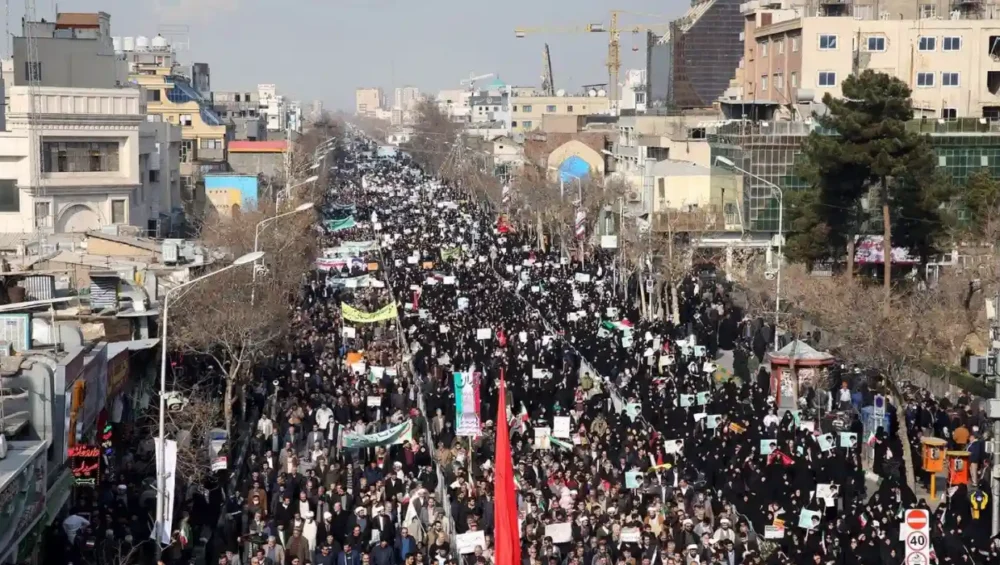
Iranian authorities have unleashed a violent crackdown on nationwide protests since December 28, 2025, marked by unlawful use of firearms, beatings, and mass arbitrary arrests, Amnesty International and Human Rights Watch reported. Security forces, including the Islamic Revolutionary Guard Corps (IRGC) and Iran’s police force (FARAJA), have used rifles, shotguns loaded with metal pellets, water cannons, tear gas, and physical force to disperse largely peaceful demonstrations.
Between December 31, 2025, and January 3, 2026, at least 28 protesters and bystanders, including children, were killed in 13 cities across eight provinces, based on verified information from Amnesty International and Human Rights Watch.
Iranian authorities are brutally cracking down on nationwide protests. At least 27 protesters and bystanders, including children, have been killed in just over a week.
— Human Rights Watch (@hrw) January 7, 2026
Iranian authorities should cease the use of unlawful force and release those arrested for exercising their… pic.twitter.com/6aKIgXzsSF
“People daring to express anger at decades of repression are met with unlawful killings, beatings, and mass arrests, in a deadly repeat of the 2022 Woman Life Freedom uprising,”
said Amnesty’s Diana Eltahawy.
“Iran’s Supreme National Security Council must immediately order an end to these actions.”
What Sparked the Protests in December 2025?
Protests erupted after a sharp currency collapse, soaring inflation, chronic mismanagement of essential services—including water access—and worsening living conditions. The initial demonstrations began with shop closures and strikes in Tehran’s Grand Bazaar, quickly spreading nationwide. Protesters called for the downfall of the Islamic Republic system, demanding human rights, dignity, and freedom.
Authorities responded with violent dispersals and mass arrests, detaining hundreds arbitrarily, many at risk of torture or other ill-treatment.
Are Iranian Security Forces Following a Pattern of Impunity?
Human Rights Watch and Amnesty International found a persistent pattern of unlawful use of force, suggesting systemic impunity.
“The frequency and persistence of lethal force against protesters, combined with impunity for security forces, indicates that these tactics are entrenched state policy,”
said Human Rights Watch’s Michael Page.
#Iran: We're following the ongoing protests, and reports of violence, with concern.@volker_turk: I call on the authorities to uphold the rights to freedom of expression, association and peaceful assembly. All individuals must be able to protest peacefully and express their… pic.twitter.com/Qam8zuT4xi
— UN Human Rights (@UNHumanRights) January 2, 2026
Security forces’ abuses have included firing metal pellets at protesters, beatings, and arbitrary detentions. Officials have demonized protesters as “rioters” and vowed a firm crackdown, with Supreme Leader Ali Khamenei on January 3 stating, “Rioters should be put in their place.”
How Are Victims and Families Being Silenced?
Authorities have denied responsibility for killings while forcing victims’ families to appear on state media to blame “accidents” or other protesters. Families who resist face threats, reprisals, and secret burials. Amnesty International verified that most protests were peaceful, with no imminent threat justifying the use of lethal force.
The deadliest repression occurred in Lorestan and Ilam provinces, home to Kurdish and Luri minorities, where at least eight and five people were killed, respectively.
Which Cities and Provinces Suffered the Most Violence?
- Azna, Lorestan: At least six killed, including Taha Safari, 16, whose body showed severe head injuries.
- Malekshahi, Ilam: At least five killed, including Reza Azimzadeh, Latif Karimi, and Mehdi Emamipour.
- Kermanshah: Reza Ghanbary and two brothers, Rasoul and Reza Kadivarian, killed by plainclothes agents.
- Chaharmahal and Bakhtiari: Ahmad Jalil, Sajad Valamanesh, and Soroush Soleimani killed in Lordegan and Hafshejan.
Verified videos show security forces firing from inside police or IRGC bases, with metal pellets hitting unarmed protesters and crowds fleeing amid gunfire.
Are Protesters Being Gravely Injured or Killed Arbitrarily?
Medical evidence, verified videos, and eyewitness accounts confirm brutal attacks on unarmed civilians, including children. Injuries from metal pellets and blunt force were consistent with patterns of deliberate suppression. Amnesty consulted an independent pathologist to review images of injured and deceased protesters, confirming serious head trauma and other lethal injuries.
What Are International Human Rights Groups Calling For?
Amnesty International and Human Rights Watch urge United Nations member states and regional bodies to issue unequivocal condemnations and pressure Iranian authorities to halt the bloodshed.
Given the systemic impunity that enables repeated crimes under international law—including murder, torture, rape, and enforced disappearances—the organizations call for other countries’ prosecutors to initiate criminal investigations under universal jurisdiction, potentially issuing arrest warrants for those responsible.
The crackdown highlights a state policy of repressing dissent while protecting security forces from accountability. It demonstrates how Iran’s leadership systematically criminalizes protest
and enforces obedience, undermining citizens’ fundamental human rights.
Experts warn that unless urgent international action is taken, this cycle of repression and impunity will likely escalate further, putting more lives at risk and entrenching a culture of violent control.