
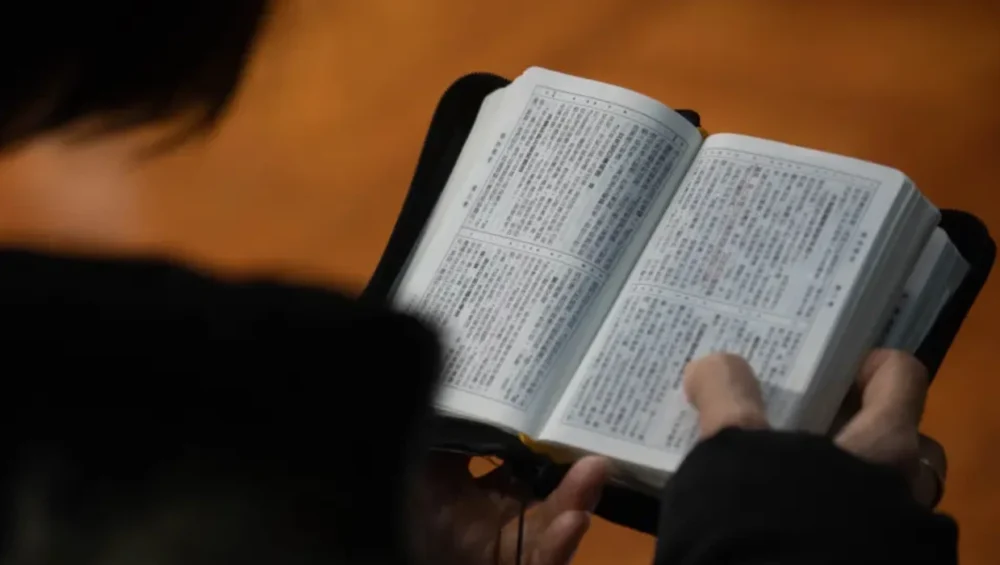
At least six members of the underground Protestant church have been detained by Chinese authorities in Chengdu in the province of Sichuan, Human Rights Watch revealed. Furthermore, the detainees are only the latest in a widespread pattern of human rights abuses stemming from the detention of prominent “house churches” in China.
The crackdown reflects the Chinese government’s animosity towards religions that operate outside government-sanctioned hierarchies, especially protestant churches that operate outside government control.
China: New Arrests at Underground Protestant Churches https://t.co/BzxWsR4Kxc
— Human Rights Watch (@hrw) January 7, 2026
What happened during the raid on Early Rain Covenant Church?
Early Rain Covenant Church reported on social media that police raided the home of its current leader, Li Yingqiang, in Deyang, Sichuan province, on January 6, 2026, and took him into custody. In coordinated police actions, several other key members were also detained, the church said.
“The Chinese government has ushered in the new year with new arrests of underground Protestant church members,” said Yalkun Uluyol, China researcher at Human Rights Watch. “The government should immediately free those detained and let them freely practice their religion.”
Who has been detained or summoned by police?
The arrested believers are: Dai Zhichao (戴志超),Ye Fenghua (叶丰华),Yan Hong (晏鸿),and Zeng Qingtao (曾庆涛). A member of the church,Shu Qiong (舒琼),was called by the police in Chengdu for summed up in the crime of “provocation of picking quarrels and trouble.” The crime is quite general and has been commonly employed
Wu Wuqing (吴五清) was also summoned by the police and released after being told not to “be involved in the case.”
What obligations does China have under international law?
Human Rights Watch urged the Chinese government to “immediately release all individuals arrested for their religious beliefs and practices, as these are recognized as enjoying protection under international human rights law.” The rights group demanded that until all those arrested are freed, “the authorities should ensure that families know where their relatives are, and they should be able to visit and consult with lawyers of their choice.”
How does this fit into a broader national crackdown on churches?
This is a follow-up to a series of raids on other illegal Protestant churches in China. In fact, just weeks prior to this, it is reported that authorities arrested a staggering 100 members from Yayang Church in Wenzhou City, Zhejiang provinces, between December 13 to 18, 2025. More than two dozen arrested church members are still detained.
On January 5, according to the US-based religious freedom organization China Aid, the church was reportedly encircled by hundreds of armed police, special police forces, and heavy construction equipment to apparently demolish the church building.
Were other churches targeted in recent months?
In October 2025, a total of almost 30 pastors, preachers, and members of the Zion Protestant Church were arrested by the Chinese government in seven locations, including Beijing, Shanghai, and the Zhejiang province. Pastor and founder of the Zion Protestant Church, Ezra Jin Mingri, was among the arrested.
Since October 2025, police have carried out coordinated raids targeting people affiliated with Zion Church, one of China's largest underground Christian networks. The crackdown included arrests, confiscations of phones and laptops, surveillance of church gatherings, and vague…
— Human Rights Foundation (HRF) (@HRF) December 23, 2025
Earlier in 2025, a Chinese court sentenced a dozen members of the Linfen Golden Lampstand Church, a hidden Protestant church in the province of Shanxi, for fraud-related offenses, with the church’s co-founder and pastor, Wang Xiaoguang, receiving a nine-year prison term, while his wife, Yang Rongli, was given 15 years.
Why has Early Rain Covenant Church been a persistent target?
Early Rain Covenant Church has been targeted by the Chinese government since its inception in 2008. In December 2018, over 100 members were arrested by police in a massive crackdown in Chengdu.
The founding pastor of the church, Wang Yi, was handed a nine-year imprisonment sentence in 2019 for “inciting subversion of state power” and “engaging in illegal business operations.” Another senior official, Qin Defu, was sentenced to four years for similar charges. Li Yingqiang and other individuals were arrested for “illegal activities” in September 2024, only to be released.
How does Chinese law restrict religious freedom?
China has always maintained very restrictive regulations concerning the practice of religion. In 2005, China’s Regulations of Religious Affairs formalized that all religious organizations must register themselves with the state and are then obliged to follow the state’s controls.
Protestant churches are always pressed to join the Three Selfs Patriotic Movement, the officially recognized umbrella organization for Protestant Christianity. Those who ignore the requirements are usually branded as operating illegally.
How has religious repression intensified under Xi Jinping?
The government’s regulation of religion has markedly intensified since the “Sinicization of Religion” campaign was initiated in 2016 by President Xi Jinping, who vowed to “Sinicize” religion and make it more closely aligned with the ideology of the
Since then, hundreds of church buildings or crosses have been torn down, assembly banned in illegal churches, the Bible made inaccessible, illegal religious texts seized, and religious and Bible-related apps banned. Such persecution extends to Tibetan Buddhism and Islam.
What is the international response being urged?
Human Rights Watch called on concerned governments to publicly condemn China’s assault on religious freedom and pressure Beijing to release individuals detained solely for exercising their basic rights.
“Xi Jinping’s government has tightened ideological control and intensified its intolerance of loyalties beyond the Chinese Communist Party,”
Uluyol said.
“Concerned governments and religious leaders around the world should press the Chinese government to free detained religious adherents and respect religious freedom in China.”