
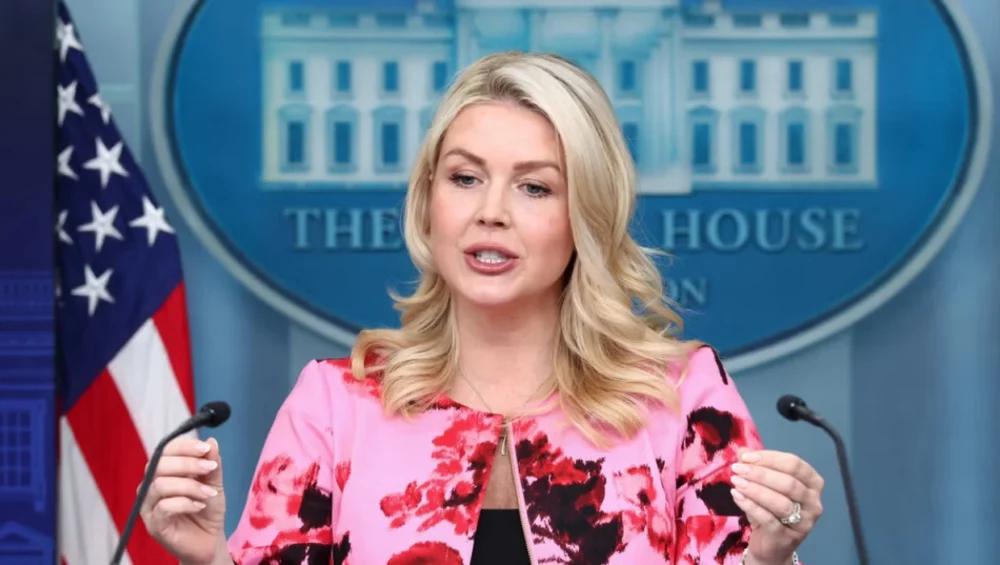
Tensions surrounding U.S. rhetoric toward Iran’s water infrastructure intensified after a late-March 2026 briefing in which the administration faced repeated questions about President Donald Trump’s warnings tied to the Strait of Hormuz deadline. Reporters pressed officials on whether threats involving desalination facilities could violate international humanitarian law. The exchange exposed a widening gap between strategic messaging and the legal sensitivities surrounding civilian infrastructure in conflict zones.
The controversy unfolded against a broader regional standoff that had already escalated through late 2025 energy strikes and maritime disruptions. Observers noted that the language used in public briefings appeared more forceful than earlier messaging during the first phase of the Hormuz tensions. Analysts interpret this shift as part of a broader pressure campaign aimed at compelling Iran to reopen maritime passage routes critical to global energy flows.
Reporter challenges during the March briefing
Journalists repeatedly raised legal concerns tied to water facilities that supply civilian populations. When asked directly whether such threats might qualify as war crimes, the administration responded that U.S. actions would remain within the bounds of international and domestic law. The statement did not address specific provisions cited by reporters, leaving open questions about how officials interpret the legal status of desalination infrastructure during wartime.
The tone of the briefing mirrored similar moments during 2025 when the White House defended strikes on Iranian energy sites after shipping disruptions near the Strait of Hormuz. At that time, officials emphasized deterrence and maritime security while avoiding detailed discussion of humanitarian thresholds or proportionality assessments.
Messaging framed as negotiation leverage
Administration spokespeople characterized the warnings as part of a negotiating posture rather than confirmation of imminent military action. The emphasis on potential diplomatic channels echoed previous claims that indirect talks with Iranian interlocutors had occurred through regional mediators during earlier stages of the crisis.
Such framing has become a recurring feature of U.S. messaging since late 2025, when Washington combined military signaling with claims of back-channel diplomacy. Analysts note that this dual narrative allows policymakers to maintain pressure while leaving room for de-escalation if talks gain traction.
Legal questions surrounding infrastructure threats
Legal specialists have focused heavily on the implications of targeting facilities that produce potable water in arid regions. Iran’s reliance on coastal desalination plants, especially during ongoing drought conditions reported in recent years, has sharpened debates about whether such installations fall under protections afforded to objects essential for civilian survival.
International humanitarian law and water infrastructure
The central legal framework referenced in these debates stems from provisions in international humanitarian law that restrict attacks on installations indispensable to civilian populations. Water systems are widely cited among the protected categories, particularly when they support urban populations in regions with limited natural freshwater sources.
Human rights researchers have argued that the destruction of such facilities could produce widespread humanitarian consequences beyond immediate military objectives. In past conflicts, investigations into attacks on water networks have often examined whether military necessity justified the damage or whether civilian harm outweighed strategic gains.
Disputes over dual-use classification
U.S. defense officials and some policy advisers have pointed to the concept of dual-use infrastructure as a complicating factor in these discussions. Facilities that supply both civilian communities and military operations can sometimes become contested targets under wartime law, provided strict proportionality standards are applied.
This argument surfaced during 2025 operations targeting energy assets in Iran’s southern coastal regions, when officials maintained that certain installations supported logistical networks used by security forces. Legal analysts, however, stress that the burden of proof in such cases remains high and requires careful review before any strike authorization.
Command responsibility and public rhetoric
Another dimension of the debate involves how public statements by political leaders could influence legal accountability. Scholars of international law point out that explicit threats or declarations may be examined when assessing command responsibility if an operation later occurs.
Some experts cited recent academic commentary suggesting that public rhetoric can signal intent, potentially complicating legal defenses should civilian infrastructure suffer damage. These concerns have resurfaced frequently in discussions surrounding the current Hormuz standoff, particularly as the deadline referenced by the administration approaches.
Strategic context shaping White House messaging
Beyond legal arguments, analysts increasingly view the administration’s language as part of a calculated strategy tied to the broader confrontation with Iran. Since late 2025, the U.S. approach has blended maritime security operations with economic pressure and information signaling aimed at influencing Tehran’s decision-making.
Evolution from 2025 maritime disruptions
The current episode can be traced back to shipping tensions that escalated toward the end of 2025, when Iranian actions affecting traffic through the Strait of Hormuz triggered international concern. At that time, U.S. forces carried out limited strikes against infrastructure linked to energy exports, an operation that Washington framed as necessary to protect global commerce.
Those developments set the stage for the present diplomatic and military standoff. Analysts argue that the administration’s latest warnings represent an extension of that strategy, signaling that pressure could broaden to additional sectors if maritime access remains contested.
Domestic political considerations
Inside Washington, the debate over potential escalation intersects with longstanding disagreements in Congress over executive war powers. Several lawmakers have sought clearer briefings on the scope of any planned military action, citing the precedent of earlier 2025 operations that occurred without formal declarations of war.
The administration has responded by emphasizing that deterrence remains the primary objective. Officials suggest that strong language may discourage further disruptions while preserving flexibility in negotiations. Nevertheless, the domestic debate has intensified scrutiny of public statements made during press briefings.
Deterrence narratives and diplomatic signals
Strategic communication specialists note that public warnings can serve multiple audiences simultaneously. Messages directed at Tehran may also be intended for regional partners, global markets, and domestic constituencies seeking reassurance about energy security.
By framing threats alongside references to potential negotiations, the administration appears to be balancing escalation risks with diplomatic signaling. Whether that balance proves sustainable remains a central question among regional analysts.
Regional implications of the controversy
The focus on desalination infrastructure has drawn attention from Gulf states that rely heavily on similar systems for water security. Governments across the region have monitored the dispute closely, aware that retaliatory actions or miscalculations could disrupt interconnected supply networks.
Concerns among Gulf partners
Countries along the Persian Gulf coast operate many of the world’s largest desalination plants, forming a network that sustains major metropolitan areas. Regional officials have quietly emphasized the importance of protecting these facilities from becoming targets in geopolitical conflicts.
Past incidents in 2025, including attacks on water-related infrastructure in other Middle Eastern conflicts, heightened awareness of how quickly disruptions can affect civilian populations. Health agencies reported that water shortages in some areas had triggered disease outbreaks, reinforcing the stakes of infrastructure protection.
Potential economic ripple effects
Energy markets remain highly sensitive to developments in the Strait of Hormuz, where a significant share of global oil shipments passes daily. Any escalation that threatens infrastructure near the waterway could amplify volatility in prices and shipping routes.
Financial analysts note that uncertainty alone can influence markets, even before military actions occur. The debate surrounding desalination threats has therefore added another layer of concern to an already fragile geopolitical environment.
International oversight challenges
Global institutions tasked with monitoring conflict-related conduct face limits when major powers disagree on interpretations of humanitarian law. Diplomatic divisions in international forums have made it difficult to establish unified responses to allegations involving infrastructure targeting.
Human rights organizations continue to track developments through satellite imagery and independent reporting. Their findings could shape future investigations if events escalate, highlighting how scrutiny extends beyond immediate battlefield outcomes.
As the diplomatic clock moves closer to the deadline linked to the Hormuz dispute, attention remains fixed on how rhetoric, law, and strategy intersect at the White House podium. The evolving debate suggests that public language in moments of crisis does more than frame policy; it also shapes expectations about restraint, accountability, and the fragile balance between pressure and stability in one of the world’s most sensitive waterways.