
The doctrine of command responsibility has re-emerged as a central legal framework in assessing accountability for wartime conduct in Ukraine. Rooted in post-World War II jurisprudence and codified in Article 28 of the Rome Statute, the principle establishes that military commanders may be held liable for crimes committed by subordinates if they knew, or should have known, and failed to act.
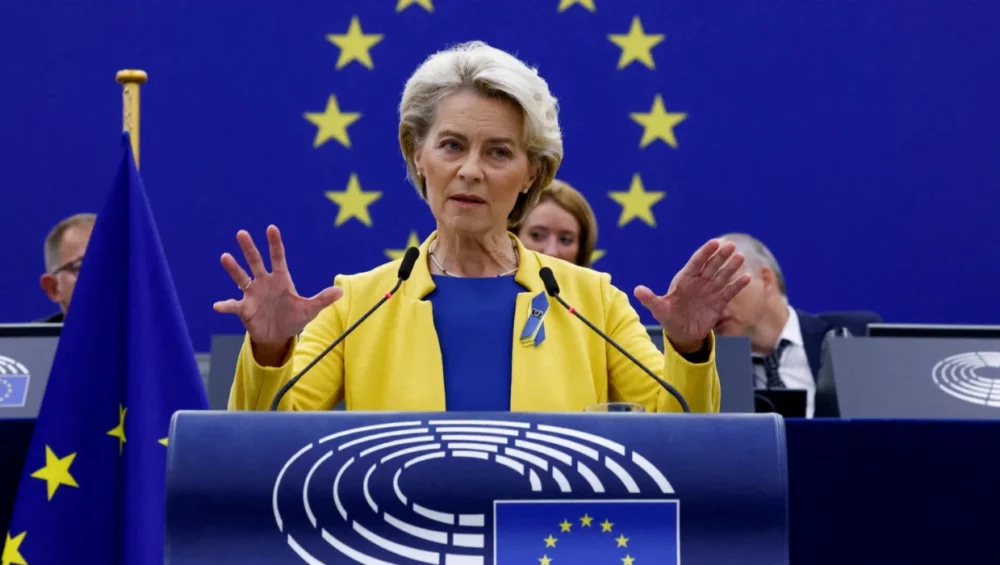
The European Union’s decision on 16 March 2026 to sanction nine Russian officers linked to the Bucha atrocities underscores the doctrine’s contemporary relevance. These measures, timed close to the fourth anniversary of the events in Bucha, indicate a deliberate effort to align political instruments with long-term prosecutorial strategies. By naming individuals in command positions, the EU effectively signals that accountability may extend beyond direct perpetrators to those higher in the chain of command.
Historical Foundations of Command Responsibility
Command responsibility emerged prominently during the Nuremberg and Tokyo trials, where senior military officials were prosecuted for systemic abuses. Subsequent tribunals, including those for the former Yugoslavia, refined the doctrine by clarifying thresholds for knowledge and effective control.
The Blaskic case at the International Criminal Tribunal for the former Yugoslavia demonstrated how failure to prevent or punish crimes could result in conviction. Conversely, acquittals in cases such as Hadzihasanovic highlighted the evidentiary challenges in proving a commander’s awareness. These precedents now shape how prosecutors approach cases linked to Bucha.
Bucha as a Case Study in Modern Application
The events in Bucha during February and March 2022 provide a stark example of alleged systemic violations. Following the withdrawal of Russian forces, investigators documented mass graves, execution-style killings, and widespread civilian harm. Ukrainian authorities have since attributed more than 1,400 civilian deaths across the Kyiv region, with a significant concentration in Bucha itself.
These findings created a factual foundation for applying command responsibility. The scale and pattern of abuses suggest potential coordination or at minimum a failure of oversight, placing senior officers under scrutiny even in the absence of direct orders.
EU Sanctions as a Precursor to Legal Accountability
The EU’s sanctions framework has evolved into a tool that not only exerts political pressure but also supports future judicial processes. By targeting individuals believed to have exercised command authority during the Bucha occupation, the measures function as an early step in establishing legal narratives.
The sanctioned individuals include senior officers who oversaw operations in Bucha and surrounding areas such as Hostomel and Irpin. Official EU statements noted that these figures “played a significant role” in actions undermining Ukraine’s sovereignty, language that mirrors terminology used in international criminal indictments.
Asset Freezes and Mobility Restrictions
Sanctions impose asset freezes, travel bans, and restrictions on financial transactions. While these measures are not criminal penalties, they constrain the ability of suspects to evade future legal proceedings. In practical terms, they reduce access to resources that could facilitate relocation or concealment.
This approach reflects lessons learned from earlier conflicts, where suspects often avoided prosecution by exploiting jurisdictional gaps. By limiting mobility, the EU increases the likelihood that individuals could face arrest if they enter cooperating jurisdictions.
Alignment With Broader 2025 Sanctions Policy
The 2026 measures build upon the EU’s broader sanctions regime expanded throughout 2025. Earlier packages targeted economic networks, including Russia’s so-called shadow fleet, while also designating additional individuals connected to military operations in Ukraine.
This continuity suggests a strategic shift toward integrating sanctions with accountability mechanisms. Rather than treating sanctions as isolated political tools, the EU appears to be embedding them within a longer-term legal framework that anticipates future prosecutions.
Interplay Between Domestic and International Prosecutions
Efforts to prosecute war crimes related to Bucha are unfolding across multiple legal arenas. Ukrainian courts, international tribunals, and national courts exercising universal jurisdiction all contribute to a layered accountability structure.
This multi-level approach reflects both necessity and strategy, as no single institution currently possesses the capacity to address the full scope of alleged crimes.
Ukrainian Judicial Advances in 2025
Ukraine’s domestic legal system has taken significant steps in prosecuting war crimes. In October 2025, prosecutors charged a Russian platoon commander for ordering the قتل of 17 civilians in Bucha. The case relied on a combination of witness testimony, forensic evidence, and digital intelligence.
Such prosecutions demonstrate the feasibility of linking individual actions to command structures. By establishing patterns at the tactical level, Ukrainian authorities aim to build cases that can extend upward through the chain of command.
Role of the International Criminal Court
The International Criminal Court continues to investigate crimes committed in Ukraine, issuing arrest warrants for individuals suspected of serious violations. While the ICC faces resource constraints, its involvement lends international legitimacy to accountability efforts.
EU sanctions complement ICC activities by identifying suspects and preserving evidence. The convergence of political and judicial processes increases the likelihood that cases involving command responsibility will reach trial, even if proceedings take years to materialize.
Universal Jurisdiction in European Courts
National courts in countries such as Germany and the Netherlands have pursued cases under the principle of universal jurisdiction. This allows prosecutors to try individuals for war crimes regardless of where the offenses occurred.
By 2025, these courts had secured initial convictions for lower-level perpetrators linked to the conflict in Ukraine. The expansion of such cases to include higher-ranking officials would represent a significant evolution in the application of command responsibility.
Evidentiary Challenges and Legal Thresholds
Proving command responsibility requires meeting stringent legal standards, particularly regarding the mental element known as mens rea. Prosecutors must demonstrate that a commander either had actual knowledge of crimes or should have been aware given the circumstances.
This requirement often represents the most difficult aspect of building a case.
Establishing Knowledge and Control
In the context of Bucha, prosecutors rely on a range of evidence, including satellite imagery, intercepted communications, and survivor testimonies. These sources can help establish timelines and patterns of behavior, suggesting whether commanders exercised effective control over their forces.
The scale of the alleged abuses strengthens arguments that senior officers could not have been unaware. However, defense arguments typically emphasize the absence of direct orders or claim breakdowns in communication during active combat.
Use of Open-Source and Digital Evidence
Technological advances have transformed the collection of evidence in modern conflicts. Open-source intelligence, including geolocated images and social media data, has played a crucial role in documenting events in Bucha.
By 2025, joint investigation teams had compiled extensive digital archives linking specific units to locations and incidents. These materials may prove critical in bridging gaps between on-the-ground actions and command-level decision-making.
Broader Implications for War Crimes Accountability
The EU’s sanctions related to Bucha reflect a broader shift toward targeting command structures rather than focusing solely on direct perpetrators. This approach aligns with evolving norms in international criminal law, which increasingly emphasize systemic responsibility.
The integration of sanctions, domestic prosecutions, and international investigations suggests the emergence of a more coordinated accountability framework.
Signals to Military Leadership Globally
By highlighting command responsibility, the EU sends a message to military leaders beyond the immediate context of Ukraine. The implication is that hierarchical position does not shield individuals from scrutiny, particularly when evidence suggests a failure to prevent or address violations.
This signaling effect may influence operational conduct in other conflicts, where commanders weigh legal risks alongside strategic considerations.
Link to Reparations and Claims Mechanisms
Developments in 2025, including negotiations for an International Claims Commission, indicate that accountability efforts extend beyond criminal prosecution. Financial reparations for victims form a parallel track, supported by mechanisms such as the Register of Damage.
Sanctions contribute to this process by identifying assets that could potentially be used to compensate victims. The connection between financial measures and legal accountability reinforces the comprehensive nature of the emerging framework.
Political Constraints and Enforcement Realities
Despite these developments, significant challenges remain in enforcing accountability. Sanctioned individuals may remain beyond the reach of jurisdictions willing to prosecute, particularly if they reside in countries that do not cooperate with international legal mechanisms.
This limitation underscores the gap between legal attribution and practical enforcement.
Limits of International Cooperation
While many European states support accountability initiatives, global consensus remains uneven. Some countries have resisted adopting sanctions or participating in investigations, complicating efforts to detain suspects.
The effectiveness of command responsibility prosecutions therefore depends not only on legal frameworks but also on political will across jurisdictions.
Long-Term Outlook for Trials
War crimes trials involving senior commanders often take years to materialize due to the complexity of evidence and legal procedures. The Bucha cases are unlikely to be resolved quickly, particularly given the ongoing nature of the conflict.
However, the accumulation of evidence and the establishment of legal precedents suggest that accountability efforts are progressing incrementally. Each sanction, investigation, and prosecution contributes to a broader trajectory that may eventually culminate in high-level trials.
The evolving interplay between sanctions and legal proceedings raises a central question about the future of accountability in modern conflicts. As evidence continues to accumulate and legal mechanisms expand, the extent to which command responsibility can be enforced at the highest levels remains an open and closely watched issue in international law.