
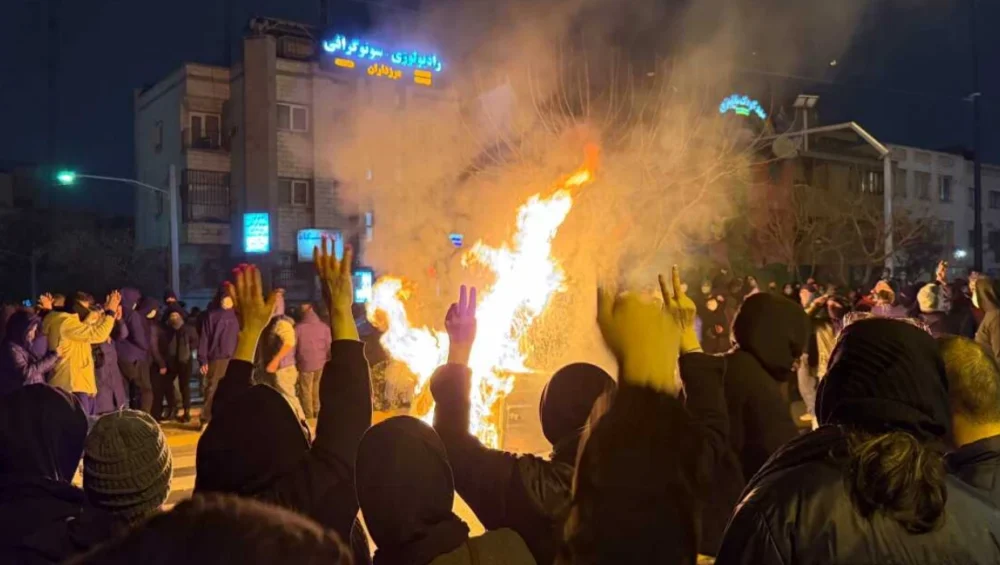
Protests broke out in Iran on 28 December 2025, following a dramatic fall in the Iranian currency. The fall contributed to the already high inflation rates, making living conditions difficult for Iranians. The protests, which began as a result of a strike by Iranian shopkeepers in the Grand Bazaar of Tehran, soon turned into a national movement. The Iranians called for a new political system that takes into consideration human rights and dignity.
The protests were unprecedented in terms of their magnitude, with the movement spreading from large cities to smaller towns. The UN Fact-Finding Mission on Iran has since confirmed that the protests took place in all 31 provinces of Iran. However, despite the initial magnitude, the protests were brutally suppressed.
How did the authorities respond?
The Iranian security forces used deadly force and a tough repression campaign. High-ranking officials referred to protesters as “rioters” and threatened a “firm” crackdown. On 3 January 2026, Supreme Leader Ali Khamenei condemned the protests and urged severe punishment. Security forces, including the Islamic Revolutionary Guard Corps (IRGC), Basij forces, various police branches (FARAJA), and plainclothes agents, committed mass killings and arrests.
Amnesty International found evidence of security forces deployed on the streets and on rooftops firing rifles and shotguns loaded with metal pellets at protesters. Many victims were shot in the head and chest, indicating a clear intention to kill or wound. The repression campaign escalated sharply on 8 and 9 January, with mass killings that represented the deadliest period of repression in decades.
Why did Iran cut internet access?
On 8 January 2026, the Iranian government carried out a complete shutdown of the internet. The shutdown was aimed at hiding the level of violence and preventing Iranians from sharing evidence with the international community. The shutdown also affected the ability of victims, journalists, and human rights organizations to document the abuses. The Iranian government, as well as the IRGC and judiciary representatives, had access to the internet and continued to broadcast propaganda to instill fear in the population.
Iran has previously used internet shutdowns to hide information. This has happened during the November 2019 protests and the Woman Life Freedom uprising in 2022. The current shutdown is the longest and most extreme, showing that the Iranian government is trying to hide mass atrocities.
What happened in the deadliest crackdown?
Amnesty International confirmed that mass killings took place throughout Iran, especially in Tehran province. On 10 January, video footage came out of Kahrizak, where a temporary morgue had to be erected because of the overflow of bodies. Relatives searched for their family members among the body bags. An analysis by Amnesty found at least 205 different body bags in the center. Later video footage showed a counter that reached 250, showing that the number of deaths was increasing rapidly.
The number of deaths is still unclear due to the internet blackout and fear of retaliation. On 17 January, Khamenei said “thousands” had died. On 21 January, Iran’s Supreme Council of National Security reported 3,117 deaths. However, the UN Special Rapporteur on Iran, Mai Sato, reported that at least 5,000 people had been killed, and the death toll could reach 20,000 according to medical sources. The real number of deaths is probably higher due to limited access and repression.
What about arrests and disappearances?
Besides the killings, the Iranian government also conducted mass arrests. According to state media, thousands were arrested by 16 January, but estimates by other sources indicate that tens of thousands were arrested, including children as young as 14 years old. Arrestees include students, human rights activists, lawyers, journalists, and members of ethnic and religious minorities. Most of them are held incommunicado, with their families not receiving any information about their whereabouts, thereby creating a situation of enforced disappearance.
There are reports that the arrestees are being subjected to torture, beatings, sexual violence, and deprivation of food and medical attention. The Iranian government has also used state media to air forced confessions of the arrestees in order to intimidate the public.
What is the cost-of-living crisis and why does it matter?
The protests were fueled by the economic collapse, which also constitutes a human rights crisis. Iran has long been mismanaging basic services, causing water shortages, power outages, and the closing of schools. In 2025, the water shortages and power outages led to significant disruptions in the lives of Iranian citizens. Rather than dealing with the problem, the government attributed the shortages to drought and overuse. This is a failure of the right to adequate living standards and has pushed citizens into poverty.
Environmental degradation has exacerbated inequalities, particularly in ethnic minorities like Kurds and Baluchis. Iran has suffered from the loss of lakes and wetlands, groundwater depletion, pollution, deforestation, land subsidence, and air pollution. In 2025, air pollution led to thousands of deaths, establishing the clear connection between environmental failure and human suffering.
Why is this crackdown different from past uprisings?
Iran has a long record of brutal suppression. Amnesty’s research shows consistent patterns of unlawful killings and mass arrests during protests in 2017-2018, 2019, 2021, and the Woman Life Freedom uprising of 2022. In 2022, the death of Jina Mahsa Amini sparked nationwide protests that were met with mass executions, torture, and arrests. No effective investigations or prosecutions have ever been conducted, reinforcing impunity and enabling further violence.
Since 2022, the authorities have increasingly used the death penalty to suppress dissent. Executions reached levels not seen in decades, and several activists remain under death sentences. The current crackdown raises fears of rapid trials and arbitrary executions as a tool to deter dissent.
What international standards are being violated?
The Iranian security forces’ actions clearly violate established human rights standards on policing protests. UN principles require legality, necessity, proportionality, and accountability. Firearms and lethal weapons are strictly prohibited for crowd dispersal. Yet verified evidence shows Iranian forces repeatedly violated these rules, demonstrating a deliberate and systematic disregard for human rights.
What does the future hold?
With the internet blackout, mass protests are less visible, but the underlying grievances remain unresolved. The crackdown has not ended the crisis; it has only intensified fear, anger, and distrust. The world is left with limited information, but the available evidence points to an ongoing humanitarian catastrophe. The Iranian authorities appear determined to suppress dissent through mass violence, detention, and information control, raising urgent questions about accountability and international response.