
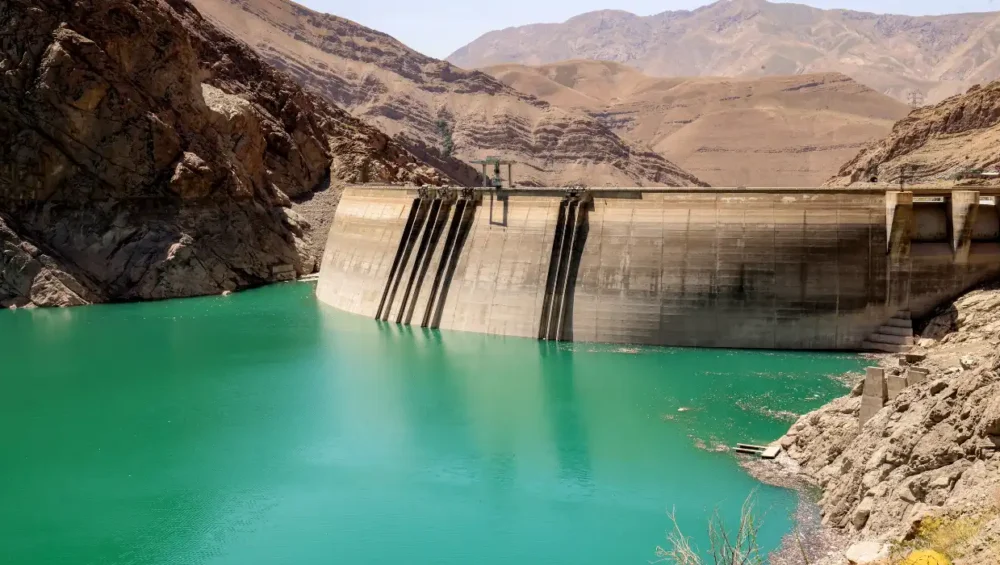
The Water as Weapon debate intensified after President Donald Trump warned that the United States could strike Iran’s critical infrastructure, including power plants, oil facilities and potentially desalination systems. The threat, issued in late March 2026 alongside demands that Iran reopen the Strait of Hormuz by early April, immediately shifted attention from traditional military targets to assets essential for civilian survival.
Legal specialists and humanitarian organizations reacted quickly, noting that water infrastructure occupies a sensitive position under international humanitarian law. Desalination plants along Iran’s Gulf coast produce a significant share of potable water for urban and industrial populations, particularly during a prolonged drought that has strained reservoirs and aquifers across the country. By explicitly referencing such facilities, the rhetoric moved the confrontation into a legal territory rarely invoked so directly by senior officials.
The controversy also reflects how infrastructure has become a strategic pressure point in modern conflicts. Energy and shipping lanes were already central to the standoff, but the mention of water supply systems expanded the debate beyond economic disruption to the potential humanitarian consequences of targeting dual-use facilities.
International law and civilian survival protections
Legal analysis surrounding the Water as Weapon discussion focuses heavily on long-established principles of international humanitarian law that govern how armed conflict affects civilians and essential infrastructure.
Geneva Conventions and protected resources
Under the Fourth Geneva Convention and subsequent legal interpretations, installations necessary for civilian survival are granted special protection. Drinking water systems, food supplies and medical services fall within this framework because their destruction can trigger widespread humanitarian crises. Additional Protocol I further reinforced this idea by prohibiting attacks on objects indispensable to the survival of the civilian population.
Human rights advocates have pointed out that desalination plants in arid regions effectively function as drinking water infrastructure. Observers noted that intentionally destroying such facilities could cross into the category of war crimes if the purpose is to deprive civilians of essential resources. These arguments gained renewed attention because the threat referenced specific categories of infrastructure rather than incidental damage during combat.
The legal emphasis on intent is significant. When public statements identify targets tied directly to civilian needs, lawyers argue that it becomes easier for investigators to assess whether the attack was meant to influence military operations or to exert broader pressure on a population.
Customary law and proportionality tests
Beyond treaty law, customary international law applies to all states regardless of formal ratification of specific agreements. One key principle is proportionality, which requires military planners to weigh the anticipated military advantage of an attack against potential civilian harm. If the expected harm to civilians is excessive relative to the strategic gain, the action may be considered unlawful.
Experts in the field have warned that water infrastructure in the Gulf region is particularly vulnerable to this calculation. Desalination plants often serve large populations and cannot be easily replaced once damaged. In a region where freshwater resources are limited, the destruction of even a small number of facilities can lead to long-term shortages affecting millions.
Legal scholars have therefore interpreted the recent statements as raising serious questions about whether such strikes could ever meet proportionality standards, especially when alternative military targets are available.
Strategic context shaped by earlier confrontations
The current controversy did not emerge in isolation. The strategic logic behind the rhetoric draws heavily on developments during 2025, when tensions between the United States, Iran and regional actors intensified and infrastructure became an increasingly common tool of coercion.
Lessons from 2025 infrastructure strikes
During late 2025, several incidents involving strikes on energy facilities and shipping infrastructure highlighted the vulnerability of regional supply networks. U.S. operations targeting Iranian-linked energy sites drew criticism from international monitors, particularly when disruptions indirectly affected civilian services. Analysts observed that attacks on refineries or port installations sometimes created ripple effects across electricity grids and water systems.
These experiences shaped the strategic environment entering 2026. Decision-makers began viewing infrastructure not only as logistical support for military operations but also as leverage capable of forcing rapid political responses. The rhetoric surrounding desalination plants appears to follow that pattern, using the potential for systemic disruption to influence negotiations over maritime access and regional security.
Regional reactions and retaliation risks
Iran and neighboring states responded cautiously but firmly to the escalation in language. Iranian officials accused Washington of threatening civilian life and warned that attacks on essential infrastructure could trigger retaliatory strikes across the Gulf. Such warnings are taken seriously because several Gulf countries rely heavily on desalination networks that share technological and geographic vulnerabilities.
Regional analysts note that the interconnected nature of energy and water systems increases the risk of unintended escalation. A strike affecting a single facility could disrupt broader supply chains, potentially affecting populations beyond the immediate conflict zone. This interconnectedness explains why governments across the region have urged restraint while quietly reinforcing defensive measures around infrastructure sites.
Military considerations and humanitarian consequences
The debate over whether water facilities qualify as legitimate targets reflects a broader tension between military necessity and humanitarian obligations in modern warfare.
Dual-use infrastructure dilemmas
Military planners often classify certain facilities as dual-use assets because they serve both civilian populations and government operations. Desalination plants, for instance, provide water for households but may also support military bases or industrial complexes tied to defense sectors. This dual role complicates legal assessments, as commanders may argue that disabling such infrastructure could weaken adversary capabilities.
However, humanitarian experts counter that the scale of civilian reliance often outweighs any tactical advantage gained from destruction. In countries experiencing drought or water scarcity, the removal of desalination capacity can lead to prolonged humanitarian crises rather than short-term military effects. These concerns have been highlighted repeatedly in discussions surrounding the 2026 confrontation.
Civilian vulnerability in water-scarce regions
Iran’s ongoing water stress adds another layer of complexity. Years of reduced rainfall, combined with overuse of groundwater resources, have left several regions dependent on engineered water supply systems. Coastal desalination plants serve large urban centers where alternative sources are limited.
Analysts studying conflict patterns note that attacks on such infrastructure can produce cascading effects beyond immediate shortages. Disruptions in water supply often affect healthcare systems, sanitation networks and local economies. These secondary consequences have been central to legal arguments that water facilities should remain off-limits in most circumstances.
Policy debate within the United States and among allies
The Water as Weapon issue has also triggered discussions within Washington and among U.S. allies about how far deterrence strategies should extend when civilian infrastructure becomes part of the messaging.
Domestic policy discussions
Inside the United States, lawmakers and legal experts have debated whether explicit threats against water infrastructure align with existing military law and oversight frameworks. Some policymakers argue that strong rhetoric is necessary to deter actions that threaten global energy markets and maritime trade. Others warn that invoking civilian infrastructure as leverage risks undermining international norms the United States has historically supported.
These discussions echo earlier debates from 2025 when infrastructure strikes raised questions about proportionality and accountability. While the administration has defended its approach as a form of pressure intended to prevent wider conflict, critics say that even rhetorical targeting of water systems can erode legal boundaries that have governed warfare for decades.
International diplomatic implications
Allied governments have approached the issue carefully, balancing security concerns with humanitarian considerations. Gulf states, many of which rely heavily on desalination themselves, have quietly emphasized the importance of protecting water infrastructure during conflicts. European partners have also raised questions in diplomatic channels about the long-term implications of normalizing such threats.
The debate reflects broader shifts in how infrastructure is treated in modern conflict scenarios. As technology and climate pressures increase reliance on complex supply systems, attacks on water networks could produce consequences far beyond traditional military objectives.
As the confrontation around the Strait of Hormuz continues to evolve, the focus on water infrastructure illustrates how the boundaries of modern conflict are being tested in new ways. Whether the rhetoric surrounding desalination plants remains a negotiating tactic or becomes a precedent in future conflicts will likely influence how international law adapts to an era where access to water carries both humanitarian significance and geopolitical leverage.