
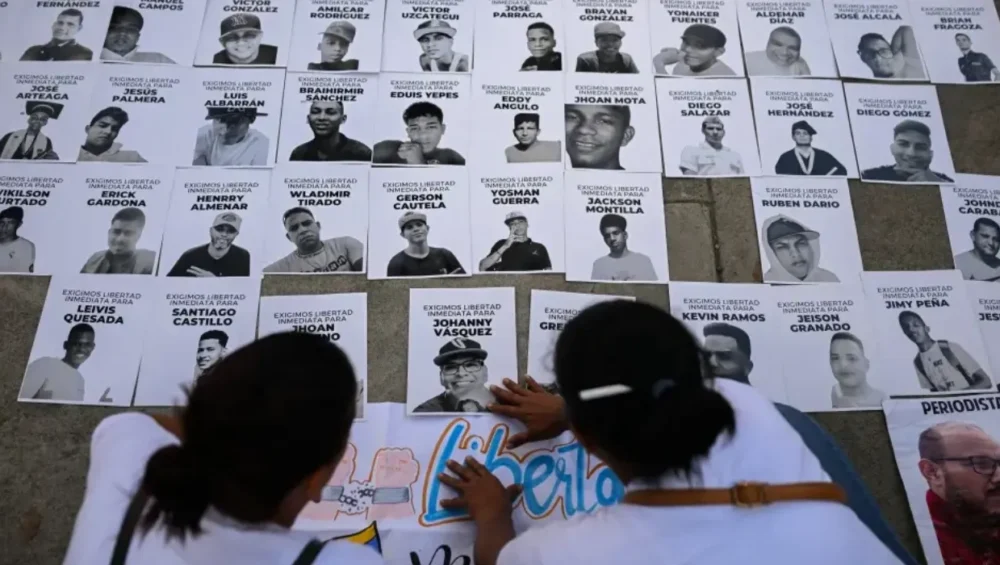
Following Venezuela’s hotly contested presidential election, which took place on July 28, 2024, there has been an escalating human rights crisis in this Latin American nation due to arbitrary arrests, torture, and attacks against human rights advocates and opposition politicians. As a result of what started out as opposition to an electoral outcome, what is now taking place could be characterized as crimes against humanity.
A Contested Election and the Eruption of Repression
The presidential election, which resulted in Nicolás Maduro winning as declared by the National Electoral Council, elicited violent protests. Independent counts had reportedly shown a victory for opposition leader Edmundo González Urrutia. This had made the elections quite irregular. This presidential selection had been criticized by a number of regional organizations such as the Organization of American States due to a lack of transparency as well as a lack of precinct-level results. This is a fundamental requirement of a fair presidential selection.
The protesters were faced with extreme levels of force. By early August 2024, at least 23 people had been killed in shootings and security operations, mostly men under the age of 30, as reported by the UN Human Rights Council’s fact-finding mission. The repression escalated from controlling crowds to targeting people in general. The government initiated “Operation Tun Tun,” which consisted of surprise attacks, arrested people without warrants, doxing people believed to be protesting, and labeling people as “terrorists” or “inciters of hate.”
The Scale and Nature of Arbitrary Detentions
Since the election, more than 2,000 people have been arbitrarily detained for protesting, criticizing the government or merely being associated with opposition activities, according to multiple reports. Human Rights Watch documented over 2,000 detentions of protesters and critics charged with vague offenses like terrorism or incitement — crimes that can carry sentences of up to 30 years. Amnesty International and local NGOs such as Foro Penal have independently tallied similar figures, noting that children and people living with disabilities have also been swept up in detention operations.
In September 2025, Foro Penal estimated approximately 815 political prisoners were held in Venezuelan facilities, including military personnel, women and foreign nationals. The true number is likely higher due to secret detentions and incommunicado cases. Hundreds more were detained and released in successive waves, but human rights organisations warn of a persistent pattern of repression where releases are followed by more arrests, a dynamic activists have described as a “revolving door” of political prisoners.
Due Process Violations and Systemic Impunity
Arrests have been characterized by gross violations of procedure. In accordance with a report by the UN mission, arrests were conducted in the absence of arrest warrants, without informing suspects of the charges against them, and without giving them prompt access to judicial authorities, in contravention of the Venezuelan constitution itself and international human rights instruments.
“Venezuela’s justice system, its Supreme Court, and its Attorney General’s Office lack independence and therefore enable random prosecutions and injustices.”
Torture, cruel treatment, and forced disappearance have been documented extensively. The National Guard and other intelligence agencies like Sebin and DGCIM have been associated with the use of physical beatings, sexual violence, and psychological abuse in order to coerce confessions as well as punish dissenters. In documented cases, prisoners had been denied access to legal representation for months and subjected to ill treatment sufficient to amount to torture as defined by the international community and the ICCPR.
Targeting Civil Society and Human Rights Defenders
Human rights defenders have been singled out for repression. High-profile cases include activists such as Javier Tarazona, Rocío San Miguel, Carlos Julio Rojas and Kennedy Tejeda, all held in notorious facilities like El Helicoide in Caracas. Amnesty International has repeatedly called for their immediate release, warning of ongoing rights violations including denial of medical care, incommunicado detention, and other abuse. Press freedom too has been under sustained attack, with journalists facing arbitrary detention, censorship, and doxxing by authorities and allied cyber networks since the June–July electoral period.
The criminalisation of civil society extends beyond arrests. Venezuelan authorities have enacted repressive legislation — including “anti-NGO laws” — that restrict the work of non-governmental organisations, while state media and allied politicians regularly launch smear campaigns against defenders of human rights and accountability.
Children, Vulnerable Groups and Enforced Disappearances
Perhaps the most harrowing aspect of Venezuela’s crackdown is the detention of minors. A UN mission found that at least 158 children (130 boys and 28 girls) were detained in the wake of the elections and charged with serious offences such as terrorism — a charge widely criticised by international rights bodies for its arbitrary and punitive use against youths. Enforced disappearances — where individuals are taken into custody and held in secret without communication — have also been systematically documented, with families left searching detention centres and morgues for months for answers.
International Response and Fragmented Accountability
Global institutions have repeatedly condemned the Venezuelan government’s actions. UN independent rights experts have called for an end to repression, thorough investigations into the use of lethal force, and respect for due process. Human Rights Watch and Amnesty International have documented escalation in repression and urged foreign governments to impose targeted sanctions and to support accountability mechanisms. The UN fact-finding mission, established in 2019, has continued to report on abuses, linking the Venezuelan security apparatus directly to killings, torture and repression.
Despite international scrutiny, meaningful accountability remains elusive. Venezuela’s government has rejected independent investigations and often attributes arrests to law enforcement against “terrorists” or criminals, blurring the line between genuine public safety concerns and politically motivated repression.
Humanitarian Impact and Mass Displacement
The repression comes amid a broader humanitarian crisis that has driven more than a quarter of Venezuela’s population abroad since the early 2010s. Long before the 2024 elections, political and economic collapse had already forced millions to flee, creating one of the largest displacement crises in the Western Hemisphere. The post-electoral crackdown has deepened fear and insecurity, further impacting civil society’s ability to operate and exacerbating the exodus of those who fear persecution or arbitrary detention.
Venezuela’s post-2024 election period is not merely a moment of political turmoil. It represents a deep entrenchment of state repression that targets not just protesters but the institutions and individuals that embody civil liberties. Arbitrary detention, torture, the criminalisation of dissent, and the sustained attack on human rights defenders violate fundamental norms of international law, undermine the possibility of democratic renewal, and constitute a grave human rights crisis that demands sustained global attention and accountability action.