
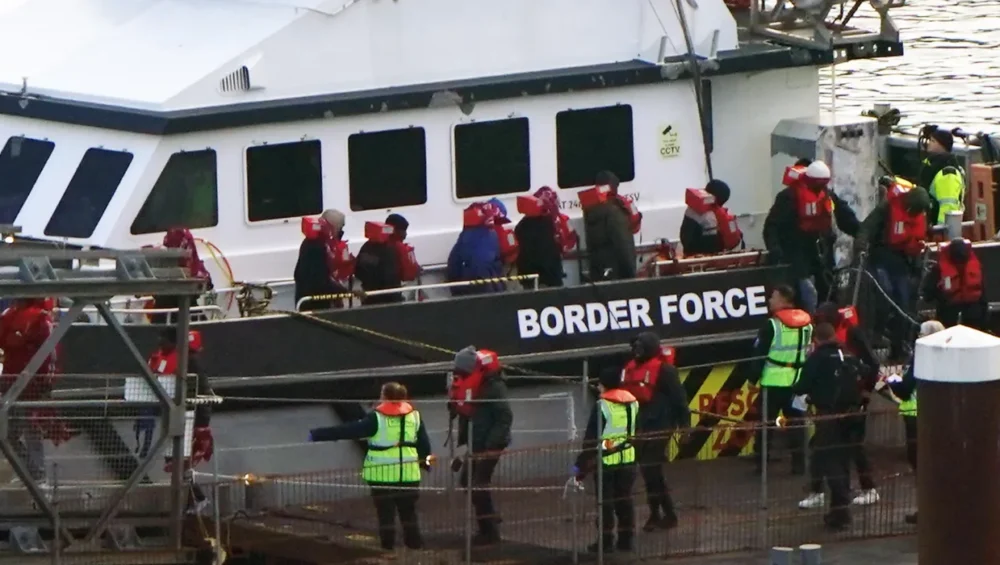
In an unusually stark warning, the United Nations has called on the UK and France to stop the controversial “one in, one out” asylum system, cautioning that it may entail serious violations of international human rights law. It urged the countries to reconsider the implementation of such a scheme.
The warning follows a 20-page letter sent on 8 December 2025 to Downing Street and the French government by nine UN human rights experts- including seven special rapporteurs- who gave the governments 60 days to respond before publishing their concerns publicly.
The letter contains voluminous case studies documenting the treatment of asylum seekers detained under the scheme, which was designed to return certain migrants arriving in the UK by small boat to France while processing only a select number of claims domestically.
Many of those affected include highly vulnerable individuals who have survived torture, human trafficking, and armed conflict in countries such as Sudan, Gaza, Eritrea, Yemen, and Iran. The UN experts have said that detaining such survivors-including those with severe psychological trauma and suicidality-may, in and of itself, constitute cruel, inhuman, or degrading treatment.
Case Studies Expose Abuse and Arbitrary Treatment
The UN letter contains ghastly stories of abuse. In one instance, an Eritrean man was forcibly restrained, had a hood placed over his head, and was then pushed onto the ground while the guards pressed their boots against his neck. The man was not allowed shoes while he was forcibly escorted out.
Another case concerned a woman from Yemen who had been a slave since the age of three. Her story of trafficking was dismissed by the Home Office on the grounds that she had not reported the incident immediately after arriving in the UK. This again shows the failure of the system to include the protections of vulnerable trafficking victims.
A man from Gaza, who had lost loved ones to Israeli shelling, was blackmailed by traffickers who took their picture and that of their fellow escapees, threatening to kill them if they went back to France or exposed the abuse they suffered.
The UN experts also pointed out that such treatment is in violation of human rights conventions, which prohibit torture and arbitrary detention, as embodied in the International Convention for Civil and Political Rights, which the UK and France are bound to uphold.
Voices from Asylum Seekers
Similar concerns have also been raised by the UN, but these concerns have also been shared by the asylum seekers themselves. In the previous coverage carried out by The Guardian, the asylum seekers who were deported again to France under the scheme were forced to flee back again into the UK due to smugglers.
During the period when they were detained in the facilities, they had decided to stage peaceful protests against the treatment they received, which was responded to in a heavy-handed manner using riot shields, teargas, and police dogs, actions carried out by the Home Office contractors.
Legal and Ethical Questions Raised
Though the UN letter sheds light on the arbitrary and opaque nature of the scheme, it is not clear the reasons behind the selection of some small boat migrants to be detained and forced to return to France, whereas others are allowed to stay in the UK and have their asylum claims processed.
Further, the UN experts expressed their interest in the protection from onward refoulement after the asylum seekers are sent back to France, wondering whether the UK and French authorities have made sure that the asylum seekers are protected from more harm. According to the UN, the UK government ought to stop the partnership with France on the grounds that migration control strategies ought to be framed to protect the right to life as opposed to increasing the risk of harm.
Support from Advocacy Groups
Organizations promoting human rights have also reemphasized and reinforced this message by the UN. Bella Mosselmans, the director of the Global Strategic Litigation Council for Refugee Rights, said that the warning by the UN reflects the experiences of refugee seekers. She pointed out that even though the policy was specifically excluded in the cases of dozens of children who were survivors of trafficking, they have been impacted already by the policy. She found it indefensible that despite the evidence of harm, threats, torture, and the denial of a hearing, the policy continues.
Government and UNHCR Responses
The UK Home Office has been quoted saying that the scheme is fully compliant, in line with legislative requirements both locally and globally. On the part of the UNHCR, it has been confirmed that they have continued engaging both governments in a bid to raise concerns and offer various observations, which may be taken into consideration. As may be deduced from the reports and case study results presented by the UN experts, it would seem that there were weaknesses in the various safeguards under the scheme and the commitment of both governments to the international standards of protection for vulnerable migrants.
The UN’s involvement is in response to the increasing backlash against European nations over their approach to refugees, which is said to be increasingly focused on deterring rather than protecting refugees. UNHCR figures show that in 2025, the UK alone recorded nearly 45,000 small boat arrivals,
“many fleeing conflict zones, persecution, and the grasp of human traffickers.”
The “one in, one out” system is said to be creating two-tier refugee systems, where the most vulnerable are being locked up and coerced while the rest are allowed to seek asylum, which is against the principle of non-refoulement, an
“cornerstone of international refugee law, and potentially could be challenged in the European Court of Human Rights.”
Analysts note that the scheme also reflects a broader trend in European migration governance, where political pressure to deter arrivals increasingly conflicts with legal and ethical obligations to protect asylum seekers. The UN letter and accompanying evidence highlight the urgent need for transparent, humane, and rights-compliant procedures, warning that failure to act may perpetuate cycles of abuse and undermine the credibility of both UK and French migration systems.