
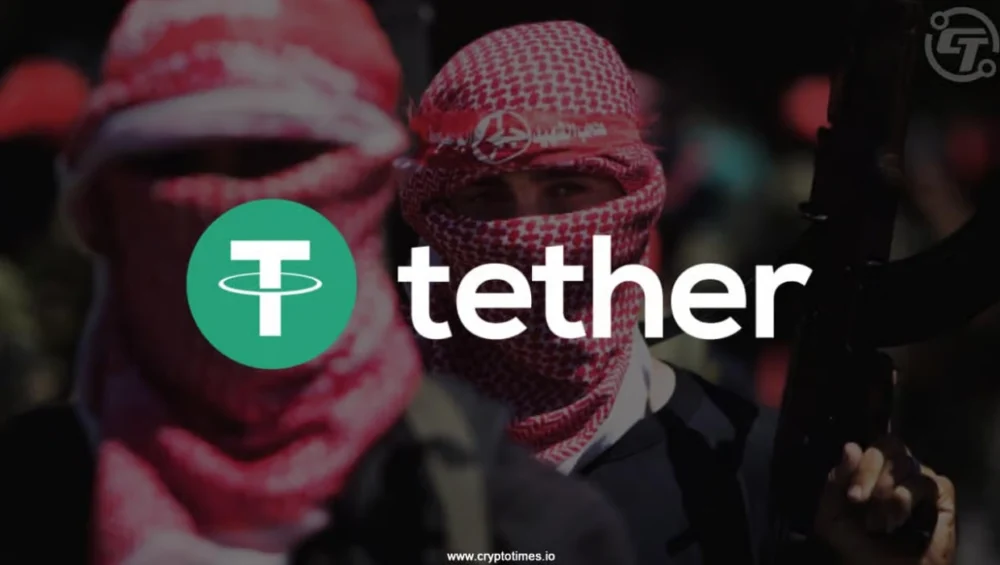
In July 2025, Tether, issuer of the world’s most circulated stablecoin USDT, froze $1.6 million in assets linked to a Gaza-based terror financing network. The move seized wallets attributed to BuyCash Money and Money Transfer Company, a monetary organization based in Gaza and already involved with unlawful transmission of finances to listed terrorist groups. The seizure was under an umbrella action by the U.S. Department of Justice that targets seizure of $2 million in crypto related to terrorism.
This is a great development which highlights the fact that as much as stablecoins are being used largely in legitimate cross-border transactions and remittance, the same can be used as a channel in illegal activity. The high degree of centralized control over the issuance and operationalization of tether tokens and its capacity to blocklist functions allows Tether to become an increasingly more active participant in the overall counterterrorism finance system.
Blockchain Transparency As An Enforcement Tool
The intervention of Tether relies on the natural transparency of blockchain, which allows accurate traceability of transactions which would be quite unattainable in the environment of a conventional banking system. According to CEO Paolo Ardoino, the effectiveness of Tether is based on transparency of blockchain technology and the speed of response when a case of abuse has been detected. Upon being notified by U.S. authorities, Tether promptly froze the illicit assets and reissued the tokens, enabling law enforcement to retain control during legal proceedings.
At the 2025 mark, Tether has seized over 2.9 billion USDT volumes, which are associated with criminal uses, with over 5,000 wallets across the world. Out of these, it arranged about 2,800 cases together with U.S law enforcers in 59 countries. These statistics indicate the magnitude of the alliance in dealing with financial offenses by exploiting the cryptocurrency environment.
Operational And Legal Dimensions Of The Freeze
Collaboration With U.S. Authorities And DOJ Civil Forfeiture
The Gaza-linked freeze was executed under a broader civil forfeiture framework. The wallets involved were traced using secondary market analysis, uncovering layered transactions through digital asset exchanges and peer-to-peer channels. These methods reflect a growing sophistication among terror networks in evading conventional oversight.
The freeze-reissue strategy employed by Tether represents a blockchain-native legal tool. By reissuing the tokens, law enforcement can track and control the assets without waiting for judicial conclusion. This method departs from legacy financial seizures, where cash or physical assets are confiscated outright.
Compliance Framework And Risk Mitigation
Tether’s compliance infrastructure incorporates rigorous Know Your Customer and Anti-Money Laundering standards. Such protocols are strengthened by state-of-the-art behavioral analytics engine and transaction monitoring solutions that aid in the detection of any suspicious pattern of usage.
Blacklists also provide guidance on tether operations, based on regulatory hooks used by jurisdictions like the U.S. Treasury of Afghanistan, or the OFAC sanctions list, meaning wallets linked with the sanctioned individuals or institutions are systematically blocked. The case of Gaza proves that the crypto companies are getting closer to international measures of enforcement.
Broader Industry And Regulatory Implications
Setting A New Compliance Standard In Crypto
The strategy of Tether will become a breakthrough on the compliance position of digital asset issuers. The fact that it was able to complete major freezes including the income-raising monetary seizure of $225 million in another DOJ case in 2025 indicates the proactive nature of the technology providers towards implementing and accepting the best practices upheld by the regulators.
Such measures can affect the approach other companies issuing stablecoins and decentralized finance software take to illicit use. The relationship between Tether and law enforcement can serve as a de facto standard of compliance within the industry many seem to regard as unregulated or reluctant to regulate.
Risks And Challenges In A Rapidly Shifting Landscape
In as much as Tether has enjoyed its success, there are numerous threats that hamper its enforcement activities. The privacy-enhancing technology cryptocurrencies are generally pseudonymous, and blockchain analytics measures deployed to increase transparency are constantly being used by malicious users disguised as mixers and zero-knowledge requests. This has resulted in the increase of decentralized laundering schemes which mask the origins of transactions.
Simultaneously, the world regulatory system remains unbalanced. To a greater extent, other jurisdictions are under-developed or lax in their crypto policies, whereas countries like the U.S and EU have formulated comprehensive crypto policies. Tether is going to have to tread this very disjointed terrain and stay compliant, trustful and liquid in disparate legal jurisdictions.
Technological Advances And The Future Of Crypto Enforcement
Enhanced Analytics And Real-time Monitoring
Blockchain analytics, artificial intelligence, and real-time scanning are cornerstones of modern enforcement. Tether uses these technologies to identify activity that may resemble terrorist funding or money laundering. Unlike traditional finance, blockchain allows retrospective and prospective analysis of wallet behaviors, exposing links across networks.
The identification of secondary-market wallet transactions, as seen in the Gaza freeze, reflects these technical capabilities. These efforts fill critical gaps that conventional surveillance methods fail to address, especially in cross-border financial investigations.
Cooperative Ecosystem Building
Tether’s partnerships with over 275 law enforcement agencies worldwide underscore the need for a cooperative digital asset ecosystem. Shared intelligence, harmonized reporting structures, and standardized forensic practices are becoming essential to effective enforcement.
These collaborative networks enable simultaneous action across jurisdictions, streamlining efforts to intercept illicit finance. In a world where terrorism financing can cross borders within seconds, coordinated response is essential.
Stakeholder Perspectives
This person has spoken on the topic: Christiaan DeFi, a blockchain security expert, recently noted that
“the collaboration between Tether and U.S. authorities reflects the new frontier in financial crime disruption, where blockchain transparency enables not only reactive but proactive, data-driven interdiction.”
DeFi’s statement echoes broader sentiment in the crypto enforcement space—emphasizing that technological transparency, when combined with legal authority and institutional cooperation, offers new tools to disrupt evolving criminal strategies.
Industry analysts observe that Tether’s responsiveness, while applauded, also points to a key tension in crypto: maintaining the balance between user autonomy and global security. Law enforcement officials, meanwhile, credit the company’s growing sophistication in identifying and responding to threats in real time.
Expanding The Combat Against Terror Financing In Crypto
Tether’s freeze of $1.6 million USDT marks a milestone in the integration of blockchain technologies into global security and law enforcement frameworks. The Gaza case exemplifies how digital currency issuers can serve as pivotal actors in responding to the misuse of financial technology by organized terror networks.
As the crypto industry matures, such events illustrate the feasibility of embedding anti-terror finance enforcement within blockchain-native structures. The increasing sophistication of both the perpetrators and the protectors suggests that future engagement will require not only legal muscle but also technical innovation and international alignment.
The evolution of digital finance challenges the global community to develop responsive, adaptive systems that preserve the benefits of open financial systems while curbing their exploitation. In this environment, Tether’s actions serve as a litmus test for the crypto sector’s capacity to act responsibly—and with global security in mind.
The Gaza-linked freeze is unlikely to be an isolated case. As stablecoins proliferate and non-state threats diversify, digital asset firms will continue to be called upon to play defense. Whether they rise to meet that challenge consistently and transparently may determine not just the future of financial crime, but also the integrity of financial freedom itself.
2 Comments
Your point of view caught my eye and was very interesting. Thanks. I have a question for you.
Your article helped me a lot, is there any more related content? Thanks!