
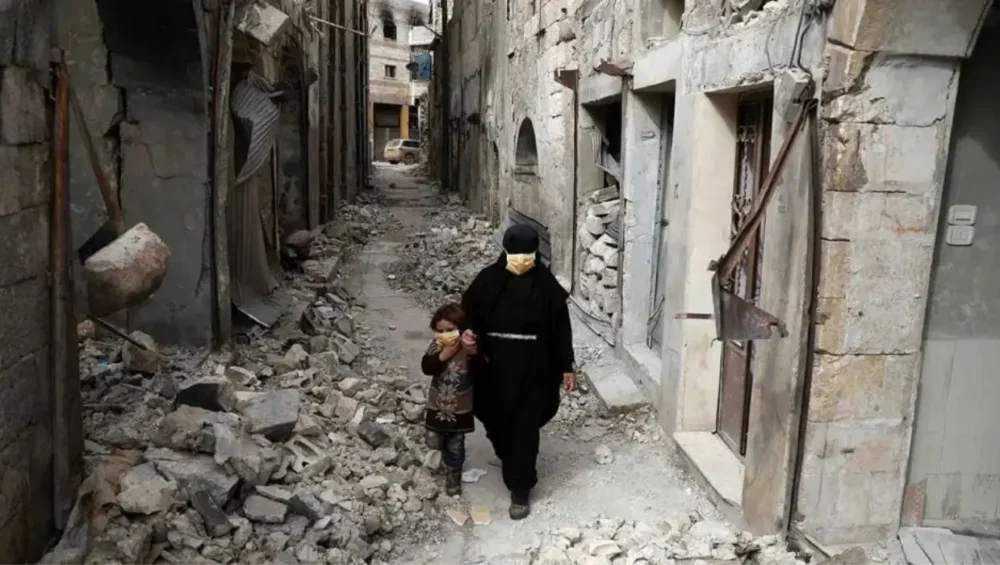
Attacking hospitals and schools in the Syrian civil conflict has been elevated in the year 2025, and this is one of the most worrying escalations of the conflict over the past few years. The civilian infrastructure that has been damaged by the constant violence has been the target of sustained bombings in various areas. Humanitarian monitors have given reports of how attacks on medical centers and educational facilities have been accompanied by massive offensives, suggesting that it is attempted within a strategy and not by collateral damage.
Increased Precision Weaponry And Expanded Frontlines
Since late 2024, the application of drones, precision-guided munitions, and long-range artillery has increased, which enables actors with arms to strike places that were previously inaccessible. Analysts observe that other hospitals have been hit soon after they reopened or received new supplies, which indicates pre-strike surveillance and purposeful targeting of victims.
Civilian Zones Becoming Contested Spaces
Schools, which are commonly located close to residential places, have been exposed as front lines shift. As the communities cannot move, schools get occupied and open. Security threats have compelled administrators to either change schedules or close down their operations.
Declining Medical Capacity And Widening Gaps In Essential Care
This has put pressure on the remaining medics in Syria in the event that the remaining hospitals are destroyed in 2025. Staff, supplies, and sterilized equipment shortages are experienced in the functional facilities. The emergency surgeries are redirected to the improvised clinics where there is no assurance of capacity and availability of power is not consistent.
Implications For Public Health And Disease Prevention
Disruptions to hospital networks weaken disease surveillance and vaccination activities. Health specialists warn of increased vulnerability to measles, respiratory infections, and waterborne diseases. Maternal and neonatal care has suffered critically as specialized units become non-operational.
Delayed Humanitarian Access And Blocked Medical Corridors
The delivery of aid has become more limiting. The cross-border corridors that are permitted at the beginning of 2025 have been subject to periodic shutdowns, which are related to the security tensions. The humanitarian organizations are documenting long durations of waiting to get anesthesia, antibiotics, and trauma kits and the global calls are being renewed to receive secure access.
The Assault On Educational Institutions And Its Social Consequences
A school that has been shell shocked or also airstriked shows the furthering plunge of the crisis within the education sector in Syria. A lot of the facilities impacted by 2025 were both shelters or distribution stations, so civilians were at high risk during the busiest work periods.
Long-Term Risks For Children And Youth
Lack of education brings about long term effects. Constant school shutdowns raise the rates of school dropouts and lower the economic opportunities in the future. Those who watch the youths in their recruitment activities have observed that there has been an increasing rate of enlisting adolescents in regions where the education opportunity has disintegrated.
Community Displacement Driven By Loss Of Educational Infrastructure
Such families often change their residence when the schools they are working in are destroyed or declared unsafe. These trends put strain on host communities and make humanitarian planning difficult. According to the aid workers, school destruction is now among the most frequent triggers of displacement in 2025.
Legal Dimensions And Accountability Challenges
The attack on hospitals and schools intentionally violates the international humanitarian law, including those established by the Geneva Conventions. Accountability systems are weak because of the fractured military space and overlapping geopolitical agendas, despite the blatant malpractices.
Documentation Efforts Driven By Technology And Partnerships
Sophisticated satellite visuals, geospatial analysis instruments, and open-source verifying sites have reinforced documentation endeavors in 2025. With greater precision, investigators are now able to confirm the locations of the strikes, time and the type of the munition used, advocacy by evidence.
Geopolitical Constraints On Enforcement
Although mounting pressure is mounting in demand to investigate, the divisions on the Security Council frustrate the collective action. The disagreements about foreign military intervention and land possession keep restricting the support of independent investigations, which supports an atmosphere of impunity.
International Response And Humanitarian Pressures
The diplomatic missions and aid agencies have stepped up the demands of renewed provisions of civilian amenities. Temporary classes and mobile clinics have been adopted as important interim remedies in areas where buildings have been demolished. Nevertheless, such solutions are too narrow and are incapable of compensating for the loss of stable infrastructure.
Operational Difficulties For Aid Providers
The year 2025 has introduced some of the harshest situations where humanitarian operations can take place. The security threats about the aid distribution areas, fuel shortage, and communication disruptions disrupt the scheduling and reach. Organizations emphasize that every hospital or school that is destroyed makes it extremely expensive to continue to maintain simple services.
Fragmented Territorial Control And Inconsistent Security Guarantees
Various actors control different areas in an inconsistent way with dissimilar coverage of civilian infrastructure. The former have some form of communication to ensure they do not strike against the facilities of the people whereas the latter do not have any means of communication. This patchwork landscape puts a number of communities without any trustworthy protection.
Evolving Conflict Dynamics And Future Risks
The increase in assaults on hospitals and schools in 2025 is the strategic initiative to interfere with the resilience of civilians and to undermine the community infrastructure. Analysts have cautioned that the ongoing deterioration of key services will worsen distrust and make any efforts to stabilize and rebuild in the future a difficult task.
The course of the war brings up important concerns of the future of civilian protection. With technological developments and a changing geopolitical alignment, protection of critical infrastructure will be relying on superior monitoring systems, more solid diplomatic alliances and re-adherence to legal accountability. Civilian spaces will most likely continue to be exposed without a continued international interaction, creating a new conflict environment in which the recovery process will be even harder to imagine.