
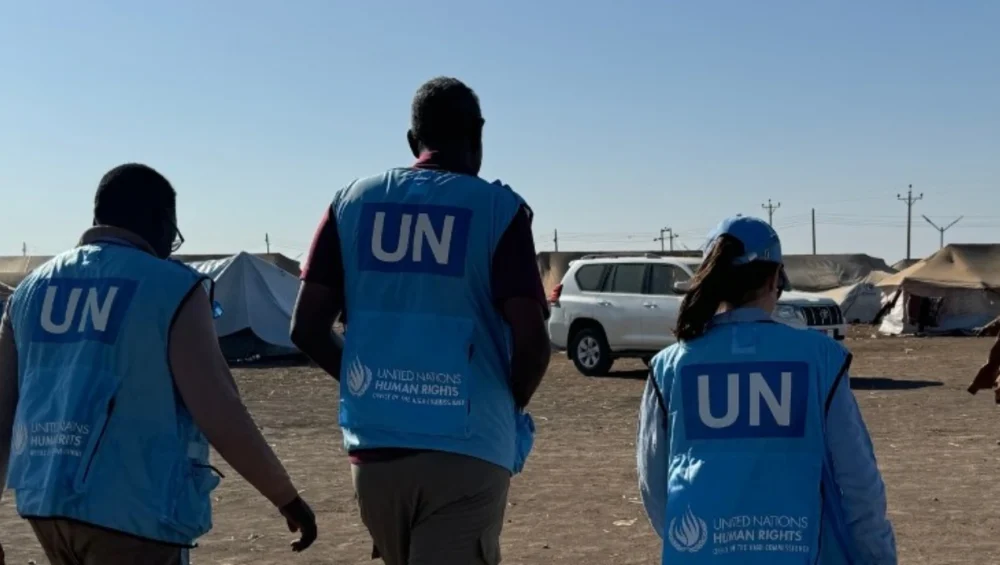
Sudan has turned out to be one of the most perilous countries for human rights defenders around the globe. Against the backdrop of a prolonged and vicious war between the armed forces of Sudan and the RSF, which has entered its third year as of January 2026, human rights defenders are threatened with targeted killings, wrongful detention, and intimidation.
On the other hand, NGOs are being smothered by purposeful restrictions, pillage, and violence. All these have significantly affected both humanitarian assistance and efforts aimed at ensuring accountability.
Based on reporting from the United Nations, Amnesty International, Front Line Defenders, and humanitarian organizations, this paper will discuss how the conflict in Sudan has created a deadly environment for civil society and why the ongoing survival of human rights observation is at stake.
A Protracted War With Civilian Catastrophe
The conflict, which broke out between SAF and RSF in April 2023, currently affects a wide area of Sudan, including Khartoum, Darfur, Kordofan, and Al Jazirah. In just 2024, at least 4,200 reported fatalities among civilians had been recorded, with estimates of the total number being much higher.
Both warring parties have committed grave violations of international humanitarian and human rights law, including:
- Summary executions
- Widespread sexual violence
- Attacks on internally displaced persons (IDP) camps
- Systematic assaults on schools and hospitals
Between May and June 2024, the RSF launched a total of nine attacks on health facilities in El Fasher, while ethnically driven violence intensified in the region of Darfur. Among the most remembered incidents is the one in October 2024, in which RSF troops massacred a total of 141 civilians in the region of Al Jazirah.
With increased fighting using drone attacks and artillery as well as urban warfare, the numbers of displaced people increased to well over a million. It was also evident that famine had been established in five regions by the beginning of 2025. It has been one of the quickest deteriorations of food insecurity standards across the globe. Impunity in the conflict has continued to contribute to escalation.
Human Rights Defenders as Deliberate Targets
In such a scenario, human rights advocates have been directly attacked through violence. Lawyers who record human rights abuses, offer legal assistance, or help establish Emergency Response Rooms are subjected to arbitrary arrest, torture, kidnapping, assassination, and strategic campaigns, which describe them as “traitors” or “collaborators.”
In Khartoum, Darfur, and Al Jazirah, there were lists in the early months of 2025 naming HRDs, medics, and volunteers as suspected RSF collaborators in the wake of SAF territorial gains. At least 18 civilians were killed by February 2025 in incidents related to allegations made against them.
In Darfur, the threat has been most dire with Several HRDs murdered in the midst of ethnic conflict and state failure. SAF and RSF have targeted peace builders and gender-based violence documenters, reducing civic space in what was already limited.
Documented Killings of Human Rights Defenders
The risks faced by Sudanese HRDs are not abstract. They are documented and deadly.
- Mohammed Ahmed Kudia, a human rights defender and lawyer, was killed on 28 May 2023. His home was burned and his property looted by RSF members.
- Khamis Arabab, a lawyer and member of the Darfur Bar Association, was killed on 30 May 2023 when RSF fighters attacked his house in El Geneina. He had spent two years defending victims of attacks on IDP camps and providing legal aid to survivors.
- Khidir Sulieman Abdelmageed, head of the human rights organization Afkar, was attacked and killed on 11 June 2023 while attempting to flee his home in El Geneina after receiving death threats. He had worked with multiple national and international organizations and recently with the International Institute for Democracy and Electoral Assistance (International IDEA) in Darfur.
The Darfur Bar Association confirmed in May 2023 that Kudia and Arabab had received explicit death threats from militia members prior to their killings. Front Line Defenders has condemned these murders, warning that HRDs were killed precisely because of their work documenting abuses during violent clashes between SAF and RSF in West Darfur.
NGOs Under Siege: Bureaucracy, Violence, and Aid Obstruction
The space for humanitarian and human rights organizations has collapsed alongside the security situation. Both SAF- and RSF-affiliated authorities have willfully obstructed humanitarian access, in violation of international humanitarian law and the 2023 Jeddah Declaration.
SAF Restrictions
- Arbitrary visa delays and denials for UN and NGO staff
- Travel permit blockages
- A de facto blockade on medical supplies into RSF-controlled areas of Khartoum
Between August and September 2024, nearly 7 million people were unable to access humanitarian assistance due to access constraints, according to the Sudan NGO Forum.
RSF Obstruction and Looting
- Looting of 86 NGO offices and 50 warehouses
- Theft of 220 NGO vehicles
- Incursions into hospitals and aid facilities
Médecins Sans Frontières (MSF) suspended operations at Turkish Hospital in Khartoum after repeated violent incidents. In July 2024, MSF condemned the RSF’s blockage of its aid trucks in Darfur.
Since the conflict began:
- 3,000 humanitarian personnel have ceased working in Sudan
- 32 aid workers have been detained
- At least 20 aid workers have been killed
Starvation as a Weapon of War
In June, UN experts blamed both SAF and RSF for using starvation as a weapon of war.
On 1 August, the Famine Review Committeedeclared that famine is present in the Zamzam IDP Camp in North Darfur, where about 400,000 displaced persons take refuge, including those fleeing the conflict in El Fasher.
Even after reaching a decision with forces aligned with SAF for opening a major border crossing in Chad in August 2024 for three months after US-led talks in Geneva, they had previously blocked UN access for several months. In September, the UN Security Council urged access to humanitarian needs in North Darfur.
The Collapse of Social Infrastructure
The targeting of HRDs and NGOs has far-reaching consequences:
- 70–80% of health facilities are non-functional
- 90% of children are out of school
- Documentation of war crimes is increasingly impossible
- Survivors of sexual violence lose access to justice and support
This erosion of accountability mechanisms allows atrocities to continue unchecked, deepening what the UN has described as the world’s worst humanitarian crisis in 2025.
International Response: Alarm Without Adequate Action
UN High Commissioner for Human Rights Volker Türk and independent experts have repeatedly called for:
- Protection of human rights defenders
- Unrestricted humanitarian access
- Accountability for war crimes
- Arms embargoes on perpetrators
Yet global response remains insufficient. As of late 2025, humanitarian funding stood at only 6.3% of the $4.16 billion required, while SAF-linked detentions and RSF violence continued unabated.
Regional and international pressure—from the UN, African Union, and key donor states—remains critical, but has yet to translate into meaningful protection on the ground.