
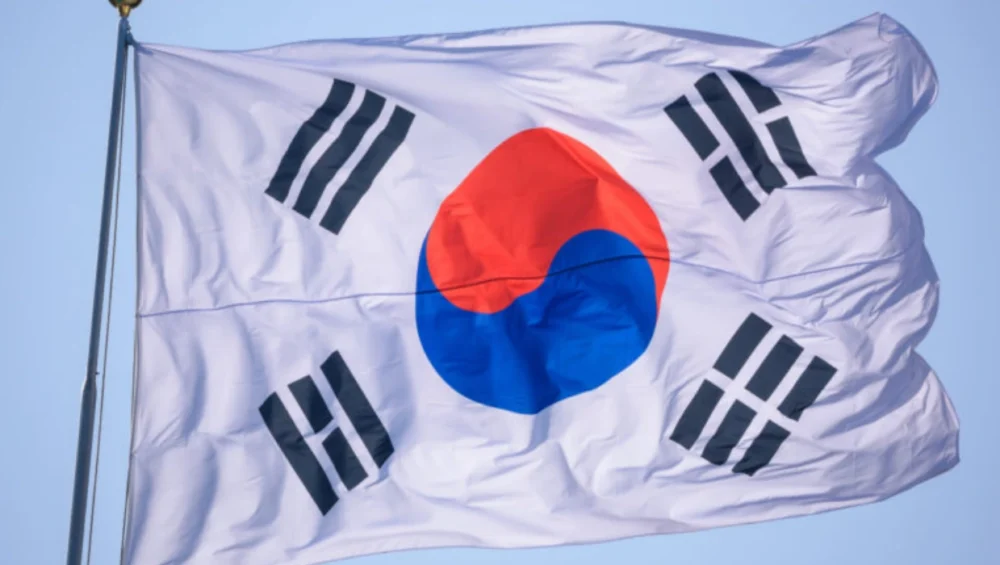
South Korea’s decision to phase out foreign adoptions by 2029 marks a historic turning point in a system that for decades operated with minimal oversight and devastating human consequences.
While the government has framed the move as part of child welfare reform, United Nations investigators and adoptee advocates argue that the deeper human rights violations tied to mass overseas adoptions remain largely unaddressed.
At the heart of the issue lies a painful truth: South Korea’s foreign adoption program was not merely a social policy, but a state-enabled system that violated fundamental human rights on a massive scale.
Origins of a state-sanctioned adoption industry
Foreign adoption from South Korea experienced a quick growth after the Korean War, but the system became fully established during the military authoritarian regimes of the 1960s through the 1980s. Special laws under military rule pushed overseas adoptions forward as a solution for poverty problems and social discrimination against single mothers, and high child welfare costs.
The legislation removed courts from their oversight role while giving private adoption agencies total control over the adoption process.
The agencies received permission to handle relinquishments and produce adoption documents, and conduct international transfers with minimal oversight. The practice led to the annual shipment of thousands of children overseas without obtaining proper parental approval or valid birth records.
South Korea maintained an average annual child export rate of 6,000 children during the 1980s, which mostly went to Western countries, including the United States and European nations. South Korea became the top child exporter worldwide through overseas adoptions of approximately 200,000 Korean children between the 1950s and early 2000s.
Systemic fraud and the denial of identity
Investigations and testimonies from adoptees have revealed widespread falsification of records. The system placed children who had parents alive into the same category as those who had no parents at all. The process involved complete removal of original information about names and birthdates and family backgrounds, which made it impossible for adoptees to find their biological roots.
The practice violates human rights according to international law because it breaches the fundamental rights to identity, family life, and access to truthful information. South Korea became a signatory to the UN Convention on the Rights of the Child (CRC) in 1991.
It guarantees children the right to maintain their identity, nationality, and family connections. The principles remained unheeded throughout multiple decades.
The falsification of paperwork did not bring an end to the damage that occurred. Many adoptees report experiencing abuse, neglect, and exploitation in their adoptive countries, with little recourse to justice. The events brought permanent effects to Yooree Kim after her forced relocation to France in 1984, and subsequent mistreatment by her adoptive family.
International complicity and demand-driven adoption
Seoul does not bear the complete responsibility for these abuses. Western nations played a critical role in sustaining the system. The high demand for infants during the 1970s and 1980s established a need to keep a continuous flow of children available for adoption.
Receiving countries frequently failed to scrutinize adoption practices or question suspicious documentation. In some cases, they actively encouraged South Korea to continue overseas placements to meet domestic demand. Adoption agencies in Europe and North America benefited financially and institutionally from the arrangement, while governments turned a blind eye to ethical concerns.
This dynamic transformed adoption into a transnational market, where children from a developing country were transferred to wealthier states under the guise of humanitarianism. The imbalance of power between sending and receiving countries meant accountability was rarely enforced.
UN intervention and human rights accountability
The issue gained renewed international attention after UN special rapporteurs on trafficking, enforced disappearances, and child abuse raised serious concerns over South Korea’s failure to provide truth-finding and reparations. Investigators criticized Seoul for denying adoptees effective access to justice and for suspending a government fact-finding investigation into adoption abuses.
The UN issued a warning that particular cases might reach the level of enforced disappearances, which represent a severe breach of international legal standards. Enforced disappearance is not limited to political repression. It includes any state involvement in concealing the fate or whereabouts of individuals, particularly when identity and family ties are erased.
The government of South Korea has chosen to concentrate its official response on future policy changes instead of dealing with the historical damage that has been identified. The government wants to create a public adoption system while backing domestic adoptions, but they have yet to develop solutions for record falsification and victim compensation.
The limits of reform without justice
Reforms introduced in 2011 reinstated judicial oversight of foreign adoptions and significantly reduced overseas placements. By 2025, South Korea approved just 24 foreign adoptions, compared to thousands in previous decades. While this represents progress, it does not resolve the legacy of abuse experienced by earlier generations of adoptees.
The suspension of the Truth and Reconciliation Commission’s investigation into adoption fraud has further deepened concerns. Of 367 cases reviewed, only 56 adoptees were formally recognized as victims before the probe was halted. The remaining cases remain in legal limbo, dependent on future legislation.
Human rights lawyers argue that without removing statutes of limitations for state-related abuses and establishing a permanent truth mechanism, victims will continue to face barriers to justice. The government’s veto of legislation aimed at lifting these limits has reinforced perceptions of reluctance to confront institutional responsibility.
Adoption as a human rights issue, not a welfare tool
The framing of foreign adoption as a welfare solution obscured its human rights implications for decades. Adoption policies prioritized economic efficiency and social conformity over family preservation and child protection. Single mothers were stigmatized, welfare support was minimal, and adoption became a substitute for social investment.
International human rights standards now emphasize that adoption should be a last resort, pursued only when family reunification or domestic care options are exhausted. South Korea’s historical reliance on overseas adoption stands in stark contrast to these principles.
Toward truth, reparations, and recognition
President Lee Jae Myung’s apology for past adoption abuses was a symbolic step, but victims and advocates stress that acknowledgment must be followed by action. This includes reopening investigations, correcting records, providing compensation, and ensuring access to mental health and legal support for adoptees.
At a broader level, the case of South Korea highlights how state policies, when combined with international demand and weak oversight, can produce systemic human rights violations under the cover of humanitarian intent.