
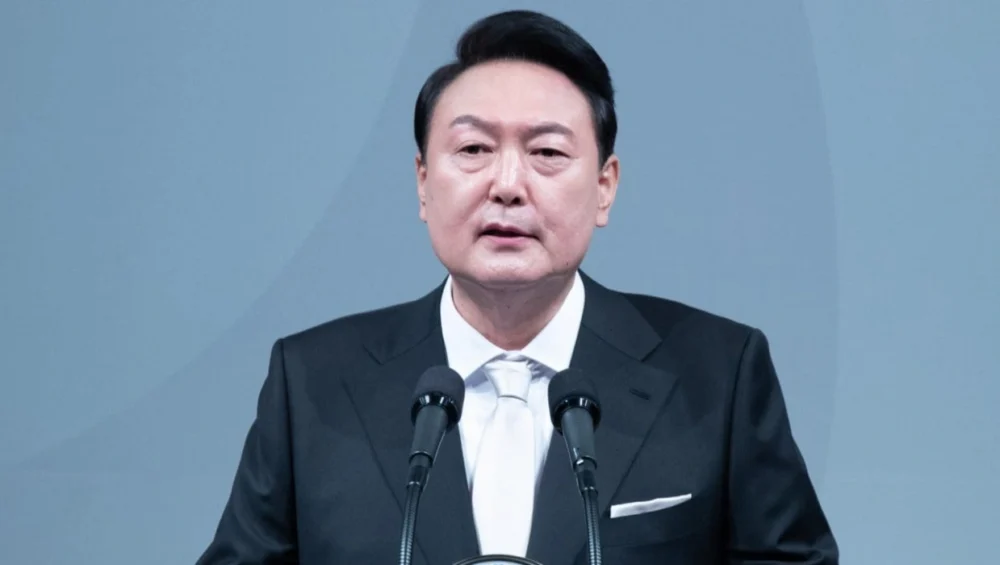
Amnesty International strongly criticized prosecutors on Monday seeking the death penalty for former South Korean President Yoon Suk Yeol on grounds that such a move would be retrogressive for human rights and democratic norms. Chiara Sangiorgio, a spokesperson for the organization, said that while no individual should stand above the law, capital punishment is inherently cruel, inhuman, and irreversible, and has no place within a justice system that claims to uphold human dignity and fundamental freedoms.
She emphasized that the actions of Yoon in December 2024 placed citizens’ rights in jeopardy, and that seeking the death penalty undermines the very principles the rule of law is intended to protect. Amnesty International called on South Korea, as a state party to the ICCPR, to seize this opportunity and move closer to abolition of capital punishment.
What led to the prosecution of Yoon Suk Yeol?
Allegations have been levied against Yoon in connection with his contentious imposition of martial law in December of 2024. This was in relation to mounting political tensions and demonstrations by the population calling on the government to uphold the constitution in its governance of the nation. In response to the mounting pressure, parliamentarians broke into the National Assembly to reverse the imposition of martial law in the country.
Shortly afterwards, the Constitutional Court impeached and removed Yoon from office for the misuse of the constitution and the threat to civil liberties posed by his actions. Moreover, the prosecutors have charged Yoon with being the leader of an insurrection as they see his activities as a threat to the democratic legal system. On the other hand, his critics have pointed out the negative implications of the death penalty in his trial.
How does international law view the death penalty in political cases?
Since 1997, South Korea has effectively practiced a moratorium on the death penalty, although the death penalty is still not repealed in the state. Human rights bodies claim that executing for either political or administrational improper conduct, no matter if unconstitutional, draws a line, equating penal responsibility with political punishment.
South Korea is a country that has signed the ICCPR and is therefore expected to restrict the use of the death penalty and make efforts towards its abolition as a country that prides itself on upholding human freedoms. According to Amnesty International, pursuing a death penalty charge against a former head of state could be considered a step backward as it is incompatible with human freedoms. The use of a death penalty charge against Yoon could therefore be considered a breach of international best practices on how former state leaders are treated.
Could pursuing the death penalty set a dangerous precedent?
Human rights lawyer Juan E. Mendez argues that the pursuit of the death penalty against the former head of state may have severe repercussions. This may lead to the politicization of the judiciary, bringing into question the impartiality of the judiciary, with fears that cases may be politically motivated.
Moreover, this trial may undermine civil liberties because a new South Korean leader may fear that a perfectly valid policy choice could be made a crime at a later stage, and it may further dent South Korea’s reputation internationally. It has also been pointed out that it may serve as a precedent for authoritarian regimes across the world to adopt tough policies being made a reality in the garb of legality because of this death penalty trial of Yoon.
How do other countries handle similar cases?
Generally, the prosecution of ex-leaders does not always result in the death sentence. For instance, ex-President Jacob Zuma of South Africa was charged with corruption cases but received a jail sentence instead of the death sentence. Again, in Brazil, ex-military leaders who were guilty of human rights violations were prosecuted but did not face the death sentence.
On the other hand, some authoritarian systems have resorted to the use of the death penalty within politically charged offenses, prompting condemnation from the United Nations and human rights bodies. Such observations illustrate the potential for South Korea to alienate itself diplomatically through the pursuit of the death penalty.
What alternatives exist for accountability?
Scholars seem to agree that accountability can be reached without resorting to the death penalty. A prison sentence of a longer term if there is a violation of the constitutional law of the country, along with political bans preventing Yoon from holding public office, could be a way to do justice to the issue while sticking to human rights standards.
Restoration of Justice practices, like recognition of guilt and various reparations to the offended, can further promote these values of democracy. This would enable the judiciary to punish the leadership without giving any irrevocable judgment that can possibly attract domestic or international disputes.
How does this case test South Korea’s legal and political institutions?
The case of Yoon Suk Yeol represents a critical test for South Korea’s democracy and legal system. Prosecutors’ pursuit of the death penalty exposes tensions between accountability and respect for human rights. While Yoon’s actions in December 2024 undeniably challenged the democratic framework and endangered citizens’ rights, human rights advocates insist that capital punishment is a step backward in the pursuit of justice. Amnesty International has argued that the former president should face legal accountability in ways that uphold principles of fairness, dignity, and proportionality.
Observers note that this trial will also have broader regional and international implications. It could influence debates on the death penalty, transitional justice, and democratic accountability throughout Asia and beyond. If South Korea proceeds with capital punishment, it may send signals about the state’s tolerance for political dissent and the balance between punishment and human rights, shaping global perceptions of its commitment to democratic norms.