
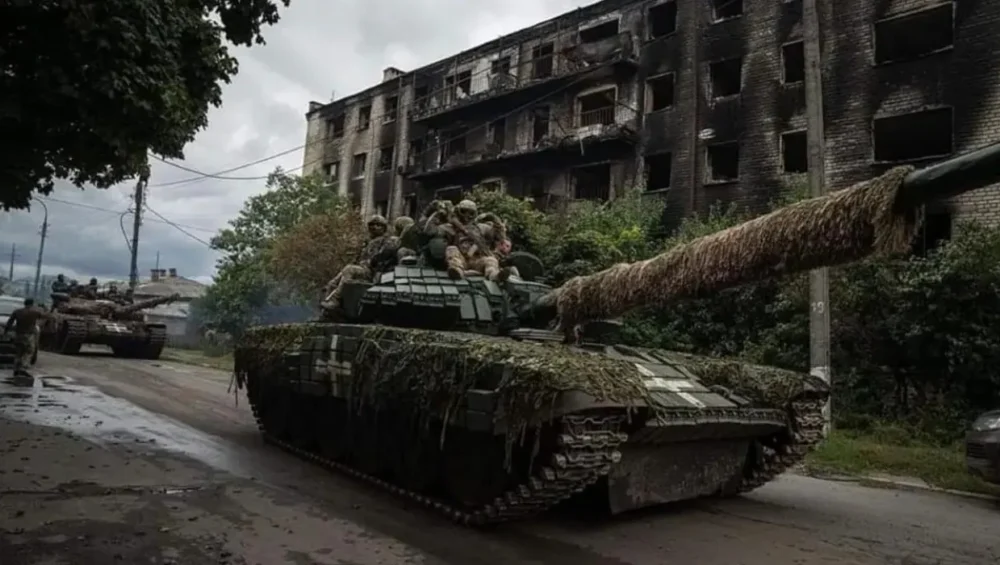
Gory Messages by Russian Generals have become one of the most upsetting intelligence leaks connected to the third and fourth years of the war in Ukraine. Later communications have been reported on as early as 2023 using intercepted communications that describe graphic abuse of Ukrainian prisoners of war, including mutilations and summary executions in a casual or even celebratory manner.
The radio free Europe radio liberty reported signals intelligence, which was reported first is chronologically consistent with heightened Russian offensives in Donetsk and Kharkiv regions in late 2025. When Moscow publicly declared territorial coherency and the reach of buffer zones, the implicit undertones of the messages were demonstrating an entirely different dimension of fighting field behavior.
Such messages purportedly entailed comments about taking trophies and group involvement in murders, which cast doubt on the civilisation of cruelty among some groups among the officer corps. The dehumanizing language termed as flippant coincided with increase in attritional losses and stagnation in operations in various fronts.
Timeline Of The Intercepts
The messages are said to extend across 36 months, which coincides with a time frame where the United Nations recorded over 150,000 potential war crimes in Ukraine since 2022. Although not every one of them can be attributed to the Russian troops, the piling up of the recorded accusations has made the responsibility of the commanding level escalate.
In 2025, when Russian troops were again trying fresh strikes around Myrnohrad and other conflict areas, the Ukrainian intelligence organizations published more intercepted communications. Analysts observe that these releases are usually used in two ways: evidentiary documentation and strategic information warfare.
Battlefield Pressure And Command Climate
The geopolitical landscape of 2025 was still marked by gradual change of territories as opposed to a game-changer. The year-round NATO evaluations demonstrated that Russia had to use artillery-intensive methods and drone warfare to compensate for manpower and supply shortages.
It is on this backdrop that the tone of the intercepted messages could have indicated that brutality could have served as a kind of inner reinforcement of morale. Violence references as recreation are used to refer to desensitization in units that have a long combat history and have had many casualties.
Patterns Of Prisoner Abuse And Structural Signals
Russia, Russian General, Gorry Messages, act of cutting body parts as a souvenir and executing without trial are some of the acts reported. These claims reflect previously reported cases that the international observers investigated, such as summary killings in occupied land in 2022 and 2023.
These trends imply consistency and not individual acts of misconduct. The way prisoners of war are treated has consistently been warned by human rights observers as one of the most important signs of command discipline and institutional culture.
Normalization Of Violations
The wording of the general was noted to put the abuse in a context of normalcy and not in an extraordinary situation. There is a strategic implication of that rhetorical framing. The words of senior officers that downplay any breach of the Geneva Conventions can be interpreted to mean that the higher authorities condone such actions.
According to the arguments of international law experts, normalization, when proven, reinforces claims in relation to command responsibility doctrines. Article 28 of the Rome Statute of the International Criminal Court provides commanders with the liability in cases when they are aware or should have been aware of the crimes committed by the forces under their command.
Internal Accountability Pressures
Since 2022, Russia has had significant turnover of command. Over a dozen senior officers are known to have been killed in action, and others fired because of the criticism of failure in operations by the public.
The removal of leaders like Ivan Popov in 2023 due to his outspoken comments on the weaknesses in logistics depicted internal conflict. Within this kind of environment, acts of ruthlessness can be interpreted by certain commanders as acts of determination especially when the pay-offs in the battlefield are low.
International Legal And Diplomatic Ramifications
Ukraine has been still submitting evidence packages to the international criminal court, requesting extended arrest warrants on the Russian officials. By early 2026 more than 100 warrants were issued against different Russian personnel on account of alleged war crimes.
Were they authentic, the intercepted messages might enhance the prosecutor’s argument that the abuse was not only episodic, but part of the operational culture. According to legal scholars, digital evidence, including in private communication, is decisive in modern war crimes litigation.
ICC And Universal Jurisdiction
Despite the fact that Russia is not a signatory to the Rome Statute, the ICC still has the jurisdiction over the crimes that are committed on Ukrainian soil because of the willingness of Kyiv to accept the jurisdiction of the court. European states have also applied the universal jurisdiction laws to conduct investigations nationally.
The 2025 democratic West diplomatic corridors continued several times to emphasize that accountability mechanisms would continue whether the battlefields were progressing or not. This method is based on experience gained in previous wars, during which justice was delayed due to the need to have preserved documentary evidence.
Intelligence Transparency And Strategic Messaging
Intercepted conversations have been periodically published by Ukrainian intelligence agencies such as the HUR to influence how the world views events. Analysts warn that, although such disclosures are used in the evidentiary mode, they are also used as psychological operations meant to demoralize the Russians and strengthen the allied support.
In its 2025 Worldwide Threat Assessment, the United States Defense Intelligence Agency stated that Moscow was starting to define the conflict as existential, which could also lead to the development of escalatory rhetoric at different levels of command.
Psychological And Strategic Dimensions
Gory Messages of the Russian General also throws some light on the psychological landscape of extended war. Accounts of mutilation used in the form of a trophy signify a loss of normative restraints that used to be barriers between combatants and prisoners.
Extreme violence can also be used as a cohesive measure to small groups in protracted conflicts, especially those that are characterized by high rates of casualties and unclear facial gains. The collective indulgence of vice may be used to cement in-group adherence, though at a very high price of both integrity and legality.
Information Ecosystem And Denial
In 2025, the Russian state propaganda focused on defensive actions and humanitarian principles of the right to territories. At the same time, pro-Russian Telegram channels usually swept or repackaged abuse claims as fake.
The gap between the official rhetoric and intercepted personal communication places emphasis on a wider information divide. Such a disconnect makes the diplomatic interaction more difficult because third-party actors have to evaluate both contradictory accounts and question the credibility of online evidence.
External Commentary And Public Discourse
A non-aligned military analyst has given a public statement regarding the bigger picture of these revelations and noted that condoning savagery in command has a stronger indicator of institutional strain. In one of the commentaries published in X (X Link), the person responded by holding that the effects of attrition warfare are likely to erode discipline unless strengthened with stringent measures in terms of controlling and ensuring credible accountability frameworks.
The comments reflected one of the dynamic core elements: frustration in the battlefield, coupled with ideological framing, and lax implementation of international standards, may speed up the abuse cycles. Although such commentary is not a replacement of judicial findings, it demonstrates increasing expert anxiety over what the structural driving forces behind purported misconduct are.
2025 Escalation And The Broader Conflict Trajectory
The emergence of Russian General’s Gory Messages coincides with intensified operations in eastern Ukraine and continued drone strikes targeting infrastructure. Crisis monitoring organizations warned in late 2025 that sustained bombardment risked further civilian harm and entrenched displacement patterns heading into 2026.
At the same time, technological shifts, including expanded use of AI-assisted targeting systems, are reshaping the conduct of war. As digital tools proliferate, the evidentiary trail they leave may become as consequential as the weapons themselves.
The trajectory of accountability now intersects with evolving warfare methods and geopolitical recalibration. Whether international legal mechanisms can meaningfully influence behavior on active battlefields remains uncertain. Yet the documentation of private communications, preserved and analyzed across borders, ensures that the war’s hidden conversations may shape not only courtrooms but also the long-term interpretation of command culture in one of Europe’s most consequential conflicts.