
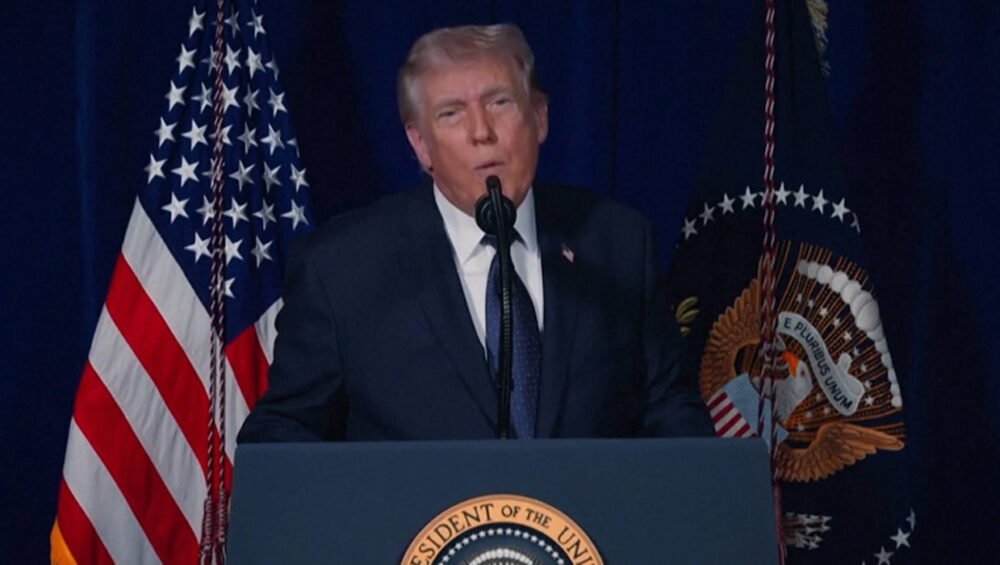
The airstrikes of U.S and Israelis on Iranian nuclear and military facilities have caused an acute legal discussion within the international community. The war crime prosecutor Reed Brody described the operation as amounting to the crime of aggression citing that the act was against international law and the U.S. constitution. The attacks, which were allegedly aimed at nuclear enrichment facilities, missile bases and naval facilities were carried out without a clear approval of the United Nations Security Council or a declaration of war by Congress.
The framing by Brody refers to the legal framework developed after World War II, and it was at Nuremberg, the murder of peace was termed as the ultimate international crime. Placing the 2026 strikes in this historical perspective, he argues with the legal justification by the administration, and asks a broader question regarding the consistency of the enforcement in the contemporary international system.
Absence of Security Council Authorization
Article 2(4) of the UN Charter forbids the use of force by the member states against the territorial integrity or political independence of another state unless in cases of Security Council authorization or as a legitimate measure of self-defense. Brody believes that the two conditions were not met. The strikes were not sanctioned by a Council resolution and no emergency consultations that followed the operation made the action retroactively valid.
The operation was justified by the administration due to threats of the region by the Iranian proxy network and the destabilizing activities. Brody however provides a distinction between the current geopolitical hostility and the minimum threshold of a clear impending armed attack needed in Article 51 of the Charter. In his conclusion, when there is no definite indication of an attack, the attacks are not within acceptable self-defense parameters.
Defining the Crime of Aggression
The Rome Statute amendments which were adopted in 2010 under the crime of aggression deal with the planning or commission of acts of force which are in violation of the Charter. Despite the fact that the International Criminal Court has a limited authority on non-member states and the complicated systems of referrals, Brody claims that the legal category can be used in principle.
He compares them to international responses to the 2022 invasion of Ukraine by Russia, pointing out that the law against the use of unilateral force is not applied selectively. To ensure that the international legal order is credible, according to him, there should be uniformity in the application of these standards.
Constitutional Dimensions in the United States
Other than the international law, Brody maintains that the strikes also cause domestic constitutional issues. The American constitution in Article I, Section 8 vests the power to declare war in Congress. Presidents can repel lightning strikes, but long-term military operations have long been traditionally legislative in nature.
The administration allegedly used the 1973 War Powers Resolution to impose a limitation on engagement that lacked congressional consent. Critics suggest that the size and extent of the February strikes was beyond the localized defensive measures that were considered in that statute. Brody argues that going around Congress undermines institutional checks and balances meant to check unilateral executive escalation.
Historical Patterns of Executive Authority
Wars on presidential war powers are not novel. Libya and Syria in 2011 and 2021 respectively also were subjected to challenges of executive discretion because of military interventions. Courts have mostly not taken up the issue directly, relying on the political question doctrine which leaves the question to the congressional oversight mechanism.
The attack on Iran-related bases in 2025 is already an operation that is being considered in Congress but has not yet resulted in authorization votes. The 2026 escalation is thus an extension of a trend of gradual executive space, which puts increasing pressure on the constitutional interpretation.
Congressional Response and Political Calculus
Members of parliament have given contradictory opinions. Others justify the strikes by saying the move was needed to discourage aggression within the region and others wonder why there was no official authorization. The domestic course of the conflict may be influenced by the process of funding issues and hearings of the control.
The electoral and partisan dynamics overlap with the constitutional argument, which makes it difficult to have unified congressional action. As in the past wars, institutional systems of accountability might be shaped more by political affiliation than legality.
Strategic Context and 2025 Precedents
The strikes came a year after a year of crumbing diplomatic involvement and increased sanctions. Talks on nuclear limits in 2025 did not bear a breakthrough and there was buildup of tension in the region as proxies between the two sides were fought. The administration officials mentioned the internal repression of Iran and the destabilizing actions of Iran as several factors.
Brody discards regime behavior as a legal justification of force on its own without the approvals of the Security Council. According to him, humanitarian or political motive can never replace the set Charter exceptions. This argument is based on the experience of previous intervention in Iraq and Libya whereby the goal of regime change brought long-term instability.
International Reactions and Diplomatic Friction
The response of key powers has been divided. The operation was criticized by Russia and China at emergency sessions and pictured them as the protectors of Charter principles. The allies of Europe had appealed to enact restraint as they raised issues of the regional behavior of Iran.
In the UN system, officials stressed on de-escalation, and adherence to international law. The discussion shows how geopolitical tensions make it hard to implement legal standards. Some states are concerned with the danger of proxies of Iran, whereas the others are concerned with the procedural legality.
Regional Security Implications
The strikes have postulates other than direct legal argument. Oil markets responded unpredictably, and the players in the region re-calibrated defence postures. Iran means that its potential retaliations, such as via allied non-state entities, pose threats of escalation.
The fact that Israel has been coordinating with Washington highlights the need to have a strategic alignment to avert perceived nuclear development. Nonetheless, there has been no multilateral support, an aspect that has put a strain on diplomatic channels in the UN system.
Accountability and Enforcement Prospects
It has been proposed by Brody and other related legal advocates that in some national courts the mechanisms of universal jurisdiction may offer avenues of accountability. These cases encounter the practical challenges, but they support the symbolic importance of aggression accusations.
It is also possible that domestic litigation under statutory provisions concerning extra-territorial harm will arise but precedent restriction on judicial redress. The cases of aggression have traditionally been prosecuted after a regime change or after the settlements of a conflict, and therefore the timely responsibility is improbable.
Normative Impact on the International Order
The greater meaning of Brody in the critique is the implication to the international standards. When powerful states do not take any action without explicit Charter approval, other states might feel less deterred against acting unilaterally. On the other hand, the proponents believe that observing strict procedural rules may slow down efforts to deal with the emerging threats.
The dilemma between legality and flexibility is the focal point in the modern security discussions. The strikes are thus acting as a strategic move as well as a test of the strength of post-1945 legal systems.
Evolving Debate on Self-Defense Standards
The issue of broadening the meaning of self-defense by the evolving threats remains a controversial topic among legal scholars. The non-state actors, cyber operations, and proxy warfare make it hard to define imminence in the classic way. Other commentators believe that we should take proactive actions in a world where events are speeding up.
Brody counters that expanding self-defense doctrine risks normalizing preventive war, undermining collective security principles. His position reflects a cautious approach rooted in historical precedents established after World War II.
The discourse surrounding the February 2026 strikes reveals the enduring friction between national security imperatives and codified legal restraints. As policymakers assess strategic outcomes and legal scholars refine interpretations of aggression, the debate will likely influence future decisions on force. Whether international norms adapt to accommodate emerging security realities or reassert traditional boundaries may determine how subsequent crises are judged in courtrooms and council chambers alike.