
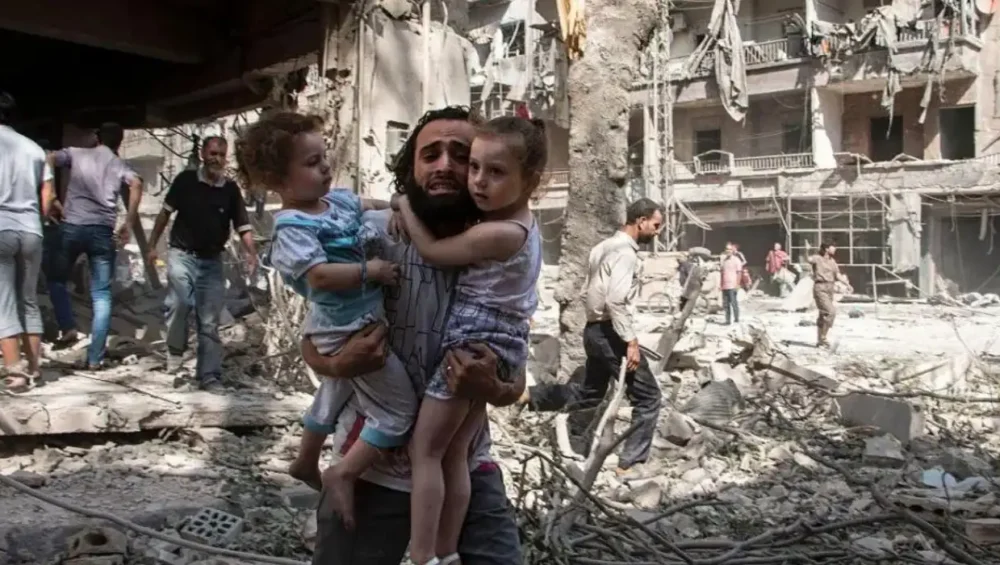
The fact that the war crimes perpetrators are not yet punished in 2025 is still defining the course of action of various ongoing conflicts undermining the international system aimed at maintaining humanitarian standards. Even with the comprehensive legal frameworks and the increased ability to document the atrocious acts, the perpetrators of these acts often get scot-free because of the disjointed governing structures, geopolitical scuffles and inter-institutional constraints. Such an expansion of the accountability gap begs the question as to the role of international law in times of long-term instability and power transitions.
Trends in abuse recorded in the modern conflict regions indicate intentional attacks on civilian rights. This weak enforcement will reduce deterrence and armed actors will be able to estimate that no consequences will follow. With wars spanning across the borders and years, impunity is being propagated and it is a culture of impunity that only serves to perpetuate violence cycles.
Structural Factors Sustaining Accountability Gaps
Impunity is an embedded concept in complicated structural circumstances that suppress the jurisdiction of international and national courts. Such circumstances are political protection by influential allies, disputed jurisdictions, and weak institutions working in conflict settings.
Geopolitical Protection And Selective Justice
Major powers tend to have strategic or economic interests rather than strict relentless pursuit of accountability of war crimes. This non-cooperative strategy enables some actors to act outside the jurisdiction of the international courts. Boxing and hedging of security councils and diplomacy restricts coherent response making the system of justice haphazard.
Fragmentation Of Armed Groups
It is projected that in 2025, many of the conflicts will be networked with non-state armed groups that will be operating outside the legal frameworks. Their fluid forms, changeable alliances and absence of traditional territoriality makes attributing evidence harder and reduces the viability of the conventional prosecution designs.
Limits Of International Judicial Mechanisms
The challenge of jurisdictional issues, high standards of evidence and insufficient cooperation of non-member states challenges institutions like the International Criminal Court. These limitations make accountability work more inefficient and increase the time lag in prosecuting massive violations.
Recent Conflict Developments Illustrating Impunity
The happenings in the year 2025 highlight the role of impunity in the experiences of civilians in the various war zones. Mass casualties, intentional destruction of infrastructures, and systematic abuse continue to be common as global bodies have extensively documented them.
Syria As A 2025 Case Study
The Syrian war is one of the key case studies of impunity since the war is rooted in impunity. According to the reports by independent monitoring organizations, over 1,500 people have been killed in March 2025 alone, and medical institutions, educational institutions, and humanitarian aid workers are still being targeted. Such violations go against the Geneva Conventions but there have not been mechanisms of global responses to hold them accountable substantially.
The governance vacuum after Assad and the existence of rival militia that has been supported by foreign forces further underscores the potential of justice. The idea of international tribunals is challenged by geopolitical boundaries and the fear of destabilizing already weak administrative systems in the key regions.
Broader Trends Across Other Conflict Zones
In the African regions, Eastern Europe and the Middle East, UN commissions of inquiry have uncovered a trend of indiscriminate shelling, extrajudicial murders, and forced disappearances. However, in most instances, accountability demands are shunned by political negotiations, which stall or water down investigations. This dynamic allows the perpetrators to be operationally free despite being warned on several occasions by the watchdog organizations.
Obstacles Confronting Accountability Mechanisms
There are many challenges to efforts in the efforts of establishing credible accountability systems, which are practical and political limitations. The restricted access to conflict areas, disputed accounts and the undermined local organizations are all determinants of justice.
Restricted Access For Investigators
Hostilities usually disrupt the ability of independent investigators to access the areas of concern. This inhibits the gathering of forensic evidence, eyewitnesses and damages. Remote documentation is used to fill in the gaps, but there is no possibility to eliminate on-site verification.
Politicization Of International Justice
Much of the time the international justice mechanisms get caught up in the stories of geopolitical competing interests. Accusation helps warring parties to attack adversaries or manipulate negotiations, reducing the impression of objectivity and making judicial processes difficult.
Weak Domestic Judicial Systems
In most states that experience conflicts, the domestic justice systems are under strained resources or are highly politicized. Courts are not equipped to prosecute senior officials or warlords and any attempts to form transitional justice systems are opposed by the established elites.
Expanding Documentation Tools And Local Advocacy
New technologies in documentation processes are a part of new initiatives to combat impunity. Satellite shots, cell phone data gleaning, and unclassified research have augmented the quantity and quality of evidence that is available to global forces. These instruments aid in long-term case-building on tribunals in the future.
The civil society groups remain at the centre in collecting testimonies, maintaining digital databases and creating awareness of the wrong inflicted. Local alliances assist in ensuring there is an independent control, even in the cases where institutional control is limited. Proponents emphasize that this preservation is essential towards the eventual accountability without heeding political postponements.
Global Politics As A Barrier To Justice
The progressively multipolar global system poses major challenges to accountable coordination. Rival blocks tend to take different positions on the intervention, sanctions or tribunal resolutions making it impossible to act in a unified manner. Instrumentalization of charges on war crimes derails consensus because the accusations are used to further national interests and not humanitarian interests.
At other times, regional actors help prop up militias that are oriented towards their strategic interests and protect them against investigation. This makes it difficult to enforce instruments like arms embargo, traveling bans and targeted sanctions, further complicated by poor implementation across jurisdictions.
Localized Responses And Emerging Resilience Measures
When the law fails to provide a solution to victims, humanitarian and civil society organizations have taken up the adaptive solutions to take care of the victims. Informal justice only gives partial relief in the form of community-based trauma services, mobile legal aid programs, and grassroot initiatives of reconciliation. These steps will be taken to enhance local resilience, foster social cohesion, and maintain the future accountability potential.
Although these efforts cannot be completely substituted by judicial procedures, they serve urgent demands and will keep people aware of the rights abuse. They are also an element of reconstruction of the post-conflict history that allows the communities to preserve the narratives crucially needed to obtain legal redress in the future.
Looking Ahead At Accountability Prospects
The ongoing nature of impunity in 2025 highlights some of the inherent problems at the crossroads between international justice and geopolitics with the changing conflict landscapes. Global institutions should be able to adapt to changes so that the future accountability efforts will either move forward or remain in stalemate. New technologies of documentation, more active civil society, and more awareness of accountability as a condition to stability are transforming the situation. The question of whether these developments will be able to break prevailing political obstacles is a key question since the conflicts escalate, and new crises become apparent.