
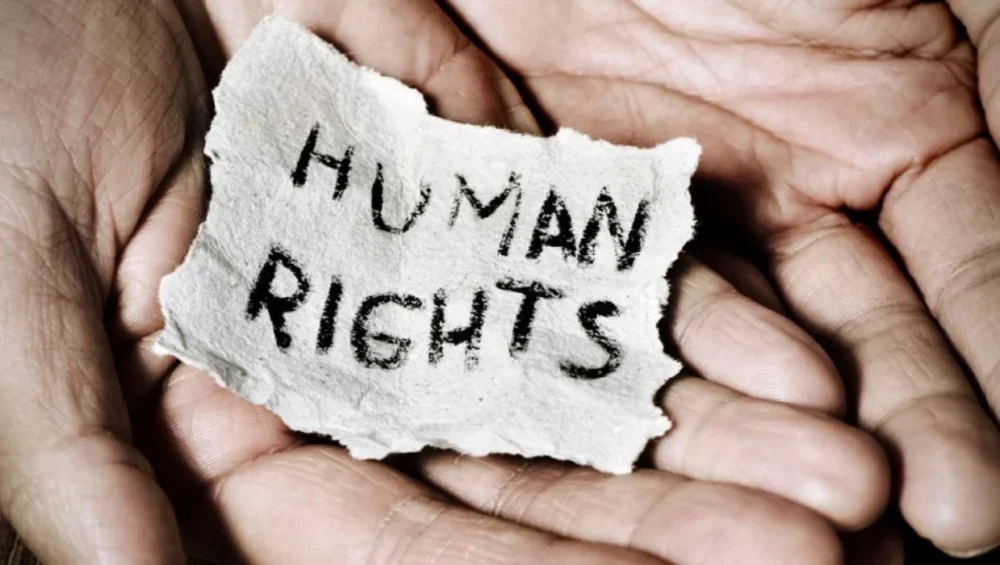
Human rights are not permanent guarantees. The freedoms people now regard as universal were assembled piece by piece after the catastrophes of the 20th century, when states accepted—often reluctantly—that power must be restrained by law, institutions, and a shared understanding of human dignity.
That postwar architecture is now under severe strain. Long weakened by China and Russia, and now under direct pressure from President Donald Trump’s administration, the rules-based order that made human rights enforceable is rapidly fraying.
When the Rules Collapse, Rights Follow
Human rights can survive without the exact structures that once protected them—but not by clinging to a collapsing status quo. They will endure only if governments and societies build something new: a durable alliance capable of defending core norms even when a superpower defects, and of making repression politically and economically costly.
The erosion of rights did not begin with Trump’s return to office. Over the past two decades, democracy has retreated globally, hollowing out the institutions that make abuse harder to commit and harder to conceal. Independent courts, free media, and accountable governance are not guarantees of human rights—but without them, violations multiply.
Democratic Guardrails Under Direct Assault
In just one year, the Trump administration has accelerated this decline. It has attacked judicial independence, defied court orders, politicized institutions meant to remain impartial, and used state power to intimidate critics across society—from journalists and universities to law firms and even entertainers.
These actions do more than chill speech. They normalize the idea that accountability is optional and that power can be exercised without consequence—a message that resonates far beyond U.S. borders.
Immigration as a Stress Test for Human Rights
The administration’s immigration policies have been especially revealing. Governments may tighten borders and enforce immigration laws, but no electoral mandate permits the denial of the right to seek asylum or the imposition of degrading detention conditions.
Here, the erosion of democratic norms intersects directly with human dignity. When basic protections are framed as discretionary or inconvenient, the universality of rights begins to unravel.
Abandoning Human Rights Abroad
Internationally, the Trump administration has pushed the limits of lawful use of force and treated international obligations with indifference, if not open contempt. It has politicized human rights reporting, withdrawn from key multilateral institutions, slashed life-saving aid programs, and undermined the International Criminal Court.
At the same time, it has courted authoritarian leaders while disparaging democratic allies, stripping away even the pretense that U.S. global leadership is tied to human rights. When other governments stay silent—fearing tariffs, retaliation, or abandonment—they become complicit in a world where power, not principle, determines who is protected.
China and Russia Exploit the Vacuum
China and Russia, which have spent years weakening the global human rights system through disinformation, influence campaigns, and obstruction at the United Nations, are capitalizing on Washington’s retreat.
When the United States signals contempt for the rules and institutions that constrain abuse, it strengthens every leader who believes human rights are optional—and only for the weak.
The Erosion of International Justice
The consequences are most visible in the realm of international accountability. Despite being subject to an arrest warrant from the International Criminal Court, Russian President Vladimir Putin continues to travel freely and has even met President Trump in Alaska.
While ICC warrants retain some force—Putin avoided BRICS summits in South Africa and Brazil—the broader signal is unmistakable: power can outlast accountability. If you are influential enough, the law may never catch up.
Beyond U.S. Leadership: The Case for a Human Rights Alliance
The central question is no longer who will replace the United States as a global guarantor of rights, but whether governments still committed to the human rights framework can act together.
The post–World War II system assumed U.S. leadership. That assumption has now collapsed. The lesson is stark: no human rights regime can depend on a single superpower.
Rather than longing for a system that no longer exists, the task is to build a new human rights alliance—anchored in rights-respecting democracies—that can defend core norms when powerful states defect. Canadian Prime Minister Mark Carney has echoed this vision, urging “middle powers” to help construct a new order grounded in shared values.
What a New Human Rights Coalition Could Do
Such an alliance could impose coordinated sanctions and visa bans on abusive officials; strengthen anti–money laundering rules so kleptocrats cannot hide wealth in safe havens; support independent media and civil society under threat; and shield international institutions from political intimidation.
It should also rely on incentives, not only punishments—offering deeper trade, investment, and security cooperation to governments that meet baseline standards on elections, judicial independence, and minority rights.
Civic Courage Is the Final Line of Defense
None of this will succeed without civic courage inside countries where democracy is eroding. Institutions do not defend themselves. Legislatures and courts must check executive power. Universities and law firms must resist coercive deals that trade independence for short-term safety. Businesses should stop treating authoritarian demands as mere “regulatory risk.”
Above all, the public must reject the seductive lie at the heart of authoritarian politics: that sacrificing the rights of others will somehow secure their own.
History suggests the opposite. When rights are weakened anywhere, they become fragile everywhere.