
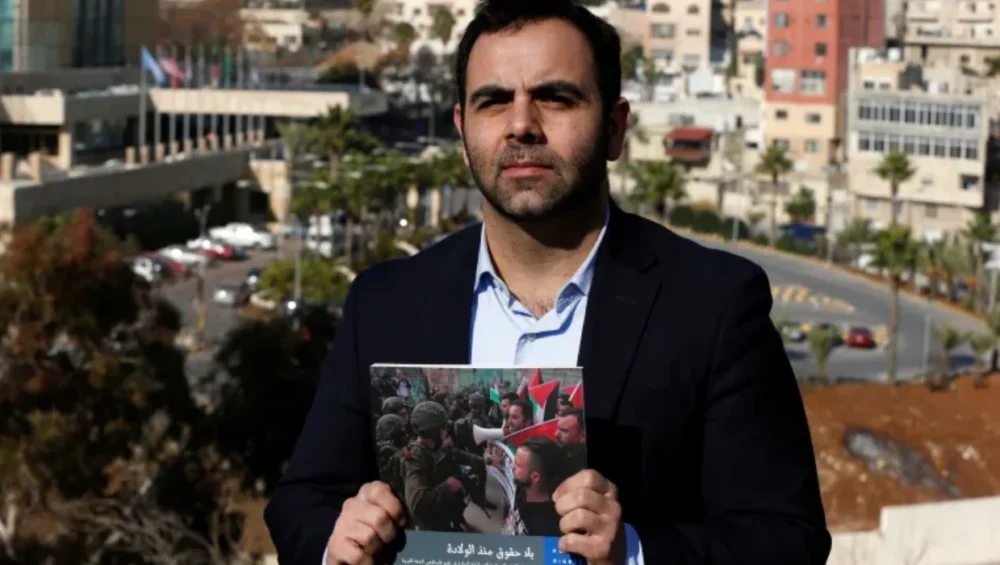
Omar Shakir, the Israel/Palestine director of Human Rights Watch (HRW), has resigned in protest over the new leadership’s refusal to publish a report that found Israel’s denial of the right of return to Palestinian refugees to be a crime against humanity.
Shakir spent over a decade at HRW before his resignation. He said that the move to stop the publication of the report undermined the organization’s commitment to principled and evidence-based human rights reporting.
What Was the Blocked Report About?
According to Shakir, the unpublished report examined how Israel’s long-standing denial of the right of return for Palestinian refugees is linked to current developments in Gaza and the occupied West Bank.
The research sought to connect:
- The destruction and erasure of refugee camps in Gaza
- The depopulation and pressure on camps in the West Bank
- Israel’s broader campaign against UNRWA, the UN agency responsible for Palestinian refugees
Shakir said the report argued that these policies must be understood as part of a continuous historical process beginning with the 1948 Nakba and intensifying in what he described as a “Nakba 2.0” unfolding today.
Why Did Shakir Say the Report Was Suppressed?
In his resignation letter dated January 15, Shakir said he was told that HRW’s new executive director, Philippe Bolopion, was concerned the report could be misinterpreted by critics as advocating the
“demographic extinguishing of the Jewishness of the Israeli state.”
Shakir rejected that framing, arguing that the report was a legal analysis grounded in international law, not a political position. He said the document had already passed internal review and had been cleared for publication by multiple senior figures within HRW before it was abruptly paused.
“Through this process, I have lost my faith in the integrity of how we do our work,”
Shakir wrote, adding that the decision called into question HRW’s commitment to applying international law consistently.
How Did Human Rights Watch Respond?
Human Rights Watch confirmed that two staff members working on Israel–Palestine had resigned following a decision to pause publication of the draft report.
In a statement, HRW said the report raised “complex and consequential issues” and that further work was required to strengthen aspects of the research and the factual basis underpinning its legal conclusions.
“For that reason, the publication of the report was paused pending further analysis and research,”
the organization said, adding that the review process is ongoing.
HRW denied that the pause reflected political pressure, insisting it was a matter of maintaining the organization’s methodological standards.
A Career Marked by Controversy and Pressure
Shakir acknowledged that his work at HRW had drawn criticism from both Israeli and Palestinian actors throughout his tenure. He said his consistent defense had been that HRW applied the same standards to Israel–Palestine as it did to the more than 100 countries it investigates worldwide.
However, he said internal pressures occasionally surfaced.
“At times, some in the organization, driven by bias, pressure, politics or cowardice, have tried to manipulate our findings,”
he wrote, though he added that past review processes had ensured the facts were ultimately published.
Shakir’s Record on Israel and Palestine
During his time at HRW, Shakir documented alleged human rights abuses across Israel, the occupied West Bank, and Gaza, including findings that Israel had established an apartheid system against Palestinians.
In 2019, the Israeli government deported Shakir, citing his advocacy work.
HRW has since continued to publish highly critical reports. In late 2024, the organization concluded that Israel had deliberately imposed conditions in Gaza calculated to bring about the destruction of part of the population, including by depriving civilians of adequate access to water.
The group said those actions amounted to the crime against humanity of extermination and constituted acts of genocide under international law.
What Does the Resignation Signal?
Shakir’s departure highlights deep tensions within international human rights organizations over how far they can go in confronting powerful states without facing political backlash.
It also raises broader questions about whether leading rights groups can maintain independence and consistency when their findings challenge entrenched geopolitical interests—particularly on Israel and Palestine, one of the most politically charged human rights dossiers in the world.
As the war in Gaza continues and scrutiny intensifies, the episode underscores the growing strain on institutions tasked with documenting abuses in an increasingly polarized global environment.