
A human rights group, Dawn, has issued a stark warning to New York state and local officials, claiming that investing public funds in bonds issued by Israel violates international law and fiduciary duties. The group cautioned that these investments could expose officials and beneficiaries to “substantial legal, ethical, and financial risks.”
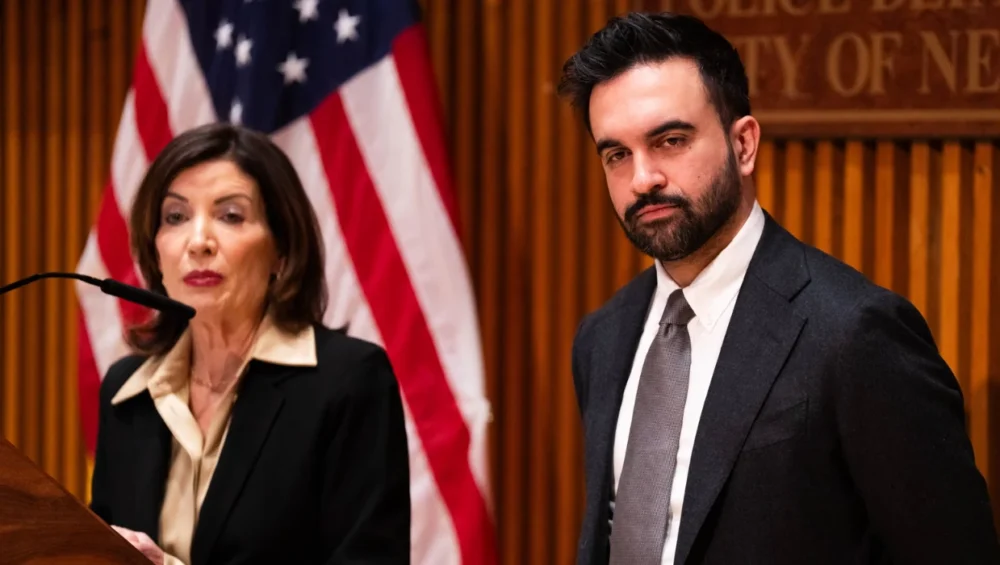
On Friday, Dawn submitted a 26-page memorandum to key decision-makers, including New York Governor Kathy Hochul, Attorney General Letitia James, New York City Mayor Zohran Mamdani, and state and city comptrollers, Tom DiNapoli and Mark Levine.
The memo urges officials to immediately halt new purchases and divest existing holdings in Israeli bonds, arguing that such investments breach both legal obligations “not to aid and abet Israeli crimes” and fiduciary responsibilities to taxpayers, according to Sarah Leah Whitson, Dawn’s executive director.
Israel’s Military Actions in Gaza and Rising Death Toll
Dawn’s warning comes amid mounting evidence of civilian casualties in Gaza. Since October 7, 2023, Israel has waged a prolonged military campaign in Gaza, dismissing, downplaying, or frequently changing the reported death toll.
Palestinian authorities, journalists, and international observers have meticulously documented the devastation, but Israel has at times provided conflicting statistics and accused Gaza officials of exaggerating civilian casualties.
The letter from Dawn, which includes potential legal action, aligns with growing calls in the United States to divest from Israeli financial instruments in response to ongoing human rights violations.
Divestment Debate Intensifies in New York
Calls for divestment have intensified at both state and local levels. In 2023, New York City’s former comptroller, Brad Lander, ended nearly $40 million in investments in Israeli bonds, citing legal and financial risks.
His successor, Mark Levine, has indicated plans to reinvest, putting him at odds with Mayor Zohran Mamdani, who has expressed opposition. At the state level, Tom DiNapoli intends to maintain investments, while challenger Raj Goyle has promised to end them.
This debate underscores the widening political divide over Israel in the United States, turning technical pension investment decisions into highly contentious political issues.
U.S. Investments in Israeli Bonds Spike Amid War
Since the October 7, 2023, attacks by militants on Israel, U.S. states and municipalities reportedly purchased at least $1.7 billion in Israeli bonds.
Mayor Mamdani has publicly questioned the practice:
“I don’t think that we should purchase Israel bonds. We don’t purchase bonds for any other sovereign nation’s debt.”
A spokesperson for Comptroller Levine emphasized the long-standing success of Israel Bonds in the city’s investment portfolio but did not clarify whether reinvestment plans would proceed. State officials Hochul and DiNapoli did not respond to requests for comment.
Human Rights Concerns Linked to Bond Investments
Dawn emphasizes that Israeli bonds are not “passive market instruments”, but rather direct loans to the Israeli government, funding defense forces, weapons, and military operations. Investing in these bonds, the group argues, enables human rights violations in Palestine and breaches fiduciary responsibilities, as public funds are legally required to be invested for the financial benefit of beneficiaries.
Nationwide Campaign for Divestment
A coalition of advocacy groups has launched the “Break the Bonds” campaign, promoting divestment at local, state, and university levels.
In Palm Beach County, Florida—the largest municipal investor in Israeli bonds—residents sued the county over $700 million in investments. The plaintiffs argue these purchases violated local laws, including requirements for investment ratings and prohibitions against politically motivated investments.
“These millions of dollars should be going to local needs,”
said Lydia Ghuman, executive director of the Internationalist Law Center, which represents the plaintiffs.
“The fact that they are being invested in bonds that are not beating the rate of inflation and propping up the economy of a foreign government is a sign of the special interests gripping local politics.”
The Killing of Hind Rajab in Gaza
The human cost of Israel’s military campaign is starkly illustrated by the tragic death of five-year-old Hind Rajab. On January 29, 2024, her family’s car was targeted by an Israeli tank. Hind survived for three hours on the phone with rescue workers, pleading for help before being killed.
Investigations by Al Jazeera’s Sanad unit, corroborated by satellite imagery and phone records, indicated that Israeli troops were present near the vehicle—contradicting the Israeli army’s initial claim that no troops were in firing range.
The U.S., Israel’s top ally, called for independent investigations into Hind’s death, along with those of her family and the medics attempting to save them. The Israeli army has since stated that the case is under review by its Fact-Finding Assessment Mechanism (FFAM), signaling a partial retreat from earlier denials.