
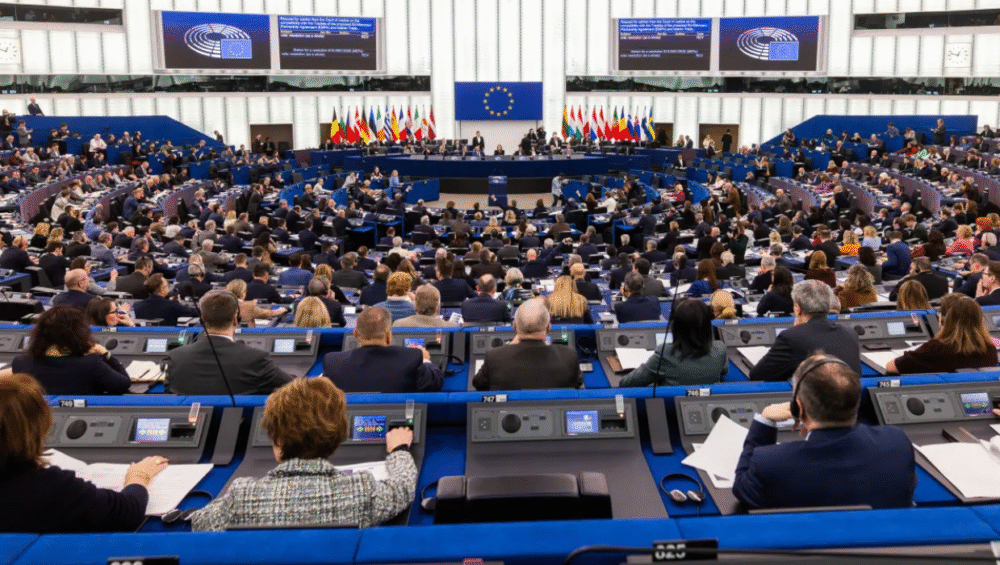
The European Parliament has voted to make sweeping changes to European Union asylum policies that critics have argued could significantly erode the fundamental right to asylum. Among the key changes are the adoption of a single EU-wide list of so-called “safe countries of origin.”
Human rights groups contend that all of these steps mark one of the most aggressive attempts in recent history by the E.U. to restrict access to asylum and to shift the responsibility from Europe, and they mark an important shift from international refugee law.
“Safe Countries of Origin” List Raises Serious Human Rights Concerns
Under the new framework, citizens from designated “safe countries of origin” will face a presumption that they do not need international protection. Their applications will be routed into accelerated procedures, raising concerns about superficial assessments and systemic denial of individual circumstances.
The report by Human Rights Watch World Report, released last week, found that human rights abuses were widespread in all the countries included on the EU’s list, including Bangladesh, Colombia, Egypt, India, Kosovo, Morocco, Tunisia, as well as EU candidate countries like Bosnia-Herzegovina, Georgia, Kosovo, Serbia, and Türkiye.
The results call into question the viability of the “safe” label and underscore the danger of persons escaping repression, violence, discrimination, or political persecution being denied effective protection.
Undermining International Refugee Law and Legal Obligations
The new EU rules on asylum are an assault on the foundations of the international refugee regime, which are rooted in the 1951 Convention on Refugees and the principle of non-refoulement, which bars governments from returning migrants to a country where they face persecution.
Critics have argued that the Parliament’s decision represents an unparalleled attack on asylum policies in the EU and needs to be interpreted within the “broader context of penalizing migration policies, including increased deportation policies, as well as the externalization of asylum policies to non-EU countries.”
Rather than upholding humane migration policies rooted in dignity and human rights, the reforms are seen as an attempt to sidestep legal obligations and reduce Europe’s share of global refugee protection.
Higher Burden of Proof for the Most Vulnerable
The ‘safe country of origin’ principle has another implication: it raises the burden of proof for asylum seekers who arrive in Europe with limited documentation and often limited legal aid. The experience of those who have survived a case of torture, political oppression, gender-based persecution, or persecution as a minority may not be accompanied by documentary evidence.
By taking safety as given, it appears to run the risk of denying genuine applicants and returning them to places where they are subject to serious violations of their human rights.
Expansion of the “Safe Third Country” Policy
Other than the origin list, the European Parliament approved another policy to allow EU countries to transfer individuals to “safe third countries” where the country and the individual have no personal connection.
This is a major expansion of the EU’s capacity for outsourcing asylum decisions, which will allow the state to deny access to European asylum processes and outsource individuals to countries where they may have no access to legal support and integration.
EU’s Record of Outsourcing Migration Control
The EU has already shown its willingness to turn a blind eye to authoritarian crackdowns and abuses by migrants through financial agreements with countries like Egypt, Tunisia, and Libya, which have come under sharp criticism for policies allowing human rights violations.
The bloc has similarly failed to address abuses in Georgia amid a recent violent crackdown, which raises concerns of whether or not geopolitics may be taking precedence over human rights issues.
Outsourcing Asylum: A Fundamental Shift in Responsibility
Parliament’s extension of the Safe Third Country idea may be of greater impact than the list of origins. It may open the way for EU countries abandoning their responsibilities altogether by negotiating agreements with other countries willing to accept asylum seekers.
This might mean that people are relocated to unknown countries with which they do not associate culturally, with no support group and/or unknown fair standards of seeking legal assistance/social services for refugees. Such actions, argue opponents, are akin to “dumping” vulnerable refugees away from those willing/able to offer adequate standards of international law for refugees.
Part of a Broader Restrictive Migration Agenda
These measures form part of a broader overhaul of EU asylum and migration policy designed to accelerate rejections, increase deportations, and externalize migration management. The reforms reflect the wider trend in European politics, where anti-immigration parties have gained ground and governments have hardened policies amid rising political pressure.
During recent years, the UNHCR reported that more than one million asylum applications were filed with the EU, driven by conflicts in Syria, Afghanistan, Ukraine, Sudan, and Gaza. Yet Europe hosts only a fraction of the world’s forcibly displaced population—more than 110 million worldwide—while countries in the Global South bear the overwhelming majority of refugees.
Human rights organizations claim that such a vote by Parliament fundamentally damages the EU’s identity as a defender of human rights and international law. The reforms could also compromise the asylum system constructed after World War II to prevent persecution and genocide, because it would favor deterrence and deportation over protection.