
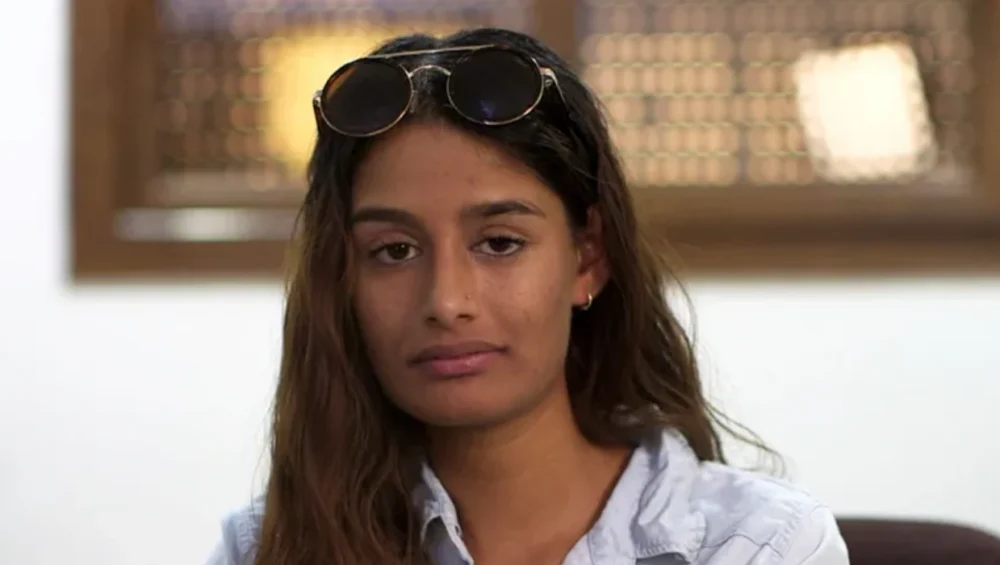
Who is Shamima Begum and why is her case controversial?
Shamima Begum, now 26, moved out of her home in East London in 2015 at the age of 15 to journey to IS-held territory along with two of her friends. Once there, she was “married off” to an IS fighter and gave birth to three children, all of whom died as babies.
In 2019, the Home Secretary, Sajid Javid, deprived Begum of her citizenship on the grounds of national security threats posed by her presence as a citizen of the UK. This ruling was affirmed by the Court of Appeal in 2024 and continues to be endorsed by the administration of the UK today. Begum, currently stateless, has taken up residence in the Syrian refugee camp.
Shamima Begum’s ban from Britain challenged by ECHR judges
— Richard Tice MP 🇬🇧 (@TiceRichard) December 31, 2025
ECHR can jog on….none of their business …just another reason why we must leave this foreign court https://t.co/do2NEqwRq0
What is the European Court of Human Rights asking the UK?
This month, the European Court of Human Rights (ECHR) transmitted a document containing Begum’s challenge based on Article 4 of the European Convention of Human Rights, which states that slavery and forced labour are prohibited.
Among the key questions, judges asked, “Did the secretary of state have a positive obligation, by virtue of Article 4, to consider whether the applicant had been a victim of trafficking and whether any duties or obligations to her flowed from that fact, before deciding to deprive her of her citizenship?”
The court’s communication emphasizes the potential international law implications of stripping a minor of citizenship without accounting for her status as a victim of child trafficking.
How does international law view stripping citizenship in such cases?
While international law, such as the Convention on the Reduction of Statelessness of 1961, conventionally limits states on making persons stateless, especially when those persons are minors or victims of human trafficking, human rights bodies believe that failing to consider Begum’s status as a child traffickied to a war-torn country may violate international laws, including those of the UK.
The UN High Commissioner for Refugees and certain NGOs have already criticized how the UK employs Cit Rev as a national security measure, potentially undermining states’ responsibilities towards vulnerable people.
Have there been similar UK cases in the past?
The UK has relied on powers granted by the British Nationality Act 1981, under which citizenship can be stripped on grounds of citizenship that are “conducive to the public good,” mainly due to terrorism, espionage, or serious offenses, with a total of 222 orders between 2010 and 2023 on national security grounds.
More recent acts, the Nationality & Borders Act of 2022 or Deprivation of Citizenship Orders Act of October 2025, specifically address notice-less stripping, appeals, mainly targeting persons of color, at a rate of 3 out of 5 cases, respectively.
In 20023, Tariq Mahmood, Britain-based Pakistani national arrested in October 2003 in Pakistan on suspicion of links to proscribed groups; British government contemplated stripping citizenship abroad, leaving him at risk of statelessness due to separation from his family.
Mohamed Sakr Born: United Kingdom Sakr was known to have undergone al-Qaeda-connected training in Somalia, and the Home Secretary later stripped him of his citizenship in 2010, rendering him stateless; he was killed later by a US drone strike in 2012.
What are Shamima Begum’s lawyers saying?
Birnberg Peirce Solicitors, which is representing Begum, describes the ECHR’s intervention as “an unprecedented opportunity” for the UK to resolve profound legal and ethical issues previously ignored. Peirce said that the Home Office had not considered at the time of her citizenship order grooming and trafficking and the state’s duty to protect before revoking Begum’s citizenship.
Lawyer Gareth Peirce stated, “It is impossible to dispute that a 15-year-old British child was lured, encouraged, and deceived for sexual exploitation in IS-controlled territory… It is equally impossible not to acknowledge the catalogue of failures to protect a child known to be at high risk.”
She also said: “It is equally impossible not to acknowledge the catalogue of failures to protect a child known for weeks beforehand to be at high risk when a close friend had disappeared to Syria in an identical way and via an identical route.
“It has already been long conceded that the then home secretary, Sajid Javid, who took the precipitous decision in 2019 very publicly to deprive Ms Begum of citizenship, had failed entirely to consider the issues of grooming and trafficking of a school child in London and of the state’s consequent duties.”
What is the UK government’s position?
A Home Office spokesperson reiterated that decisions to revoke citizenship are made to protect national security, “The government will always protect the UK and its citizens. That is why Shamima Begum – who posed a national security threat – had her British citizenship revoked and is unable to return to the UK.”
Our annual debate on Shamima Begum…
— Suella Braverman (@SuellaBraverman) December 31, 2025
I wrote this last year and I haven’t changed my mind. If anything, the case is stronger given how bad things are in our country today.
Shamima Begum must not be allowed back into the UK. https://t.co/0fyf75AfzV
The shadow home secretary Chris Philp said that Begum “has no place” in the UK, while the deputy leader of the Reform Party Richard Tice also hit out at the involvement of the ECHR as “none of their business,” claiming it underlined the need to leave the treaty.
Under no circumstances should Shamima Begum be allowed back into the UK.
— Chris Philp MP (@CPhilpOfficial) December 31, 2025
I will raise this case in Parliament on Monday with the Home Secretary.
Begum chose to go and support the violent Islamist extremists of Daesh, who murdered opponents, raped thousands of women and girls…
The ECHR will assess the UK’s replies to these four questions. The results may oblige a UK rethink of its policies on Revoking citizenship for alleged threats to national security, Taking account of obligations on trafficking and child protection, Ensuring compliance with international human rights law.
Begum’s lawyers have recently suggested that they will challenge the decision in full in Strasbourg and could possibly set a precedent in the UK with regards to challenging citizenship revocation in cases of minors and trafficking victims.